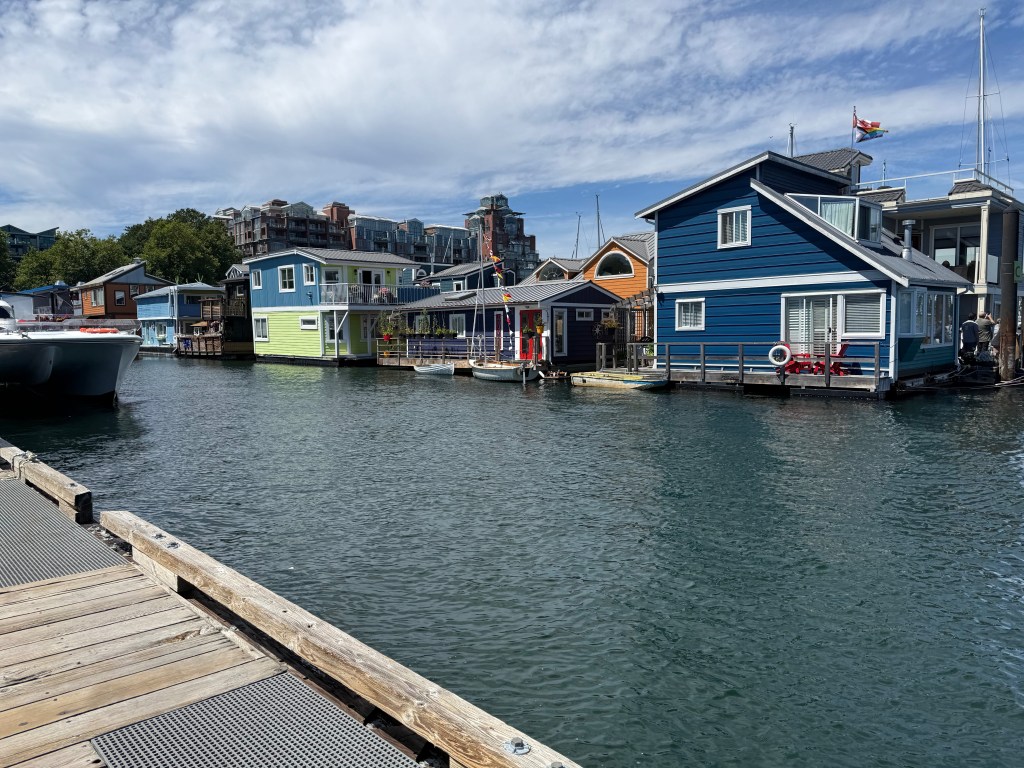
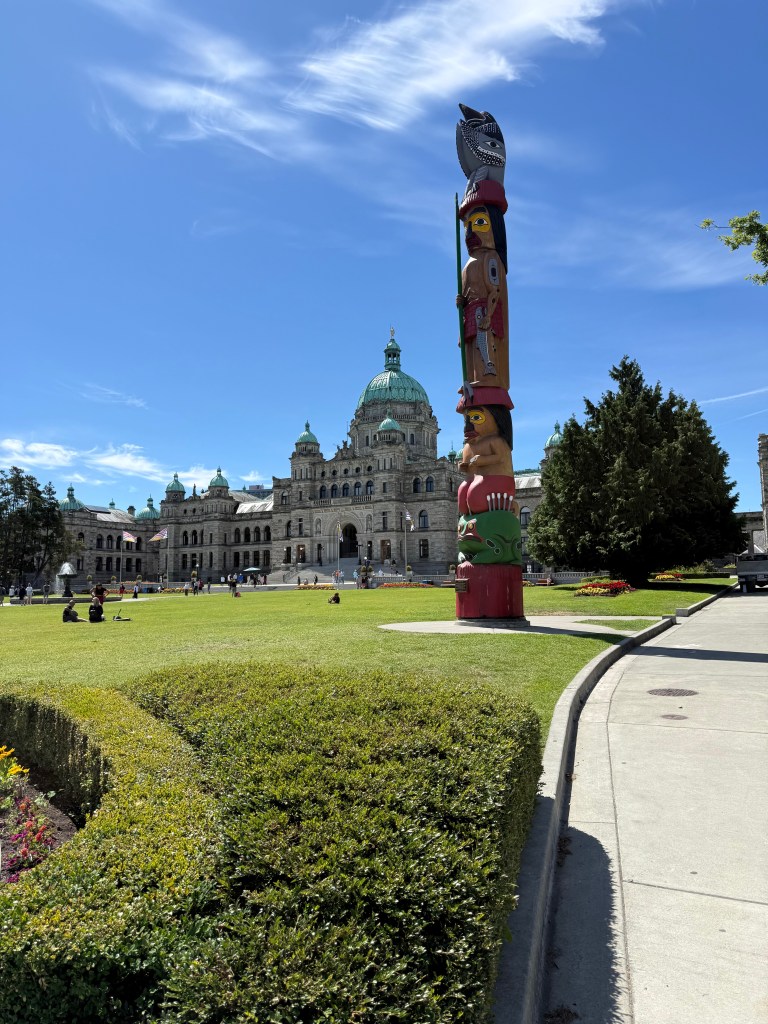
July 7 we ferried across the Strait of Juan de Fuca from Port Angeles Wa. to Victoria B.C.. Victoria is a thriving clean city on Vancouver Island, it not Vancouver is the capital of British Columbia. From the harbor we walked around the capital building then to Fisherman’s Wharf finally finishing with a drive through Beacon Hill park where the world’s highest totem pole is located.
Floating houses at Fisherman’s Wharf
The capital building of British Columbia. They love totem poles and flowers here
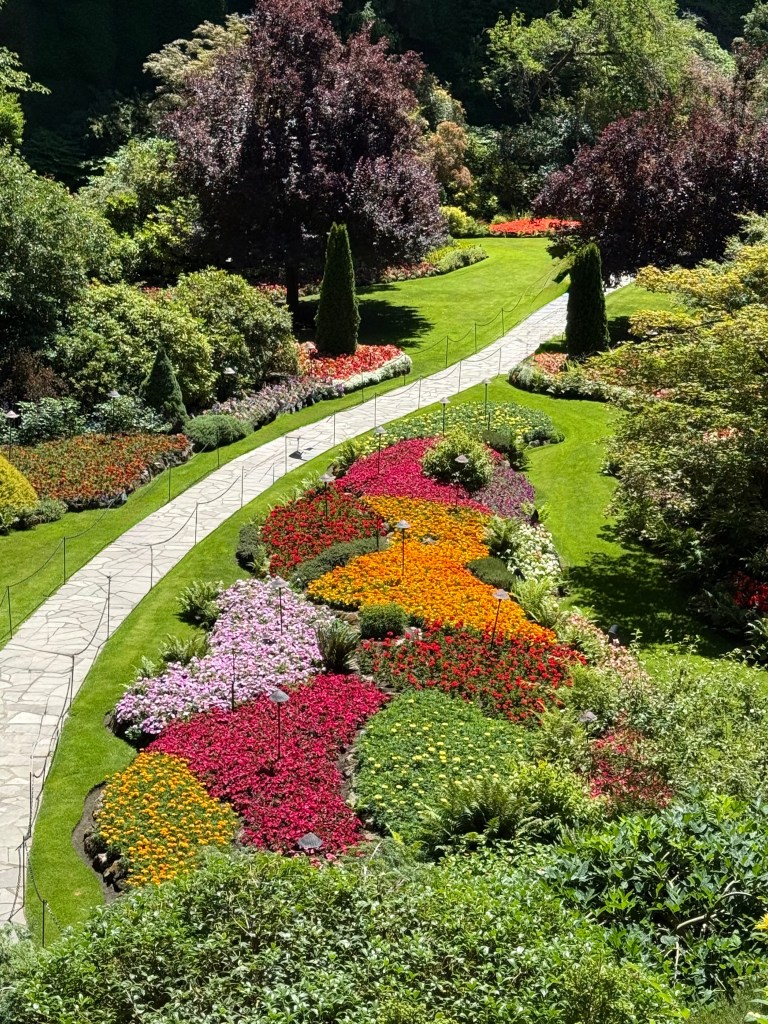
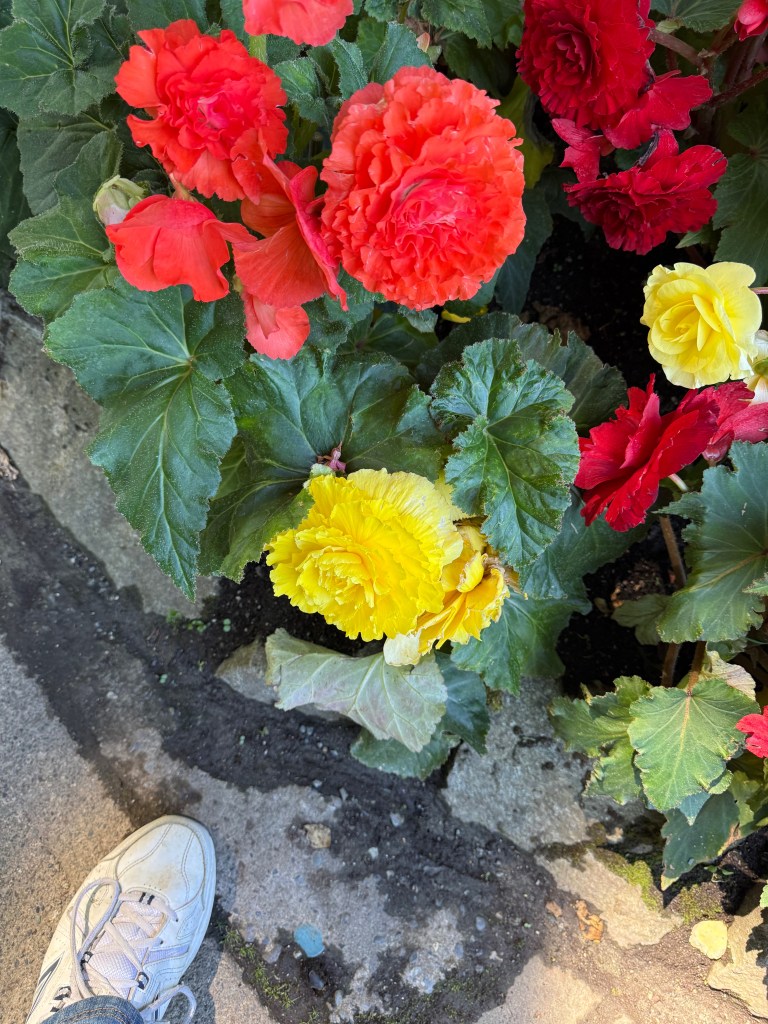
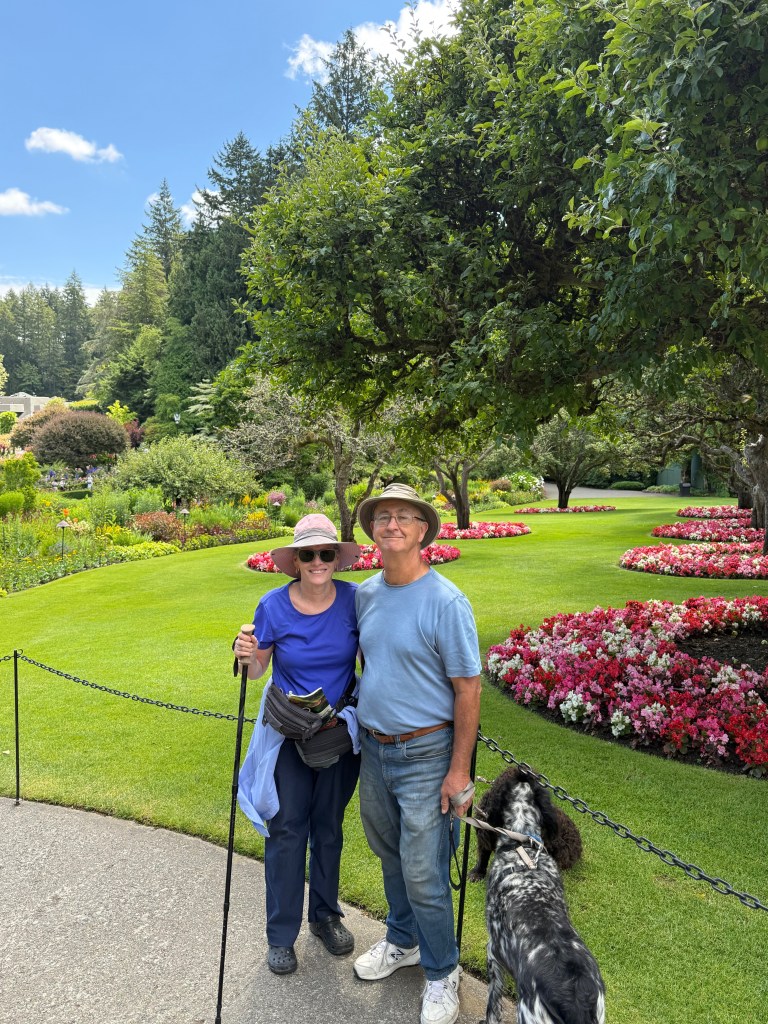
The next morning we drove to Butchart Gardens. We’re fans of botanical gardens and have visited lots of them. This is one of the best for beauty. About 64 acres, the flowers were spectacular. Sunken garden was probably the best overall, it’s located in an old quarry. Notice the begonias with blooms bigger than roses…..
Sunken Garden from above
Begonias with bloom bigger than a rose
Dog 2 is hidden behind dog 1’s head
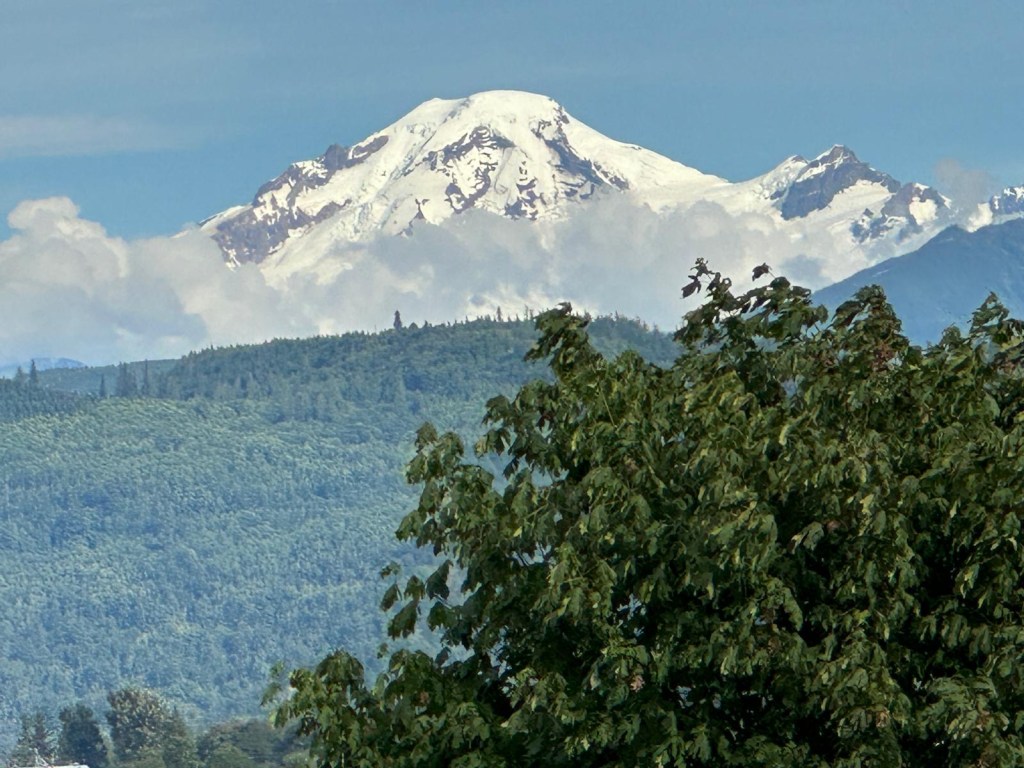
From Butchart it’s only a 30 minute drive to the ferry that crosses over to just south of Vancouver. We were lucky in that we had to wait only about 20 minutes to drive on. It took about 1 hr 20 min. to cross, slightly less that the ferry from Port Angeles to Victoria. We then began our drive through British Columbia. This view was on our right for most of the drive….
Mt Ranier
We planned to stay at a Harvest Host site, a brewery, but it was taken so we took a chance of a B.C. provincial park, E C Manning. With four campgrounds inside the park we shouldn’t have been concerned. The CG we picked had 100 sites, slightly less than half taken. The drive through British Columbia was better than I expected. Four lane, well maintained road, through mountains between which are lush valleys covered with fruit and berry orchards. It appeared very prosperous. We crossed into the US at a border crossing in an Indian reservation that gets an average of only 30 crossings a day. We drove past grand Coulee dam and made it to Missoula, MT. Cracker Barrel that evening despite heavy traffic in Spokane/Cour d’alene. July 9 we drove I94 along the Yellowstone river to Glendive, MT. where we stayed in a hotel, like each of the next two nights due to the “heat dome”. Temps were in the low 100’s, down only to mid 70’s at night.
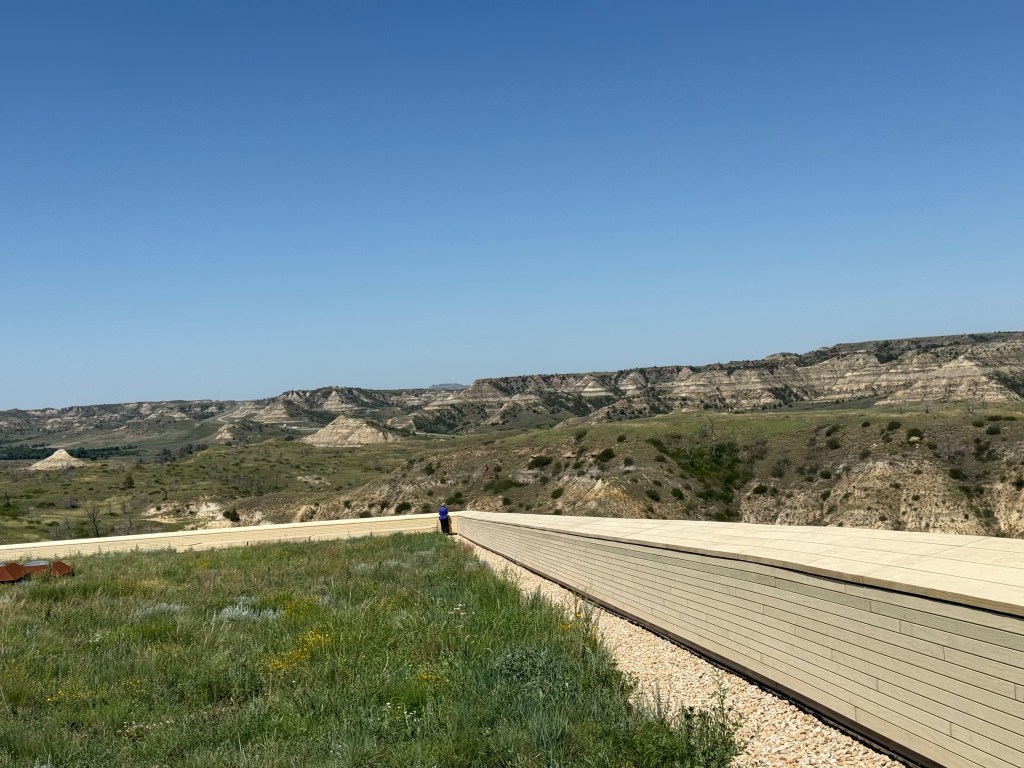
July 11 was a visit to the Theodore Roosevelt Museum on the edge of TR National Park. The museum was even better than we expected. It blends with the landscape, the roof is covered with soil and planted with native prairie plants.
This is the view from the roof, not exactly an inviting landscape but this is where TR’s ranch was. I believe we are looking at parkland in this picture. If not, it’s representative. That’s Peggy down in the corner.
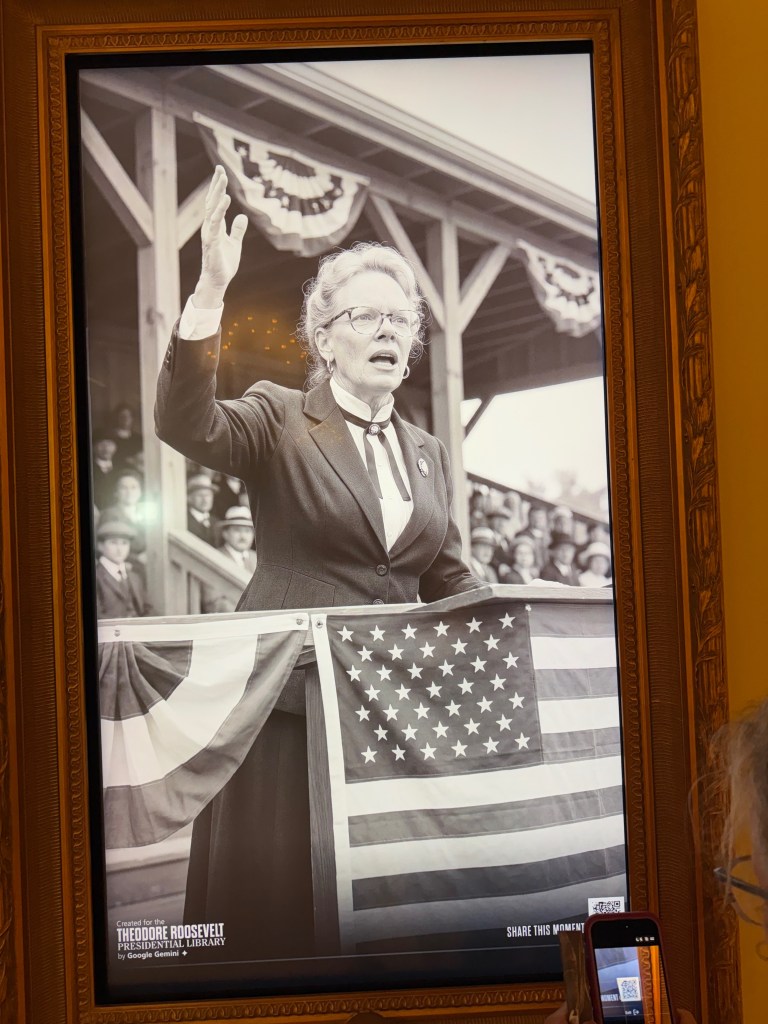
There were several interactive exhibits. The crowd enjoyed seeing themselves and their family photoshopped into photographs from Roosevelts’ life…..
Peggy giving a campaign speech
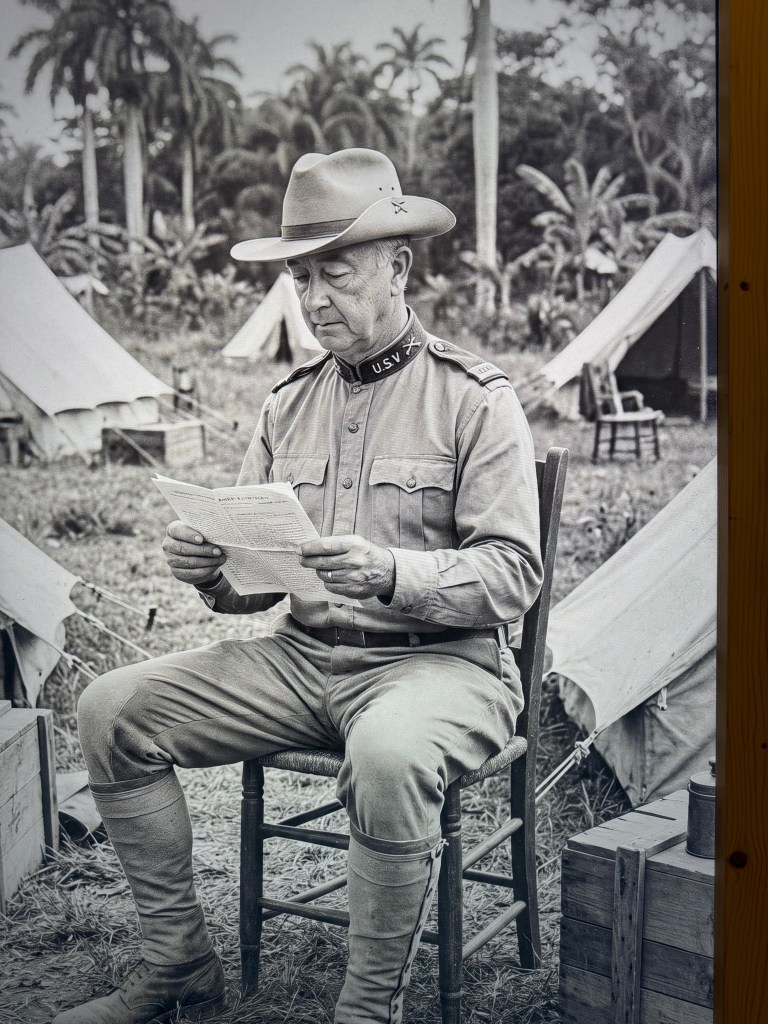
Me reviewing orders before the battle of San Juan hill
Two more days of driving and we were home on Monday July 13 late afternoon.
The second half of this vacation was in this National Park with stays at Fairholme CG on a 12 mile long mountain lake, Hoh CG in the heart of Olympia rainforest and Kalaloch CG on the ocean beach.
On Sunday June 28 we got the rental RV and headed to Fairholme. We took the ferry from Edmunds Wa. across Puget Sound to Kingston Wa., then after a stop at Walmart for supplies we headed for our campsite. All that took the whole day and we arrived at or just after dark. Here is our Fairholme campsite…..
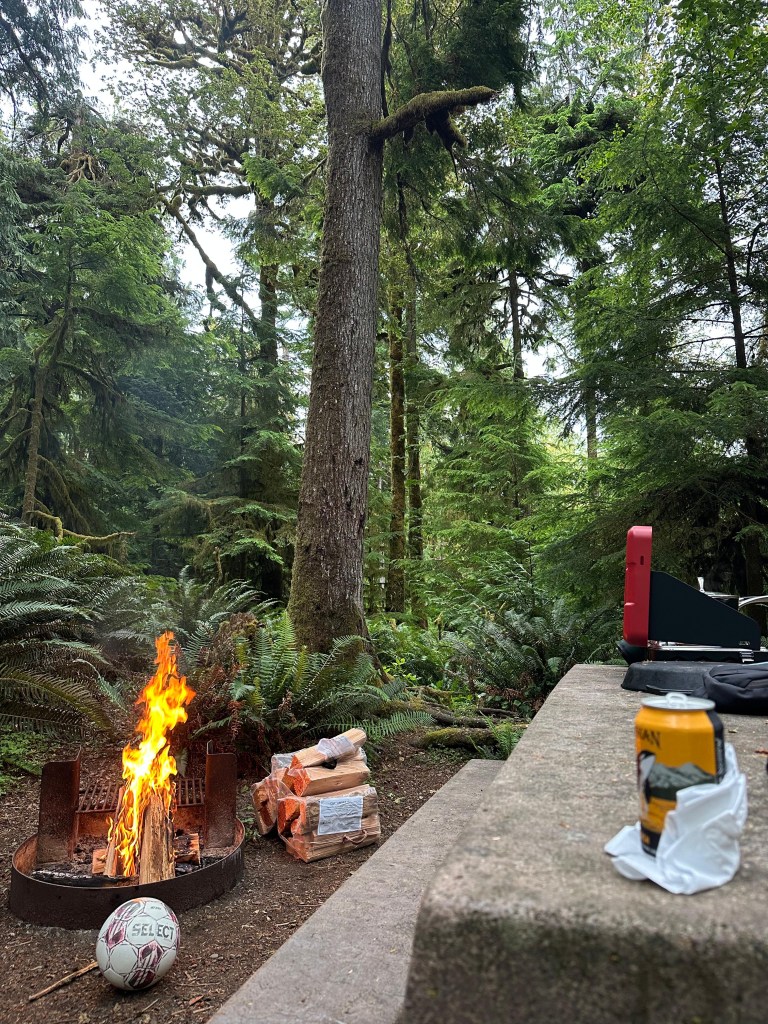
Fairholme camp site, getting ready for s’mores (concrete picnic table in foreground)
Monday Will’s family went to Devil’s Punch bowl to see it and to SWIM!!!. This water is cold. Will and AK jumped in from a bridge and swam a little, Noel got in briefly. The water was an unusual blue color, almost fluorescent. After another hike we met at Fairholme Lake Lodge for an excellent meal. Will and Colleen had the northwest boil for two. Kind of like a low country boil but instead of crawdads and shrimp they had Dungeness crab, mussels and salmon. All our meals here were excellent.
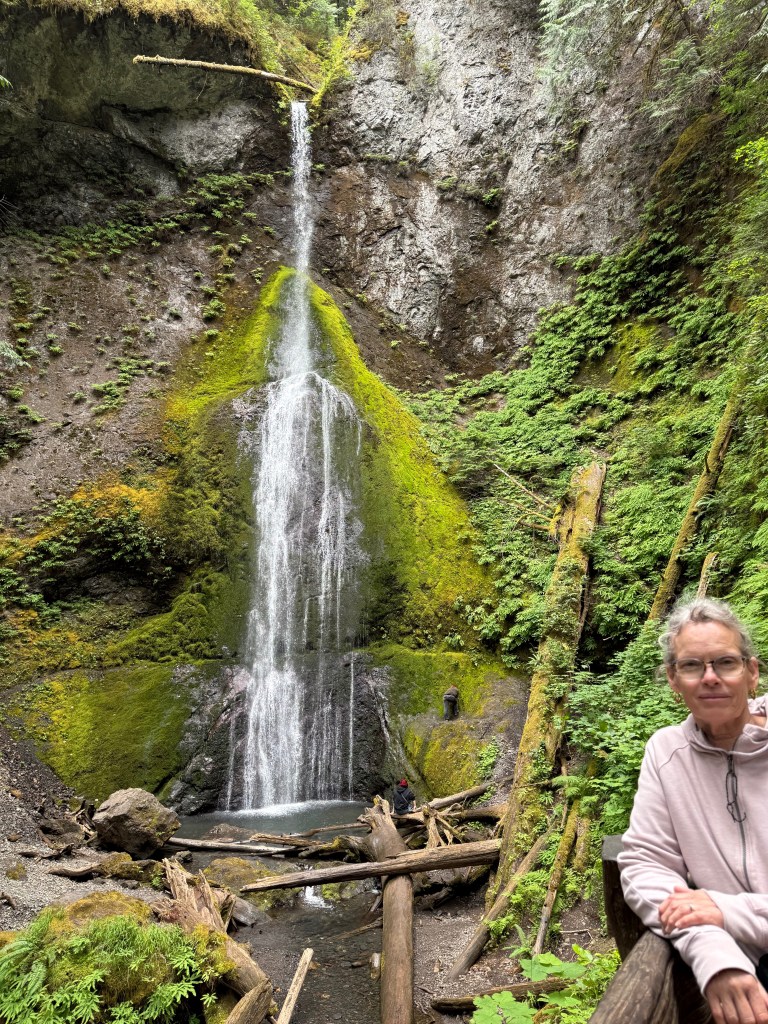
June 29 was hikes to Marymere falls for all of us and Sol duc hot springs for Will, Colleen and co.
Marymere falls, one of the hikes near Fairholme
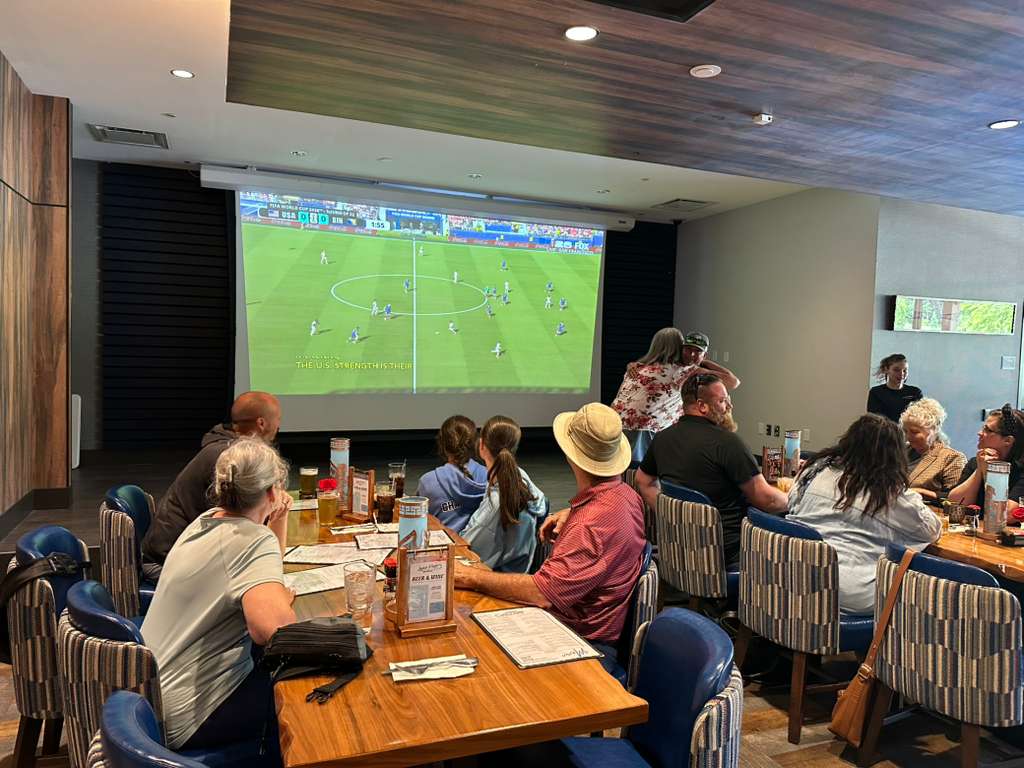
Wednesday July 1 saw Will and I and AK go to Sol Duc river to fly fish. No luck but it was a beautiful river and reminded me how much I like fly fishing. Mid afternoon we left to go to the Elwha River Casino to eat supper and watch the USA vs. Bosnia world cup game. Turned out to be a good choice. Food was good, TV screen was huge and the place wasn’t crowded.
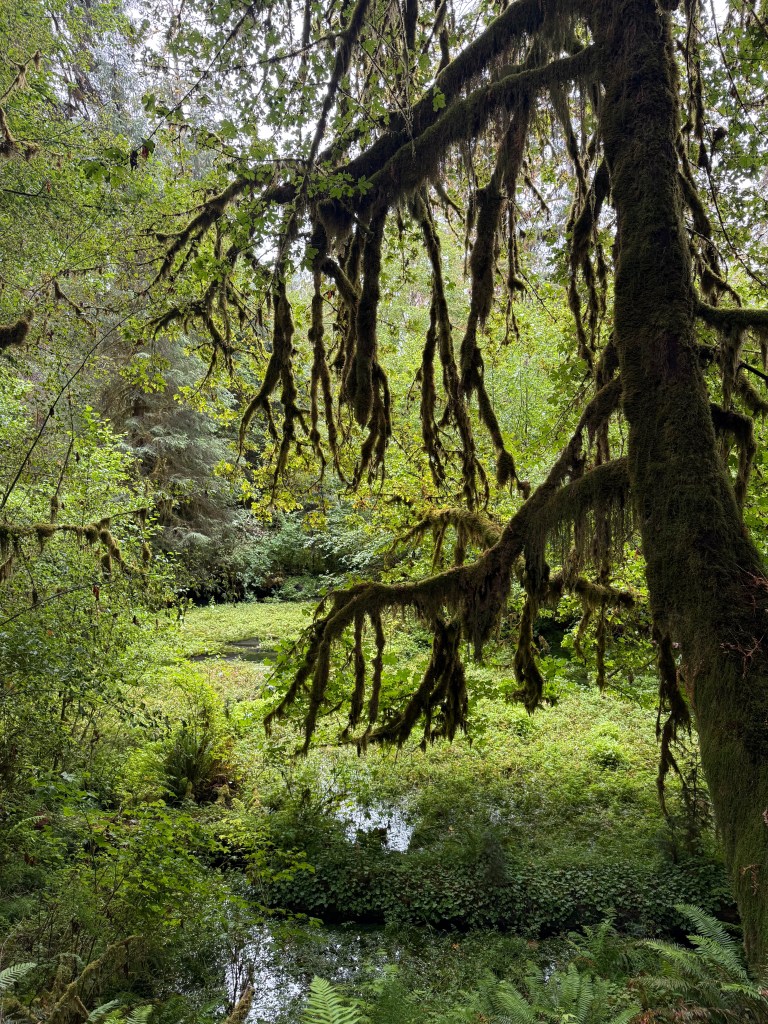
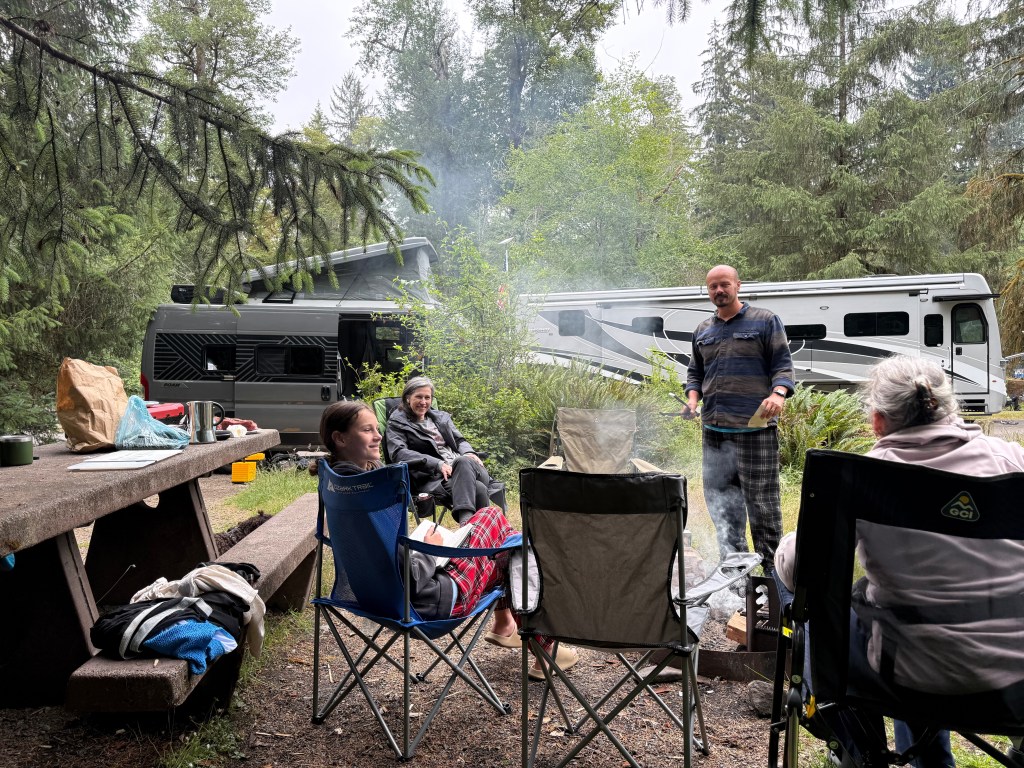
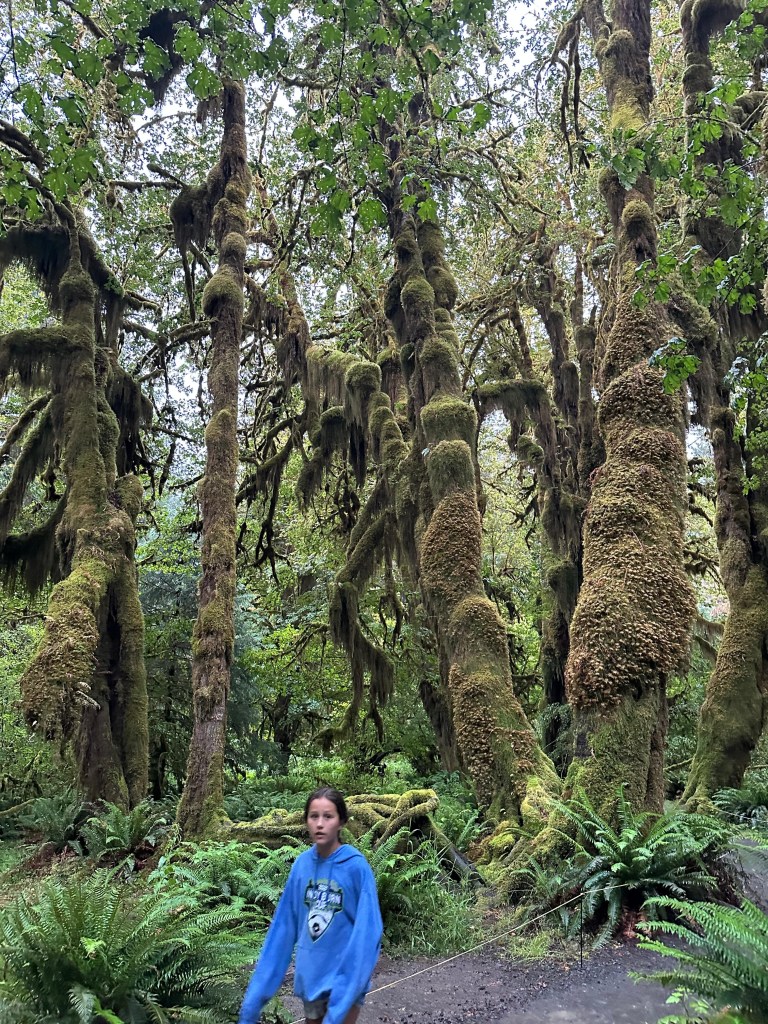
July 2 we left Fairholme for Hoh Campground, in the rain forest (to be a rain forest it must get at least 80 inches of rain a year, Hoh gets about 130 in.) Here are some pictures of Hoh Campsite with Will’s RV behind and an RV bus (not ours) in far background, and two pictures showing the moss on trees. A researcher got permission to sacrifice a tree, happened to be a big leaf maple, so she could thoroughly analyze the moss on it. The moss she removed weighed 2, 000 pounds, when dried. It could be several inches thick and essentially became itself like topsoil for other things to grow in.
Clear slowly flowing creek surrounded by moss covered trees at Hoh
Campsite at Hoh
AK at Hoh
We all hiked the Hall of Mosses Trail, and attended at least one ranger talk. AK gave a ranger talk too. Intended for just us, we walked to the amphitheater where an actual park ranger happened to be present, he listened to most of her talk. He was quite impressed. We fly fished again, the Hoh river ran right beside our camp. I saw a Roosevelt Elk, the largest elk in the US, it is black from the neck up.
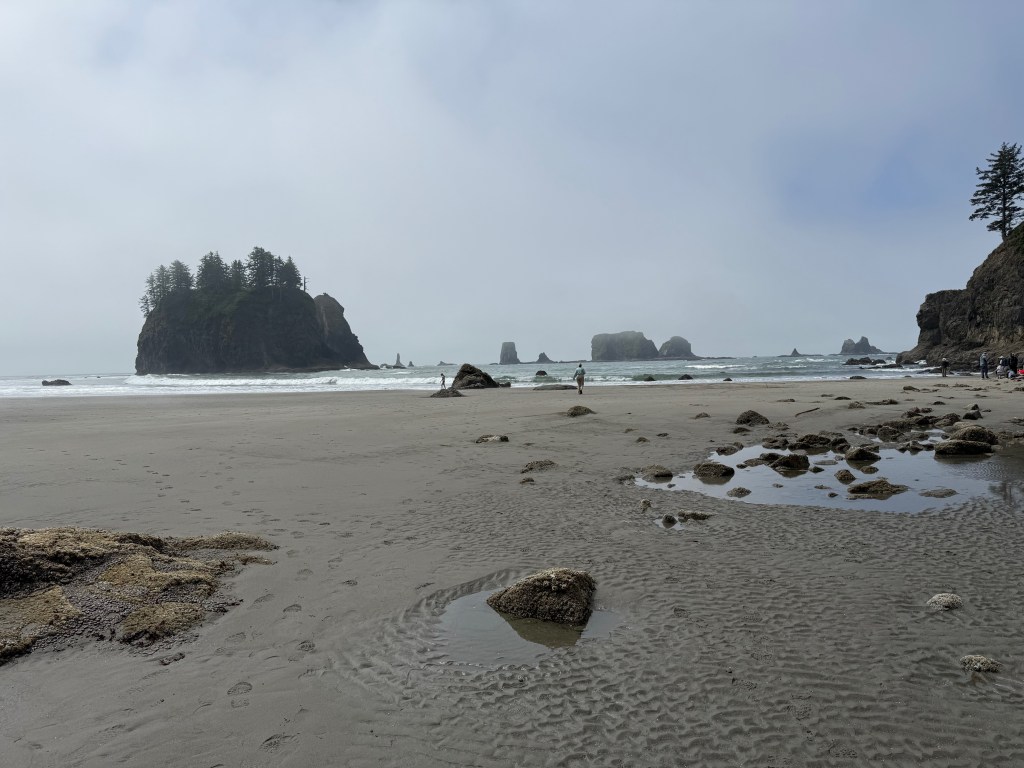
On Sunday July 5 we all went to Kalaloch Campground, on the ocean. We only had that afternoon and the next morning on the beaches there. On that afternoon Will, Noel and Anne Kash played soccer on the beach with another family, a dad and two kids the same age as Noel and AK, but both boys. We watched a world cup game in the rented RV (it had starlink) then roasted hot dogs and made woofums. The next day we went to Second beach (Will’s family) or Ruby Beach (us) being sure to be there at low tide. Here are two pictures. Very different from the southern beaches we are more used to….
Tidal pools and ‘Haystack’ rock at Ruby beach
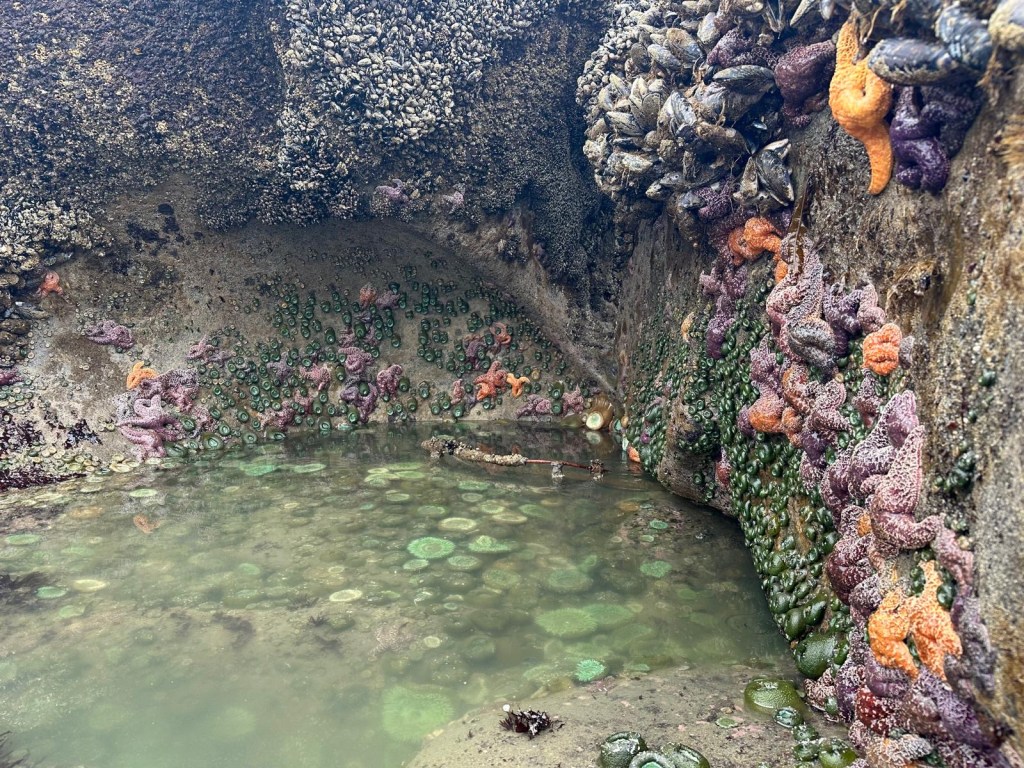
Today pool at low tide with orange and purple starfish, mussels and sea anemone
Ruby beach here at low tide. I saw a bear picking its way along the drift wood along the edge of the beach and woods. Didn’t linger to watch it as I was walking both dogs. The forest along the ocean is Sitka spruce, it is adapted to withstand salt water spray and acts as a buffer between other conifers and the ocean.
Here is a picture of a tide pool, at low tide of course. Notice the profusion of life, orange and purple starfish, mussels, sea anemone opened up exposing their inner yellow and green color. Sea urchins and crabs are present but the latter are hard to see in this picture.
Time was catching up to us, we needed a day to get back to Seattle to return the RV, and it was important to watch the USA vs. Belgium world cup game. We split up, they drove back across the Olympic peninsula, we headed to the Elwha casino again to watch the game there with plans to ferry across to Victoria British Columbia the next morning. That will be on a later post.
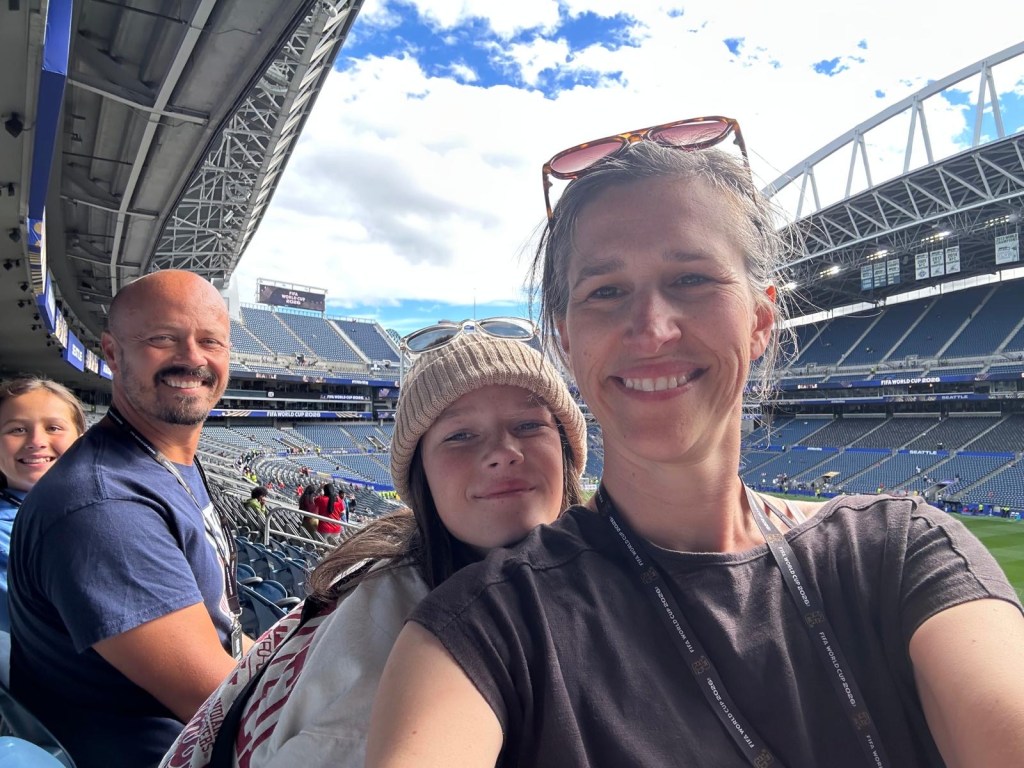
Friday 6/27/2026 was world cup day for Will, Colleen and family, Iran vs. Egypt. We started the day with a hike in Seward park. A peninsula that sticks out into Lake Washington, it has beautiful old growth forest easily accessible to south Seattle suburbs. After lunch at Rough and Tumble sports bar we went back to the house to get ready for the game. Here they are at the game, world cup selfie.
You can see they like to get there early. Soccer fans, unlike American fans, chant. The chant for Iran was – beep beep beep bee beep Iran ?!?! The chant for egypt was – beep beep beep bee beep murnch. Apparently Egyptians don’t call it Egypt, but something like murnch. The game was a tie, Egyptian fans outnumbered Iranian by two to one, lots of neutrals too.
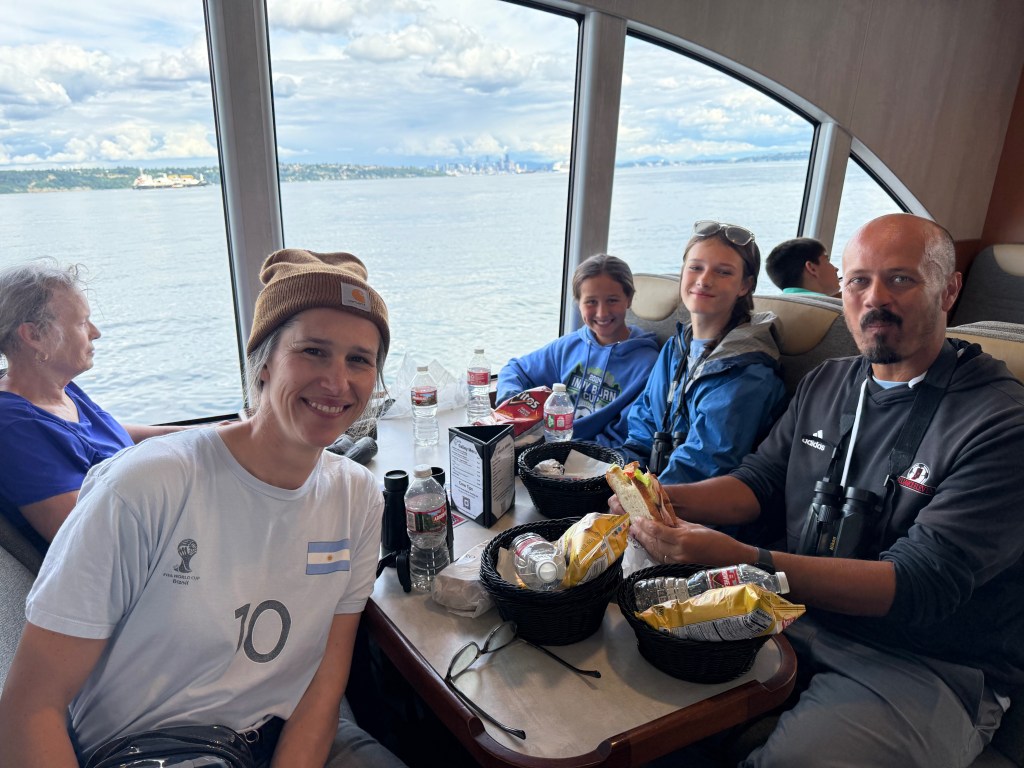
Saturday was whaling day, here we are below deck having lunch.
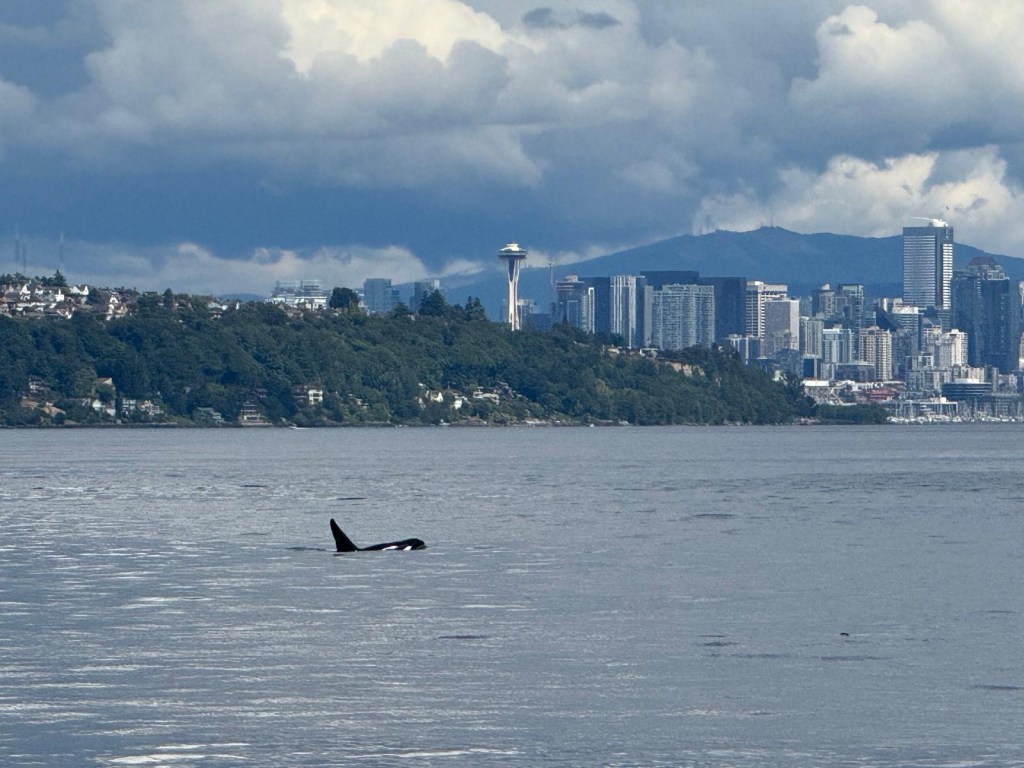
We saw two orca pods, one of 3 the other had 4, and three humpback whales. Will got this picture of an orca with the space needle in the background…..
That dorsal fin is 6 feet
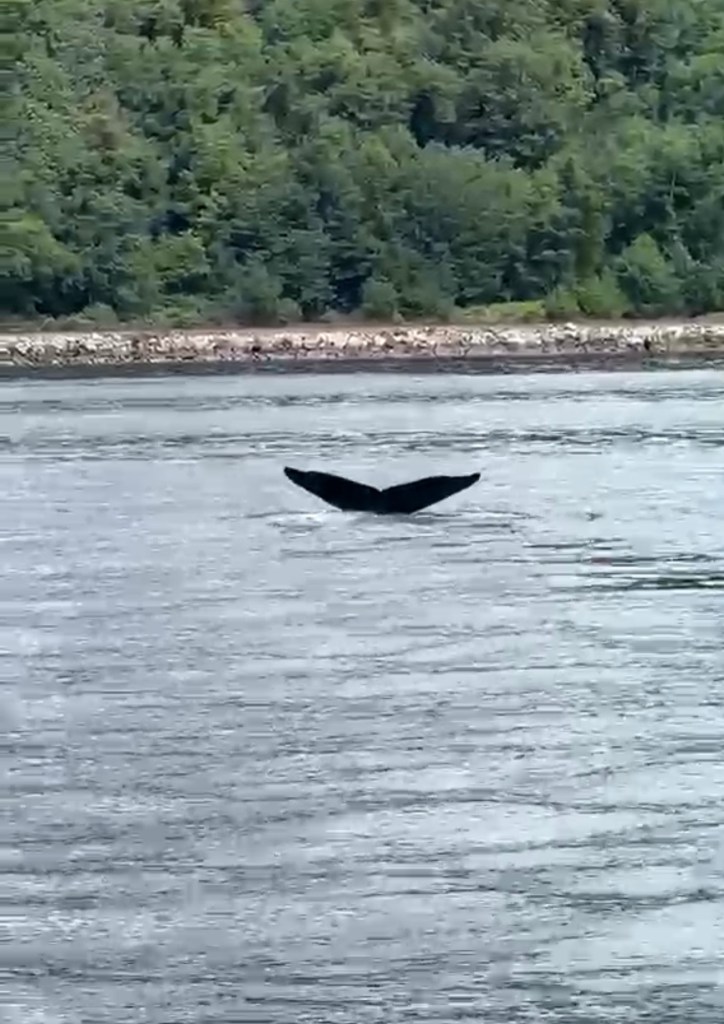
Humpback whales while larger aren’t as impressive. We never saw one breach. After spending a minute or so on the surface getting aired up, they do a dive lasting several minutes. This is what you see when they dive…..
Screenshot
We didn’t get back to the vrbo until well after 8 PM. Sunday was pack up in the morning, get the rented camper van and drive to Olympia N P via ferry from Edmunds to Kingson, Wa.
Seattle is an impressive city, warm when we got there, it turned cold the second day, what the locals call “Junuary” came in and the temps were sweaters, or more. Columbia city was a great neighborhood for a vrbo; close to the rail system and lots of restaurants and shops within easy walking distance. And while there were some “sketchy” neighborhoods, it seemed safe.
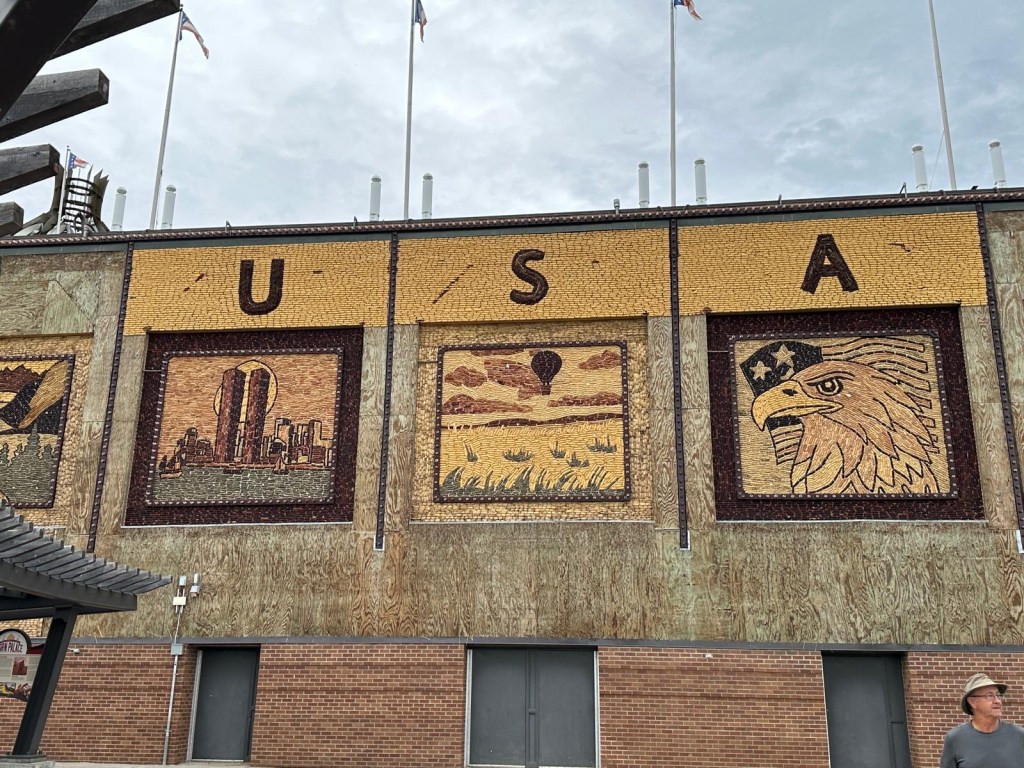
Left Bloomington Indiana 6/18 at 7:00 AM, nervous about making it to Seattle on time. Without too much difficulty we made it to Prairie River Camp, Mn., 640 miles, the first day. Day two with a stop in Mitchel, S.D. to see the corn murals, and a stop at Wall Drugs for lunch saw us go 740 miles to Painted Skull Gallery, Wy. Day three 460 miles to Missoula, Mn. included a stop at Love’s Truck Stop for a much enjoyed hot shower. Day four, 6/21 included a side trip to Flathead lake, a dog park in St Regis, MT. and ended in North Bend Christian Church in North Bend Wa., just down the road from Snoqualmi falls and easy reach of Seattle. Prairie River, Painted Skull and North Bend Christian were Harvest Host sites, Missoula was a Cracker Barrel parking lot.
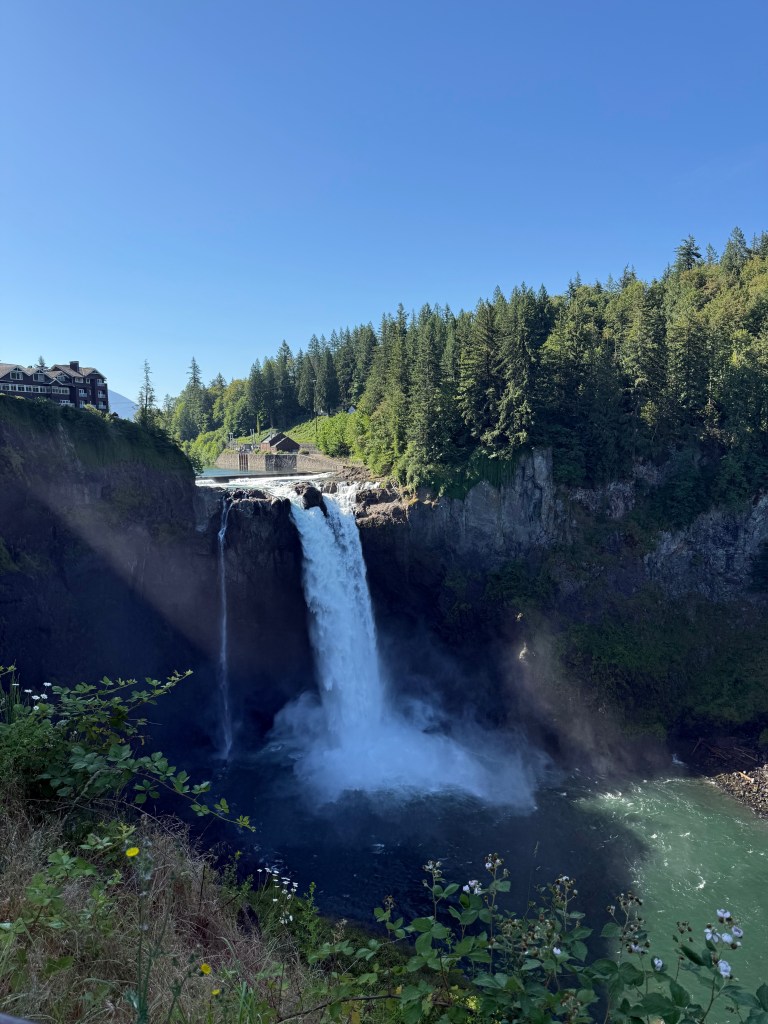
As expected corn palace murals this year had a patriotic theme, each is composed entirely of corn cobs.Snoqualmi Falls, near North Bend Wa.
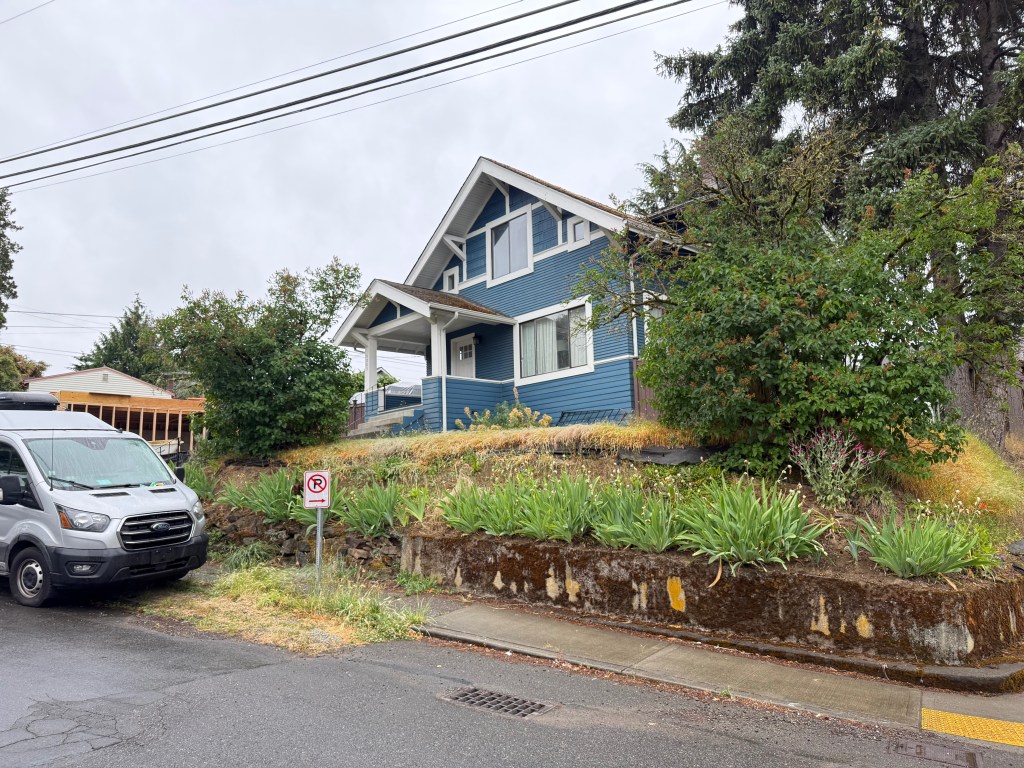
We stayed in Holiday Inn Express Monday 6/22, across from Angle Lake park, and met Will and Colleen at the airport Tuesday morning, about 9:AM. Took them to breakfast at Copperleaf Restaurant, early check in at the VRBO then Dim Sum lunch at Triumph Valley. Walked around the neighborhood, had ice cream at Molly Moon’s. In the Columbia City neighborhood, this is the house:
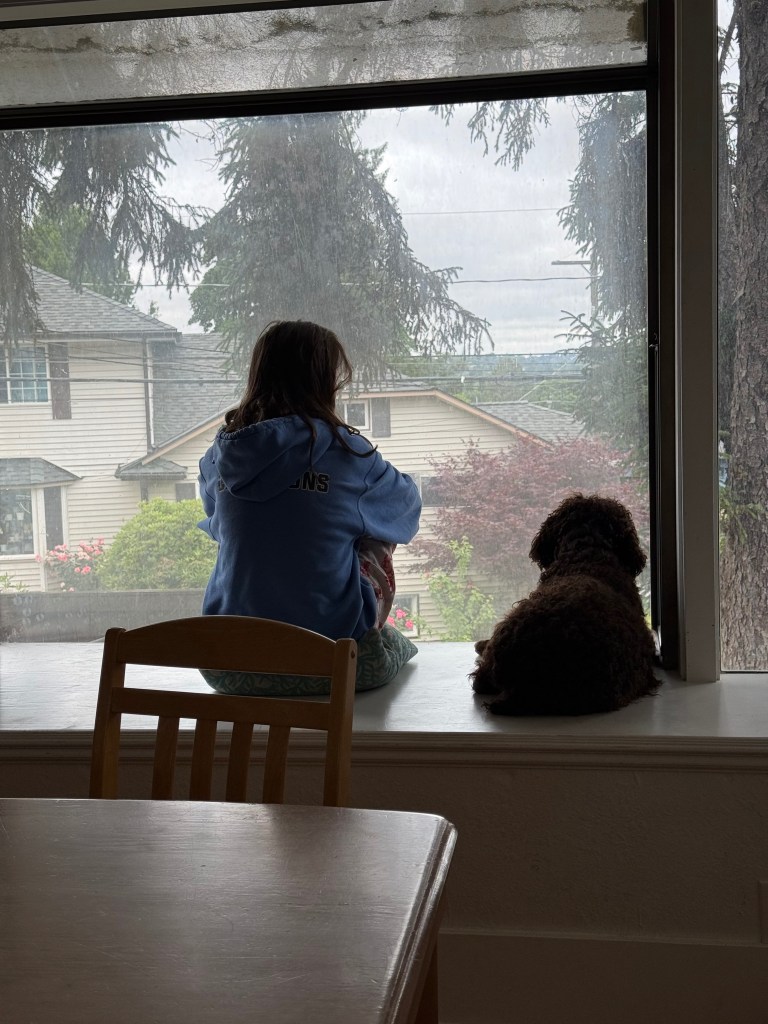
Inside the VRBO, on the lookout
Our VRBO
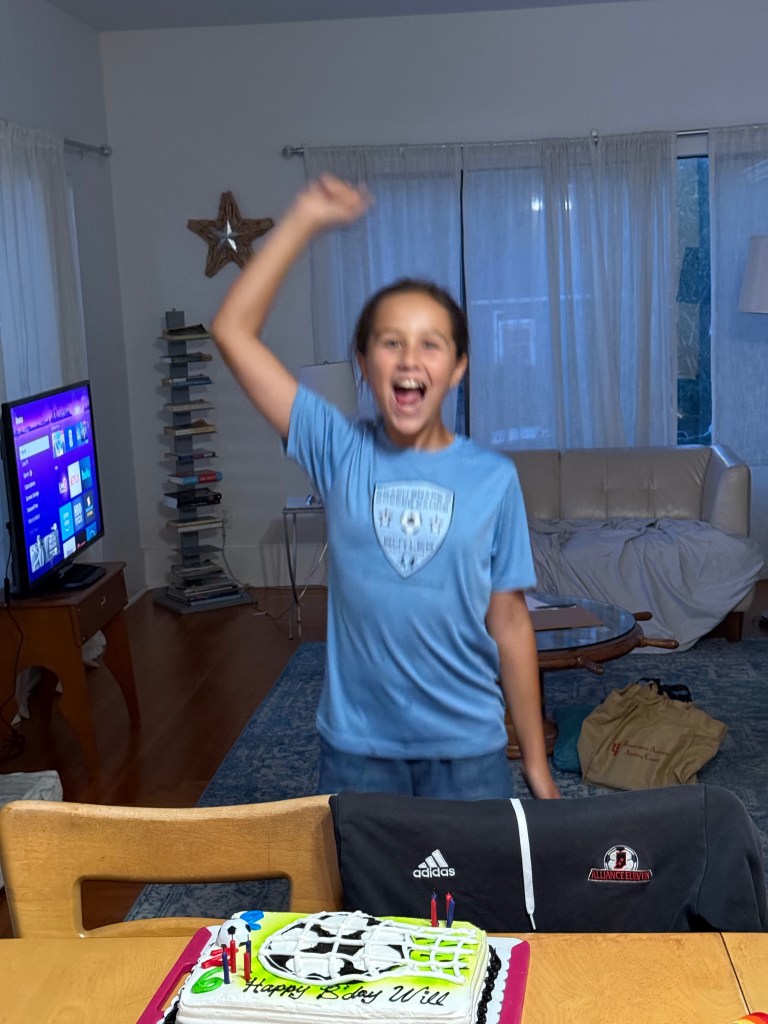
Wednesday at noon was our first world cup game, Bosnia v. Qatar, Peggy and I went with the girls. The atmosphere was different from other sporting events I have attended, lots of enthusiasm, and patriotism on display. We sat beside a couple originally from Bosnia who had an encyclopedic knowledge of the Bosnian players. He sang all the songs, participated in all the chants. Bosnia had the lion’s share of the crowd and won 3 – 1. Will and Colleen used this day to see friends who have moved to Seattle. We finished the day with a birthday party for Will. Here is AK with his cake:
Anne Kash celebrating her dad’s birthday cake.
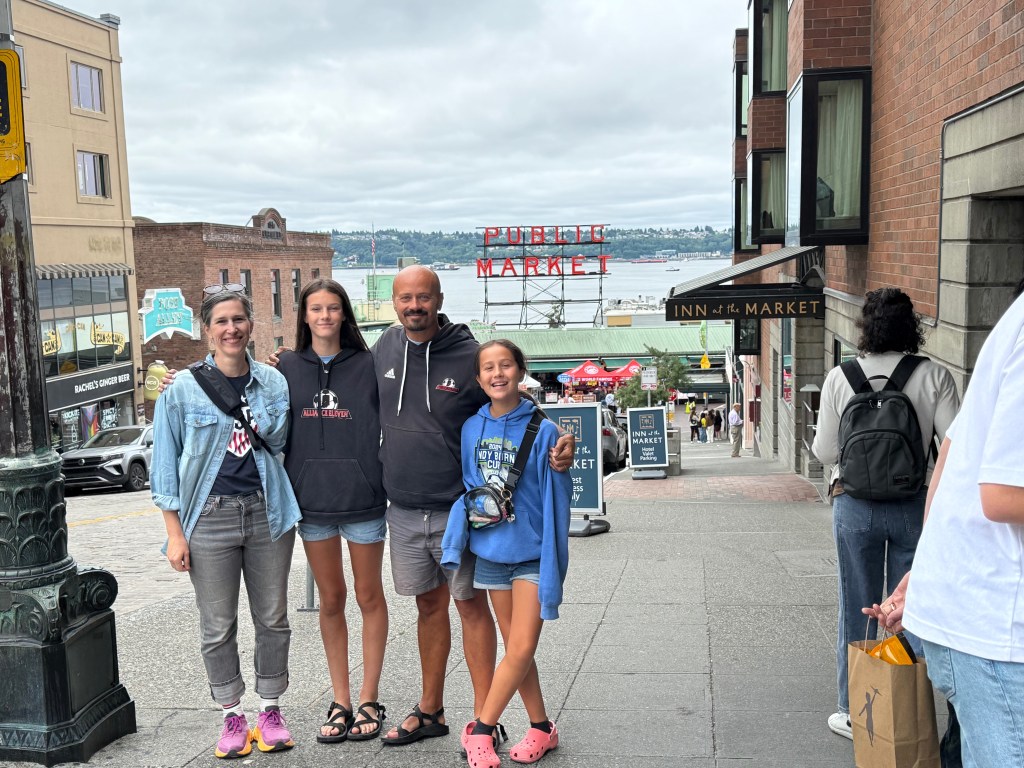
Thursday was sight seeing day. We are staying 5 blocks from a light rail stop. We took it to downtown Pike’s Place Market. Much more than just a fish market. There were local vendors of all kinds, produce, arts and crafts, and restaurants. We had a lunch of seafood at the Athenian.
Pike’s Public Market with Puget Sound in the background
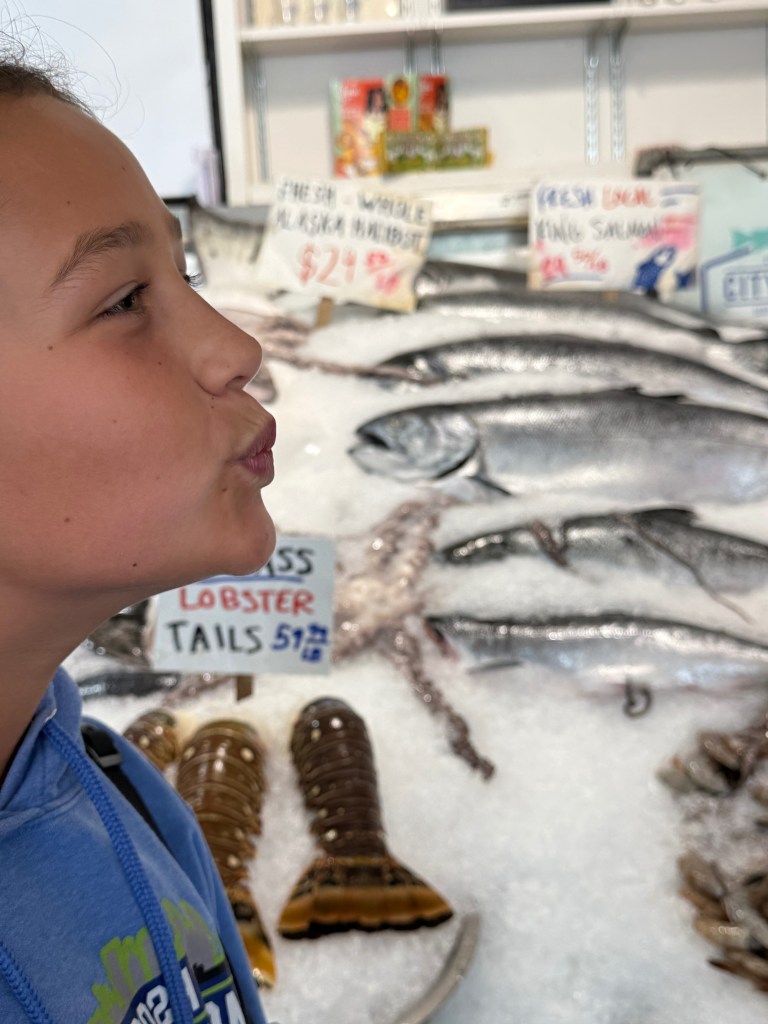
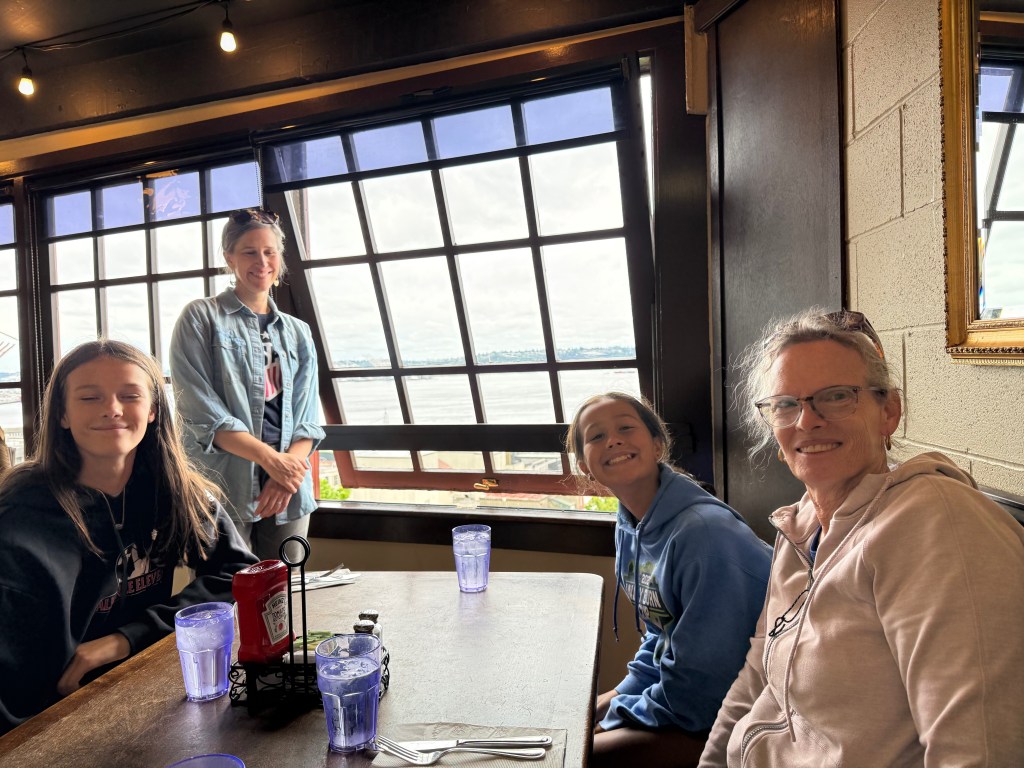
AK loves the fish marketOur table at the Athenian, overlooking Elliot Bay, of Puget Sound
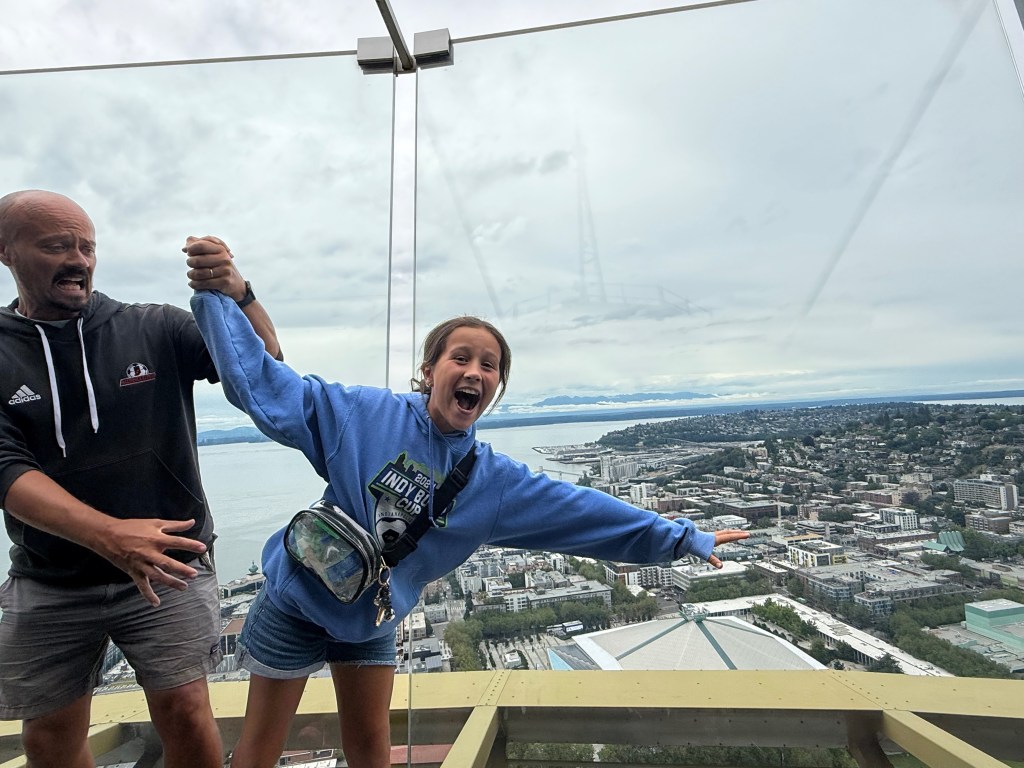
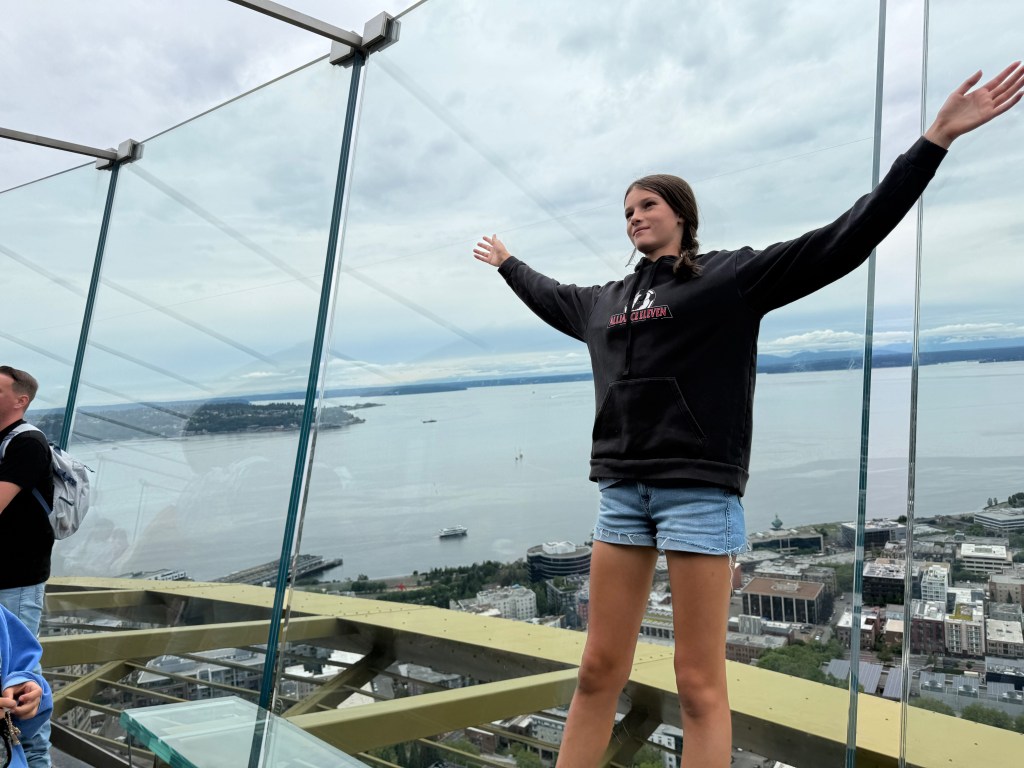
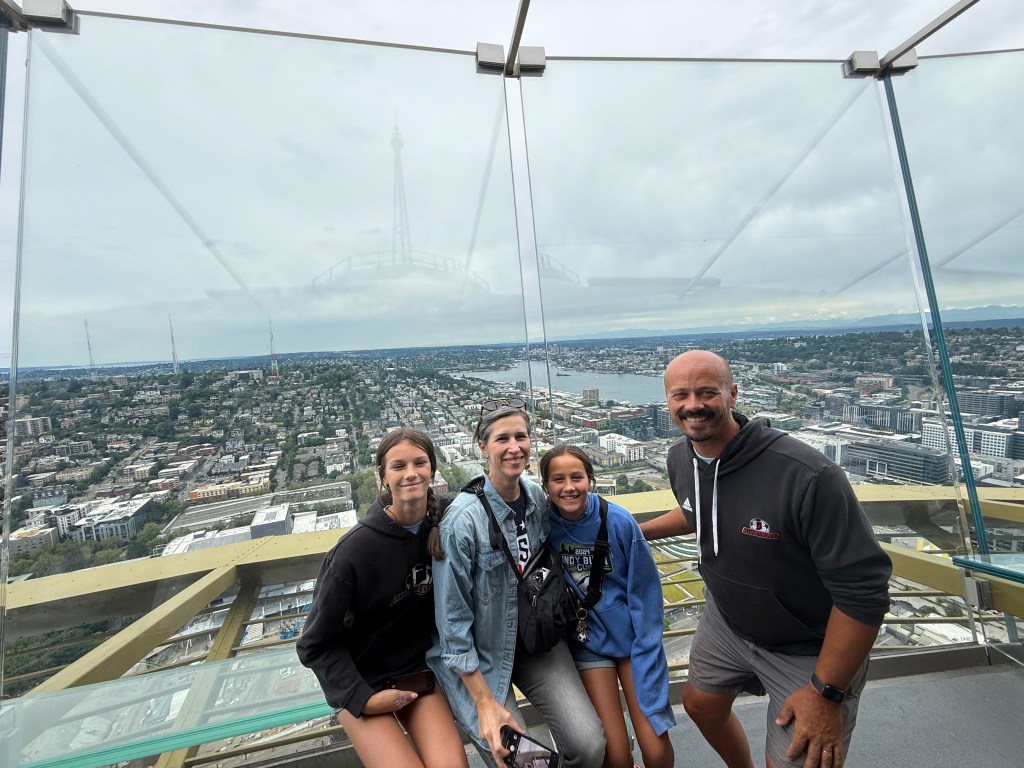
After lunch we took the monorail to the Space Needle, the monorail goes only from one of the light rail stops to the Space Needle and back. Built for a world’s fair in 1961, the all glass exterior wall leans outward creating a feeling of falling forward. The topmost floor is fixed in place and you walk around it. There is another glass enclosed, floor one level beneath the top which slowly rotates. The top floor has a cafe in the center, while the next level down has a small bar. One can sit there, sip a drink and take in a 360 view from your seat as you slowly rotate. From either of the two levels you can see the Olympic Mountains to the southwest, the Cascades to the northeast and southeast is Mt. Ranier.
Fearless Noel
Cascade mountains seen faintly in the background
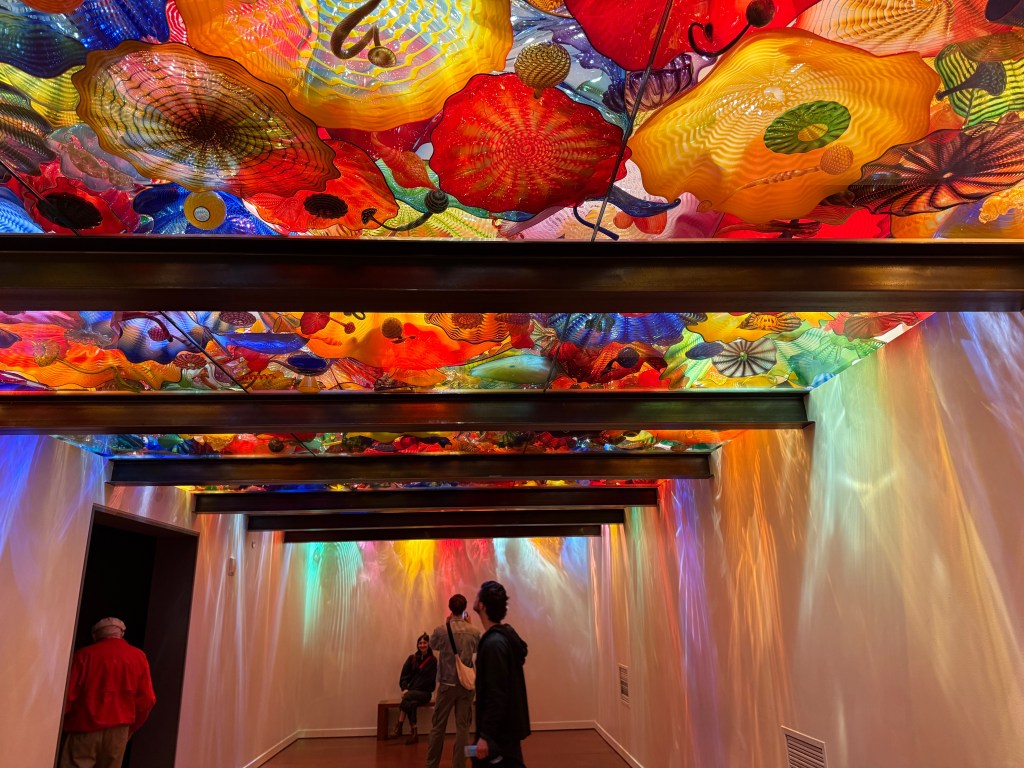
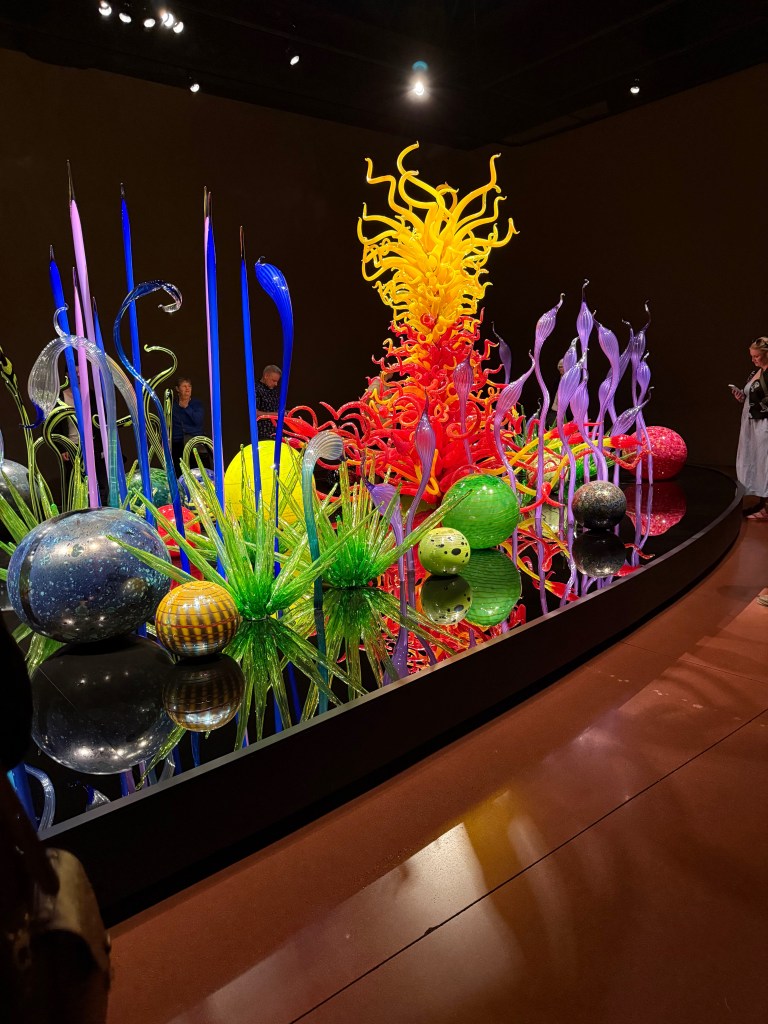
After the Space Needle Peggy and I went to Chihuly Garden and Art Museum, which is beside the Needle. Chihuly worked in blown glass, and was well known when in his late 30’s he suffered two accidents a few years apart. They left him blind in his left eye, and a dislocated shoulder, while repaired, was still too weak to hold the glass blowing pipe. From then on he used a team of glass blowers to create works he designed. Here is “Persian Ceiling” and ?, no name:
Persian Ceiling
After the Chihuly we came back to relieve the dogs, Will and co. went to see the Queen Anne neighborhood. When they returned we finished the day with a picnic on the lawn next to a farmer’s market where a man with a Karaoke machine entertained the crowd and us. Friday 6/26 is world cup day for Will, Colleen and the girls, Egypt vs Iran.
The Peru government began regulating entry to MP about 6 years ago, so now 1). you must have a guide, 2). your entry is timed so that the number of people present at any one time is limited and 3). your time inside is limited to 2 hrs, theoretically, and the guide is responsible for keeping track, and 4). you must keep to the route assigned to you on your ticket. We had 2 tickets, one for route 1 and one for route 3 but both allowed entry at 10AM. The guides are somewhat lax about enforcing the two hour limit.
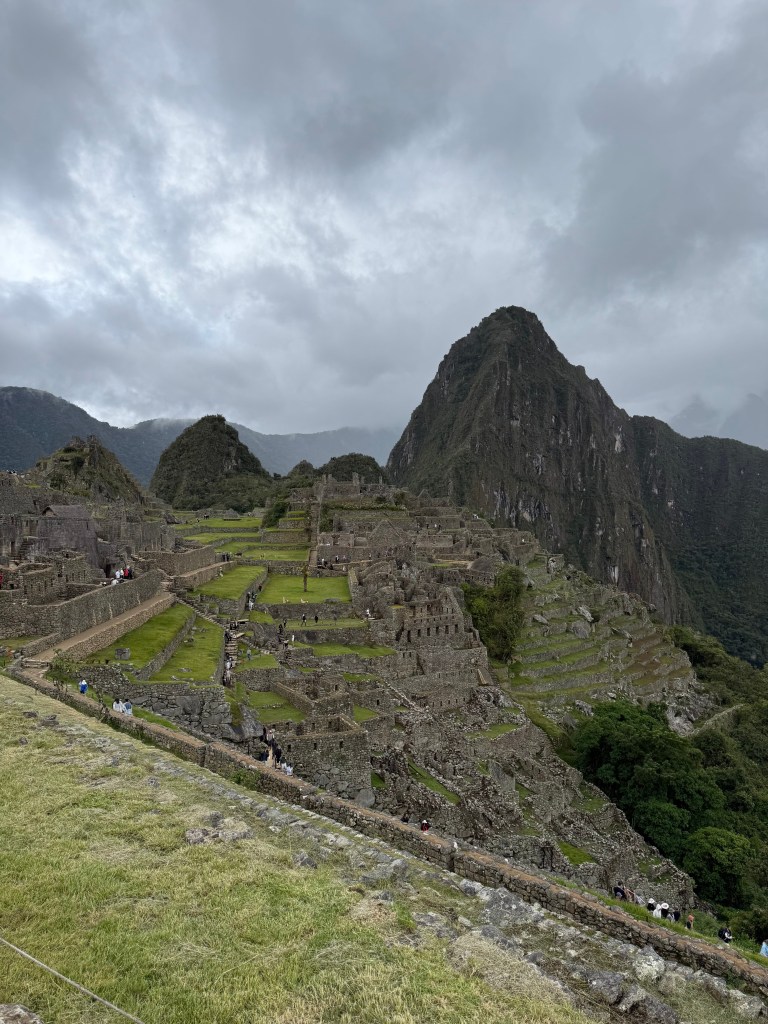
The site is spectacular, both the views and the history.
Hyaena Picchu juts up above the “lost” cityresidential area
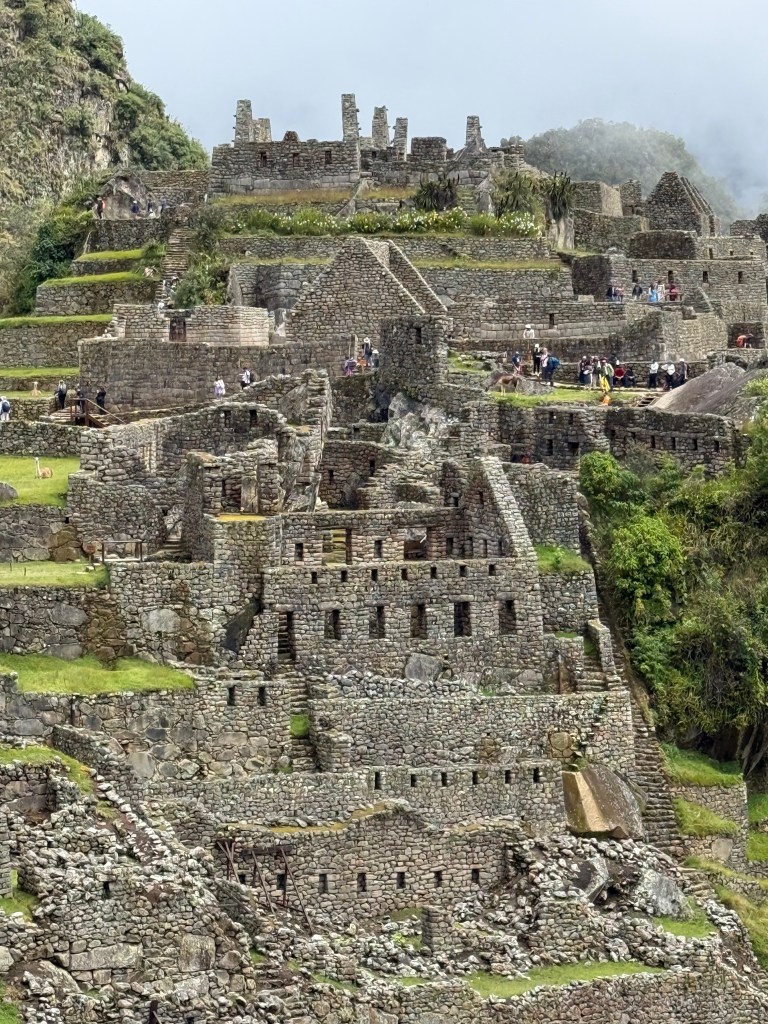
According to our guide, archeologists say construction started in late 1400’s and the site was abandoned by the Inca in early 1500’s. It was actually occupied for only about 30 years with never more than 700 people living there. All of that is hard to believe. The amount of work to create this would have been enormous. Consider that these stones were created by hammer and chisels, before the iron age, so hammers crafted out of stone, chisels made of copper?, or stone. And the terraces you see in these pictures are just part of what they created. More terraces are covered by the jungle at the bottom of the hill, they haven’t been exposed by clearing away the vegetation. The terraces were to stabilize the hillside and to provide agricultural space.All the buildings would have had thatched roofs.
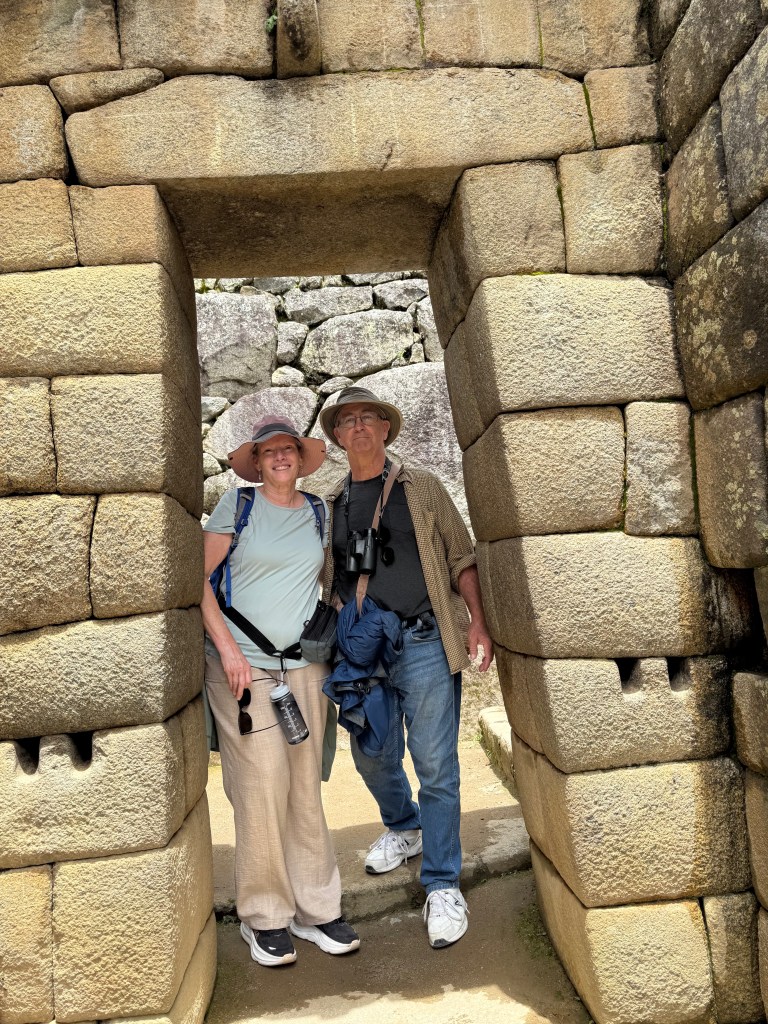
Most stones are roughly fitted together and the spaces between filled with mortar made from clay, sand and ashes but the upper classes, kings and priests, lived in extremely well fitted, smooth stone structures like this one. Notice the pair of holes chiseled into the stones on each side and a loop sticking out above the door. These are where ropes were used to hold a door in place. This was the entrance to one of the temples.
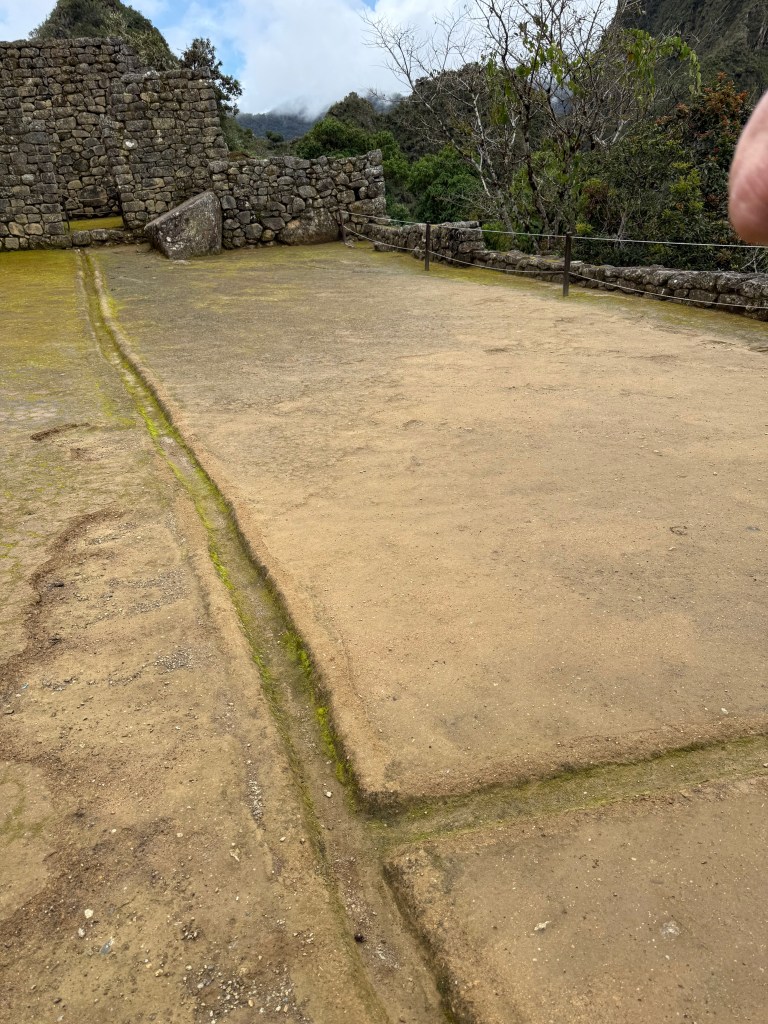
These channels were carved/chiseled into the
stone in order to channel running water through out the village.
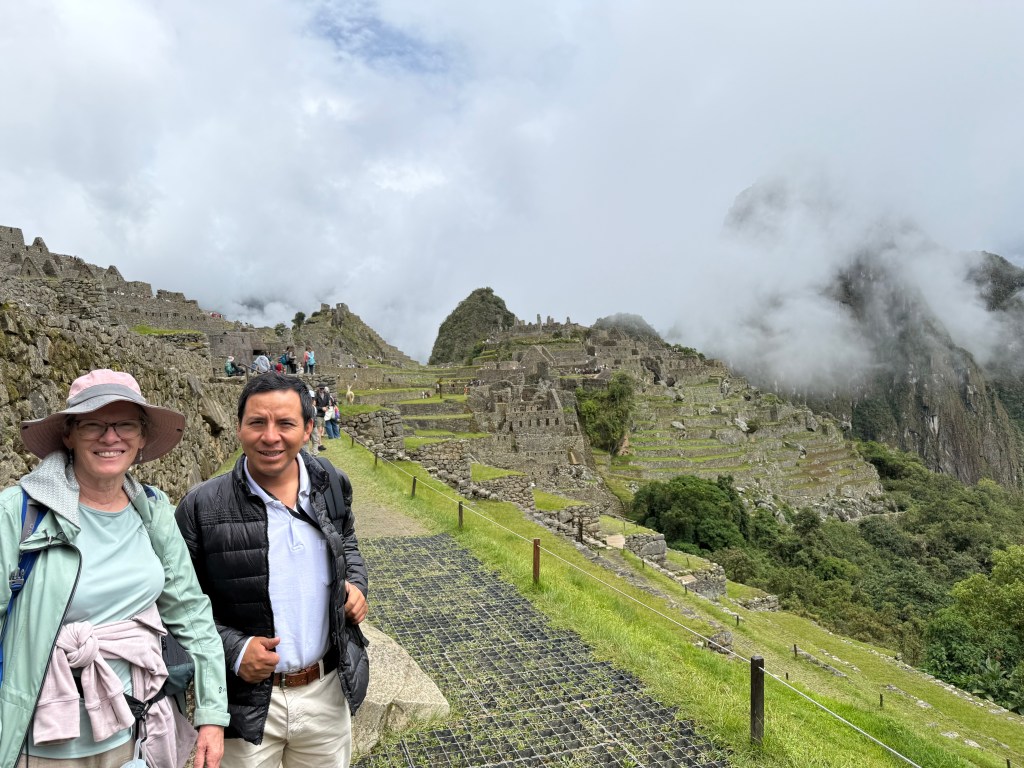
This is Peggy with our guide Hugo. We stayed from 10AM to 1 PM, all on route 3 which crisscrosses with route 2. We could have done route 1, we had a ticket, but we were tired and had seen 90%.
We watched hummingbirds at a feeder while we had a light lunch in the restaurant of the only hotel next to MP, then the bus took us back down the mountain to Agua Caliente. When there we discovered Tripmaster had arranged for a lunch for us, after that we boarded the train back to Ollyantaytambo where a driver met us and drove us to Cuzco.
We spent that night, our last at Saska Boutique hotel. Walked around the central district and ate supper at Ofrendo. Our long day and a half of flying, Sunday 3/8, started the next morning,. We flew into Louisville and arrived home 3/9 at 1PM.
Notes on Peru: if you go, don’t even think about driving in Lima, use Uber or taxi. Their driving is insane. Also don’t expect people to know English. I think none of our Uber drivers did. Restaurants frequented by tourists will have some English speakers but most we ate at had little to none. Also, Peruvians in general couldn’t understand my broken, accented Spanish nor could they slow down their speech to accomodate me by using simpler words. Finally, Peru’s food reputation really is deserved. We didn’t have a bad meal, and the dishes we had at Ayahuasca Grill in Agua Caliente, for around $13 each, was one of the best meals I have ever had.
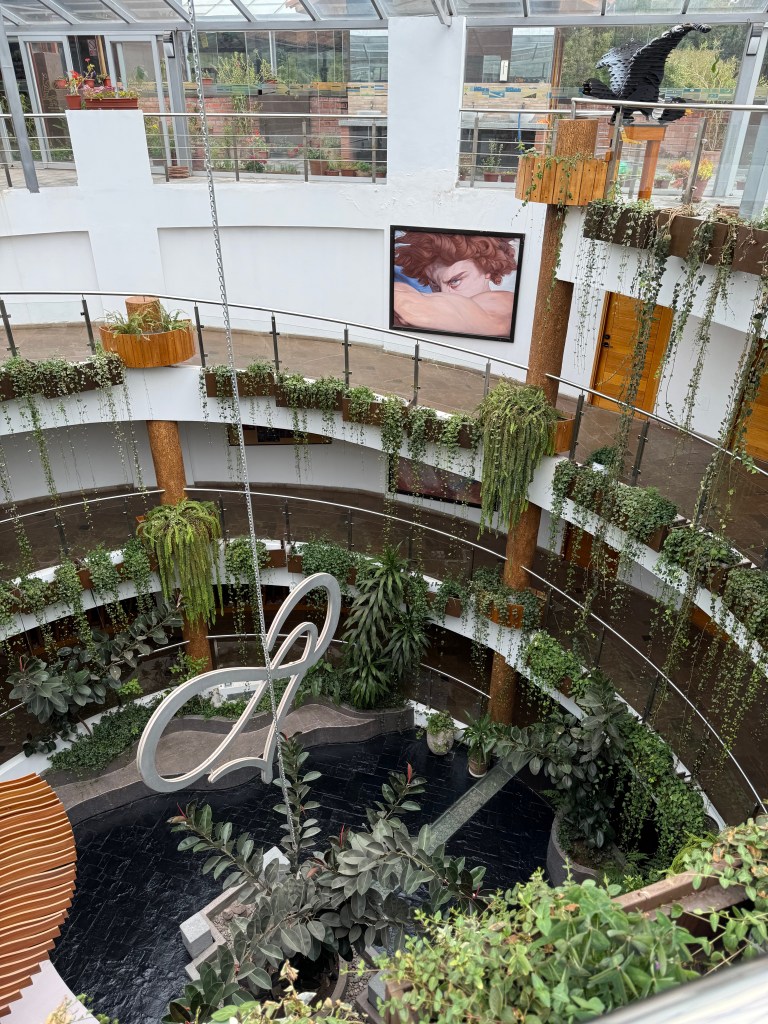
At Cusco airport we were met by a representative of Tripmaster who simply recognized us by the confused looks on our faces. He escorted us to our driver, gave us our many tickets, and departed. The drive to the Sacred Valley was 2 hrs., we arrived at Hacienda del Valle Sagrado (Sacred Valley) at 11 PM. This day started with bird watching in a wetland outside Lima, and ended several hundred miles away in the Sacred Valley. The hotel was an immaculate, interesting hotel, with almost no guests. Here’s a picture of the inside, looking down toward the lobby from our room:
Hacienda Valle del Sagrado lobby from above
The next day, Thursday we had breakfast, walked around, swam in the pool and decided to take a taxi to Ollantaytambo, about a 15 minute drive, a quaint Inca pueblo with ruins on the hills above the town.
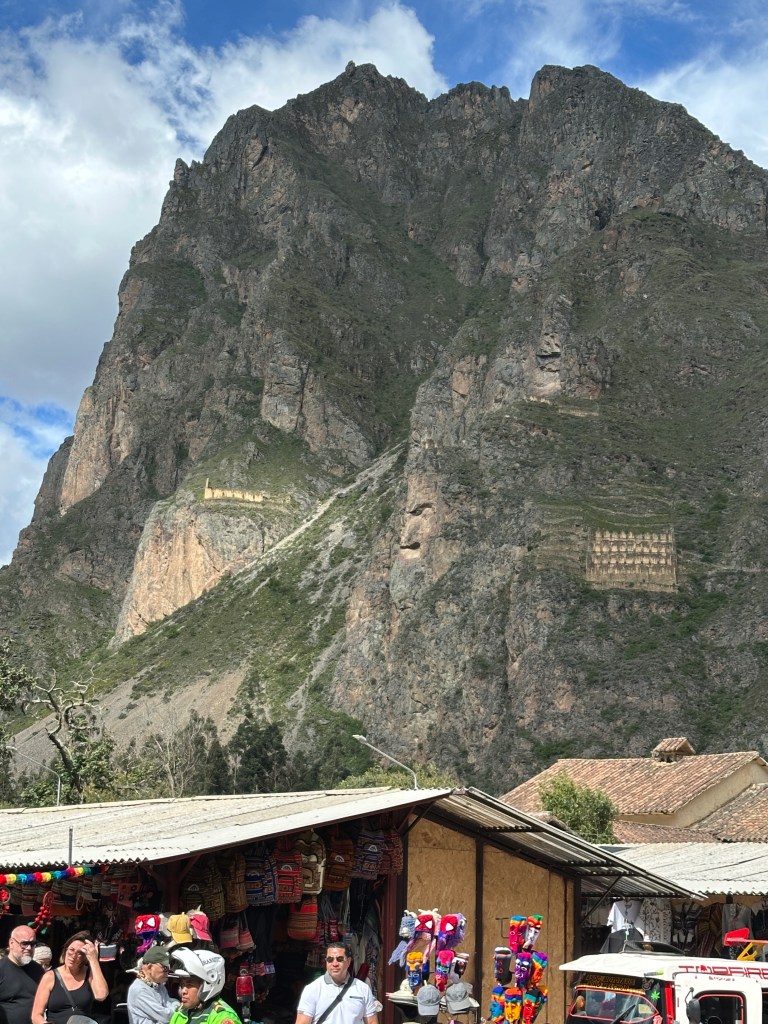
Grain storage buildings on the mountain side
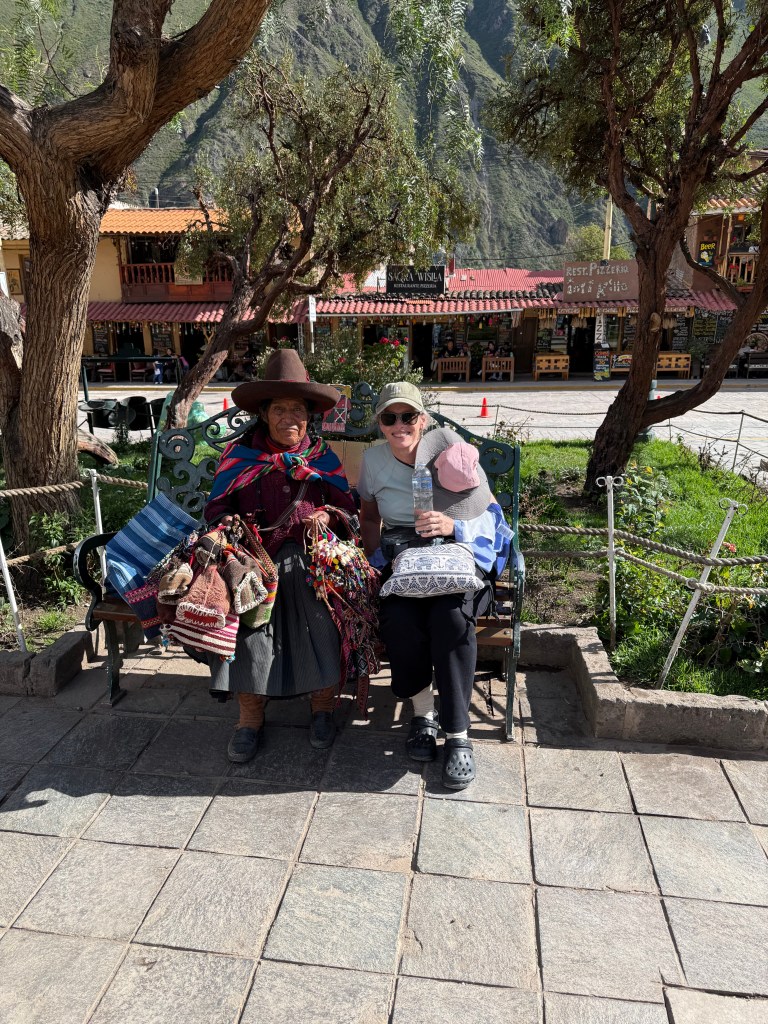
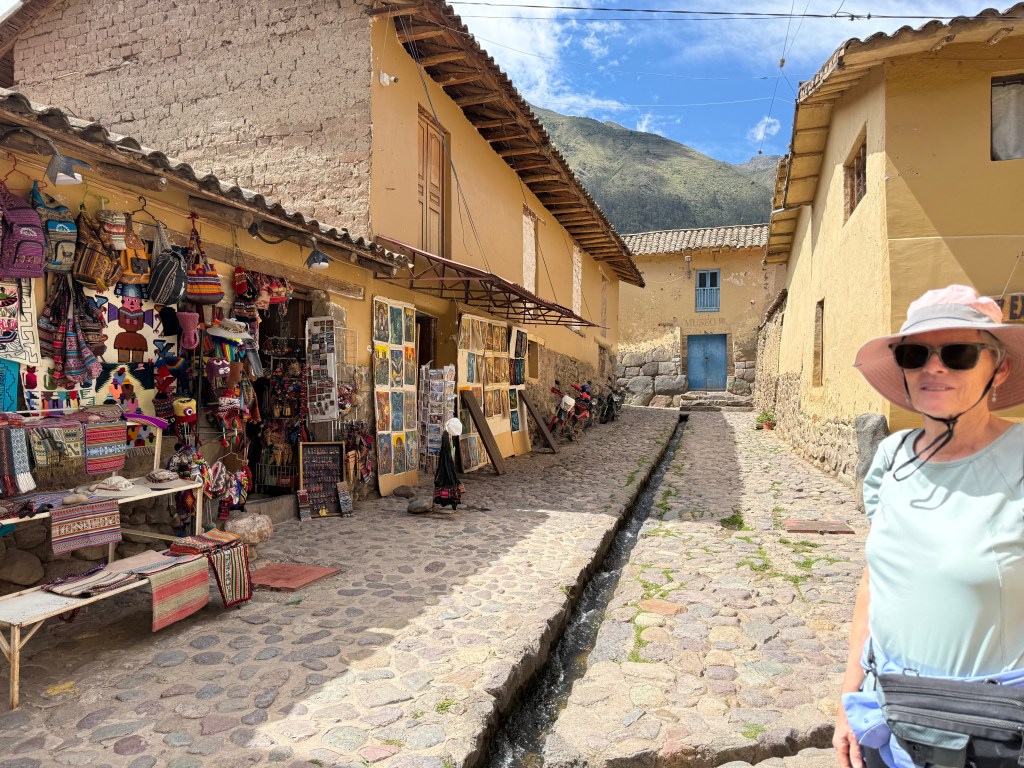
Peggy in the central plaza with her friendChannels with water run through most Inca villages
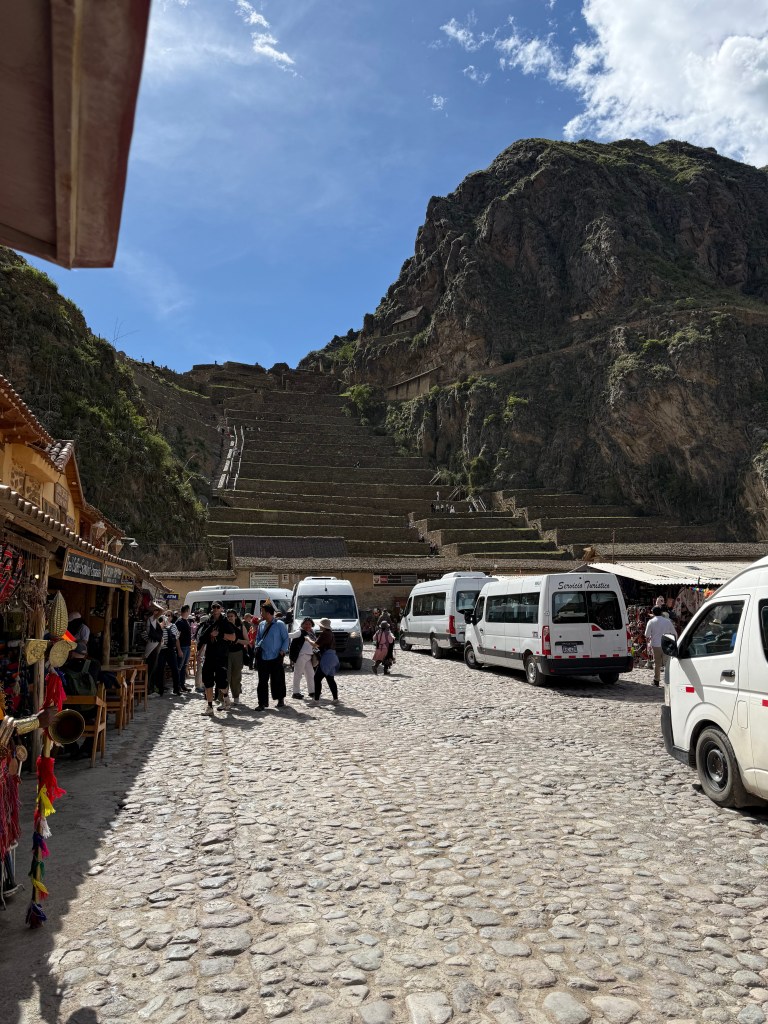
The Incans had a penchant for building terraces
Where we had lunch
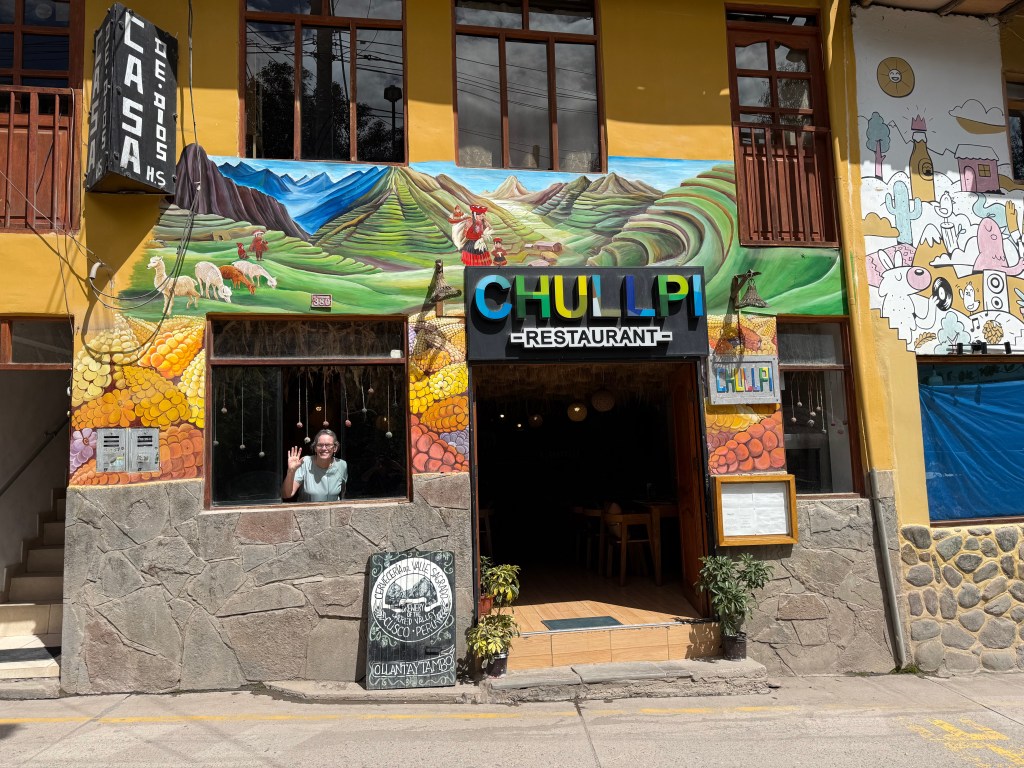
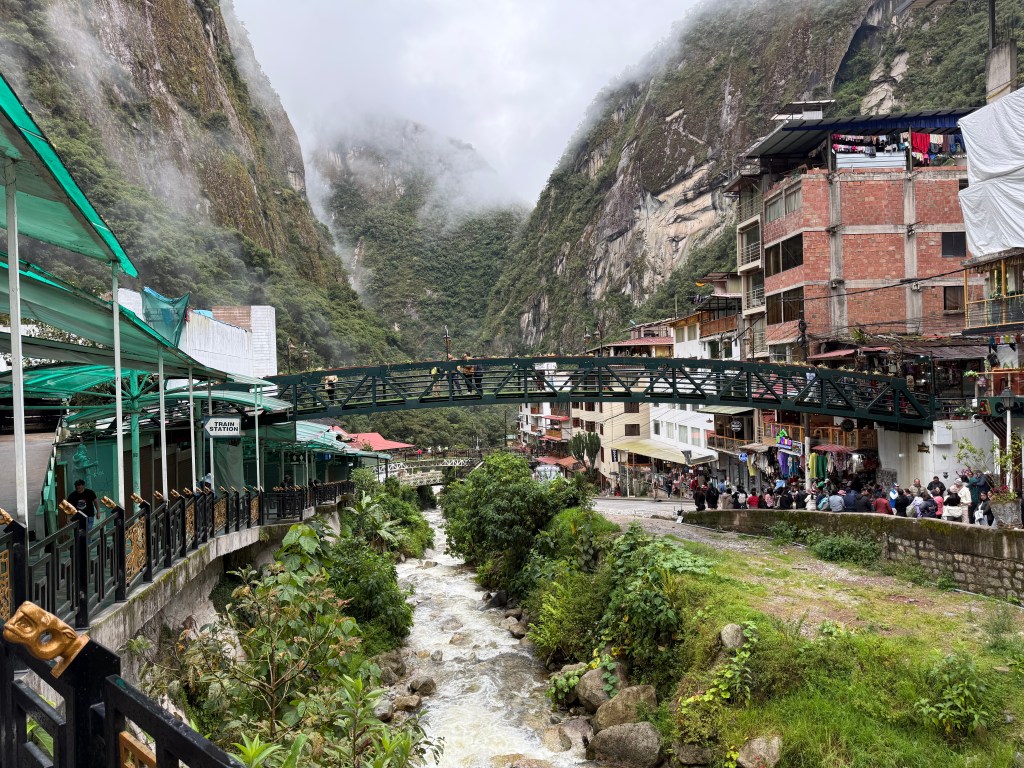
We went back to the hotel, that evening had supper, we were the only people in the restaurant, and went to bed early as our train to Agua Caliente, the embarkation point for Machu Picchu, was to leave at 5:15. We packed over night bags, tagged them to go to our hotel in Cusco on Saturday. A driver showed up as we were told one would, we got to the train station tickets and passports in hand about 5:45, boarded and set out for Agua Caliente. You can’t drive to Agua Caliente, it’s either train or a four day hike on the Inca trail. We chose the train. Our guide for the day was there to meet us as we got off the train, he walked us to our hotel, Taypikala, where we killed about an hour bird watching and resting in the lobby (our Macchu Picchu tickets were for 10AM). He came back and took us to the bus to Maccu Picchu, a 25 minute switchback drive up a steep mountain. We needed round trip tickets for the train, round trip tickets for the bus, and tickets to enter Macchu Picchu. Tripmaster provided all those and had someone to meet us at each critical spot, and a box breakfast for us on the train to Macchu Picchu. The bus left to go up the mountain around 9:30, we started our tour at 10:15. Here is a pic to give a flavor of Agua Caliente, no cars, but lots of people, hostels, stores and restaurants.
The town of Agua Caliente on both sides of this stream,. It enters into the Urubamba river at the mountain straight ahead.
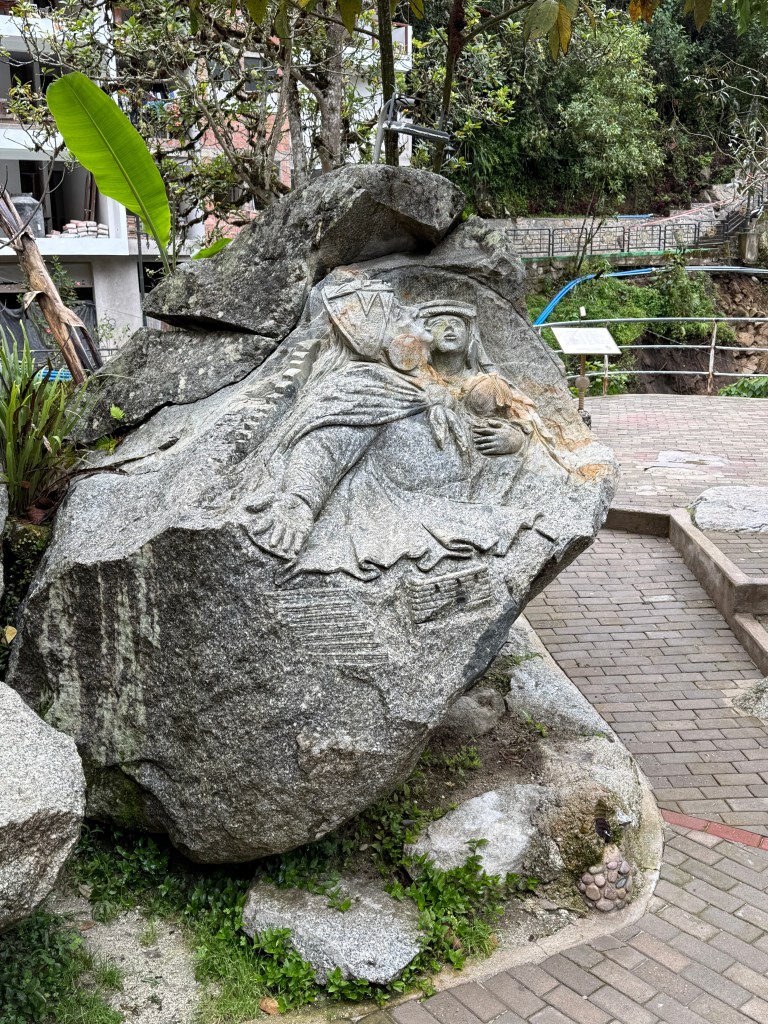
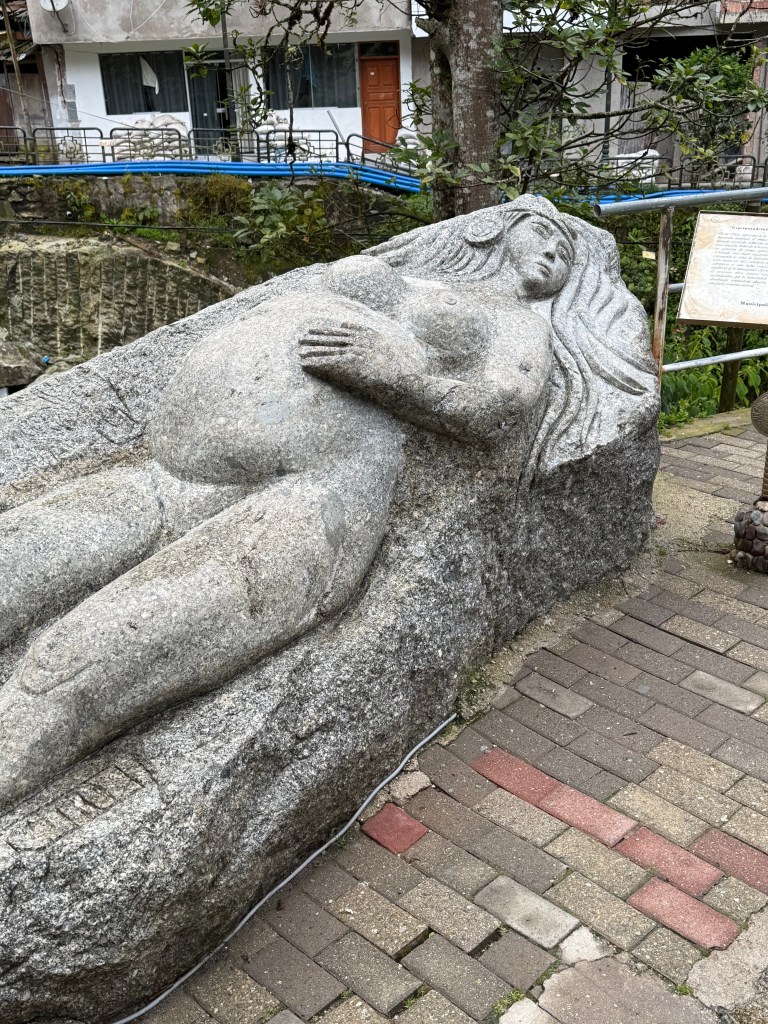
Large stones at the small plaza at the base of our hotel were left in place and carved. On the left is earth mother giving birth to ?, mankind?. On the right is an Incan boy, ? her offspring?
There is a hot spring not far upstream feeding into this. We didn’t have time to walk there. Macchu Picchu next post.
Uber Fails: Getting to Lima was a chore. We had trouble scheduling connecting flights so had to stay the night in Miami on 3/1, check in 11 PM, leave 5 hrs later. The Uber we scheduled before going to bed was a no show, but we realized it quickly and had one there to get us only 20 minutes later. We breezed through the Miami airport and were on our way. We waited about an hour in a long immigration line in Bogota only to find it was the wrong line. We found the correct line and still made our connection to Lima with time to spare. But going from the Lima airport exit to get the Uber we called for was an experience. At the end of the cross walk which you must take leaving the airport are a dozen or more nice cars with Uber signs on them, and dozens of well dressed young men with Uber logo shirts accosting you to get in one of these cars. Something didn’t seem right about it. Well for one, none of them was the person we called. These well dressed professional looking men insisted they were Uber but were closer to the airport than the official Uber pick up station. I was about to throw in the towel when Peggy saw a slovenly, unfriendly guy walking towards us. He was our real Uber driver. I asked him about all the young men we were walking away from, he matter of factly said “Oh, they are the illegal Ubers”. This was late Monday afternoon 3/2. We got to Holiday Inn Miraflores around 6:30, and ate a block away at Rasto’s where I had my first authentic Peruvian Lomo Saltado.
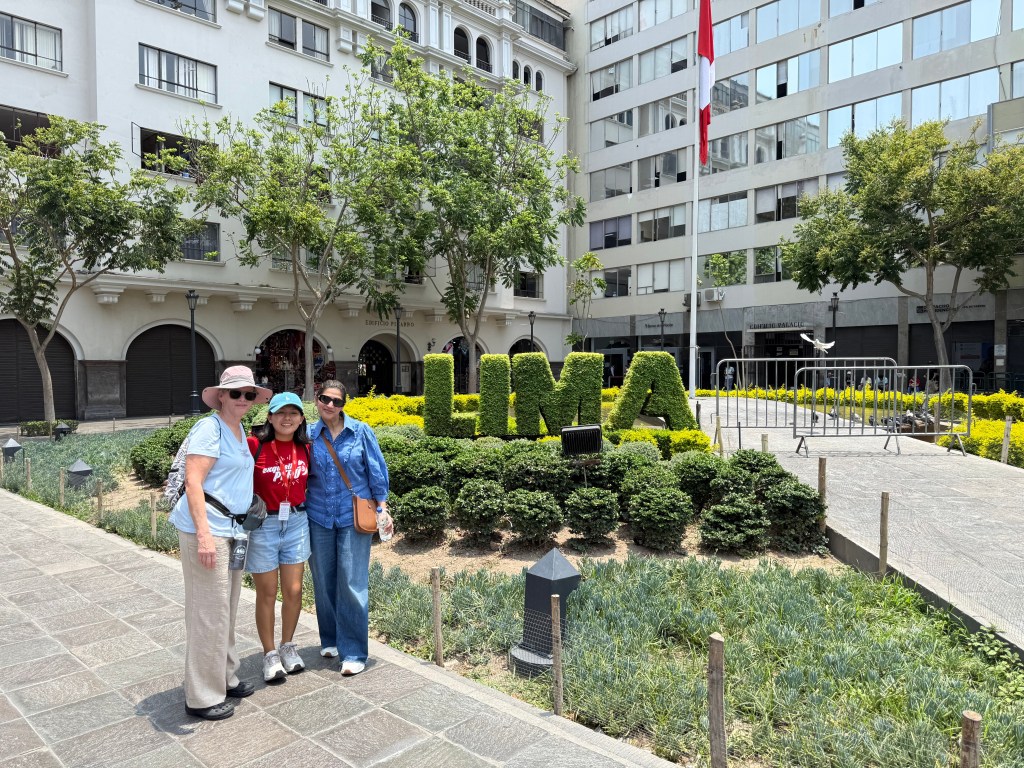
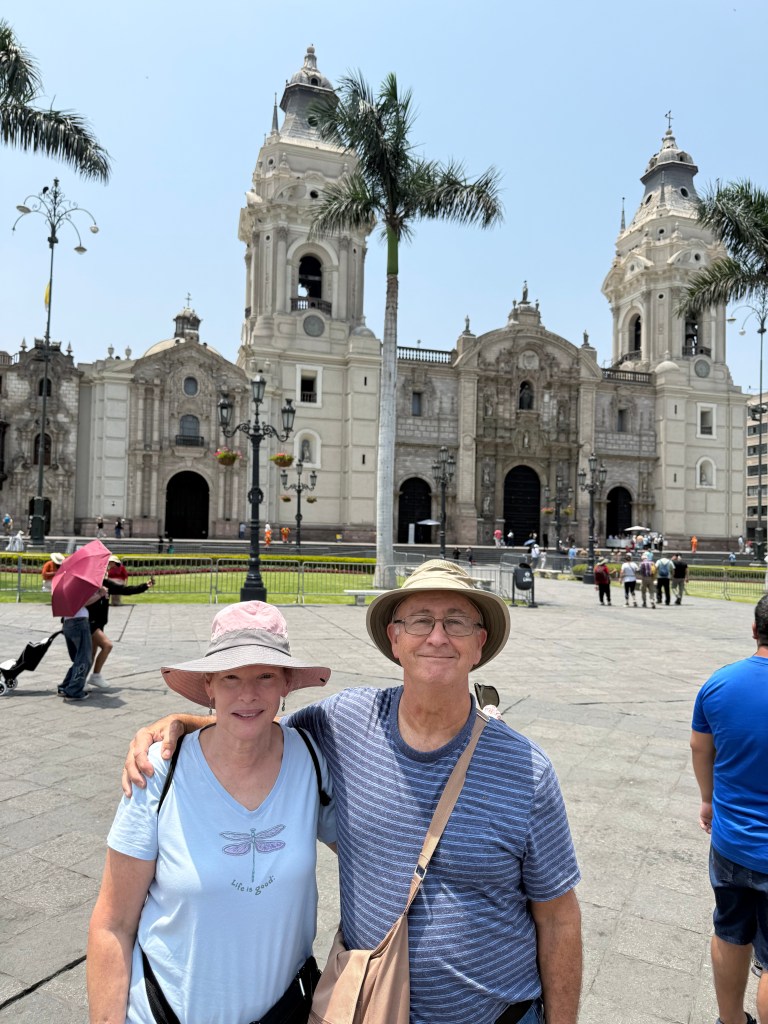
Lima: Tuesday 3/3 was a half day city tour in the morning. Here we are at the Basilica de Lima, left, and outside the municipal building with our guide Aura, right.
Our guide Aura, ethnic Chinese. Lima has a very large chinatown. Ayesha, our friend for the day is in the picture as well
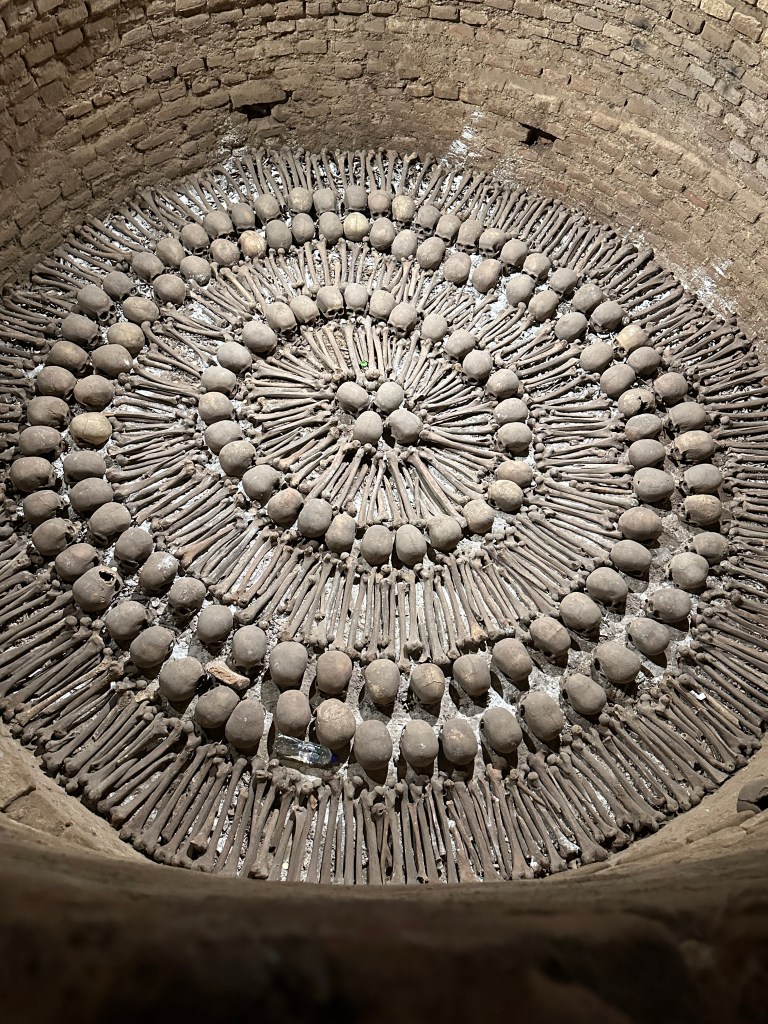
Much of this tour was walking through the San Francisco Church, Monastery and catacombs. Hundreds, maybe thousands, of skulls stacked in the catacombs under the church. For about 2 centuries, mid-1,500’s to about 1,800 it was the only consecrated burial grounds so everyone got put there. The smell of decomposing bodies got so bad a new governor of the province designated a new burial ground made “kosher” by the catholic church ending the practice of entombing bodies under the church.
Skulls and long bones excavated from the catacombs under the church
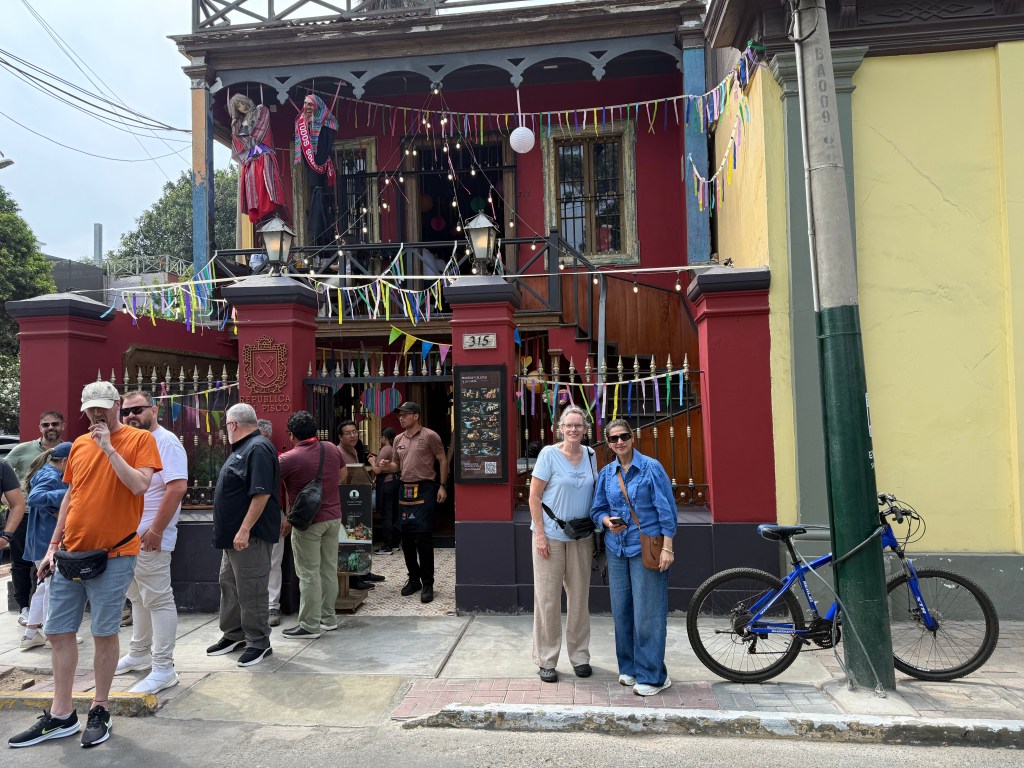
The tour dropped us off at Parque de Amor, Love Park. We teamed up with Ayesha, a single women on the tour (her husband was in a business meeting) and went for lunch at Republica del Pisco, seen here:
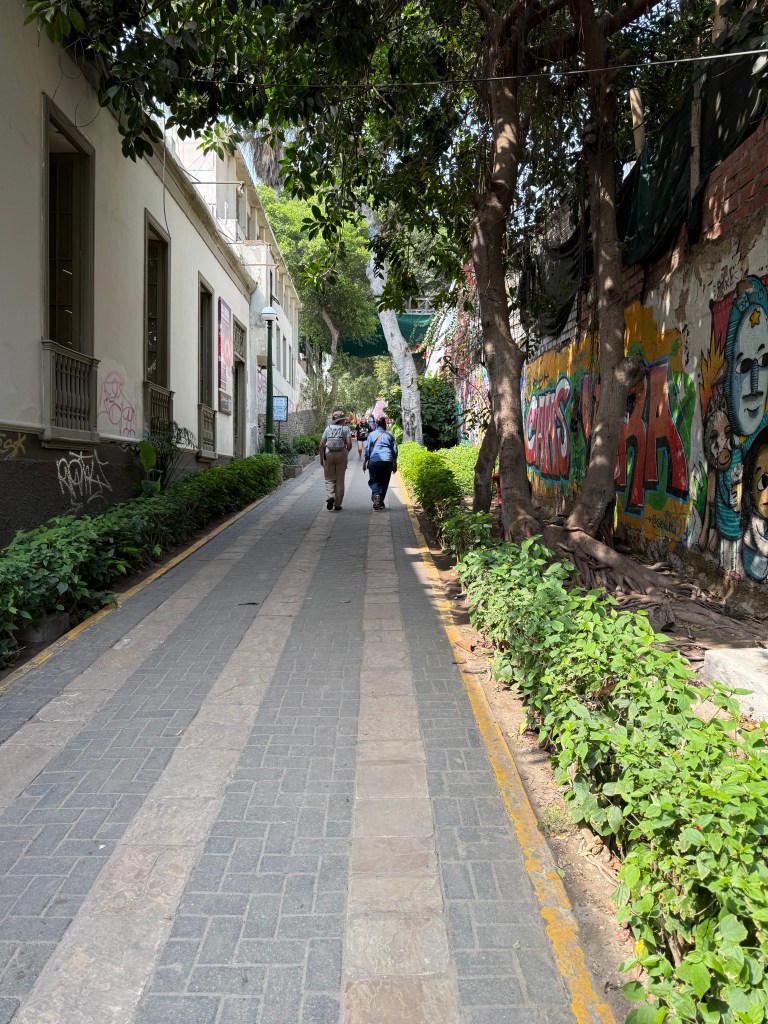
Peggy and Ayesha walking down a street in Barranca
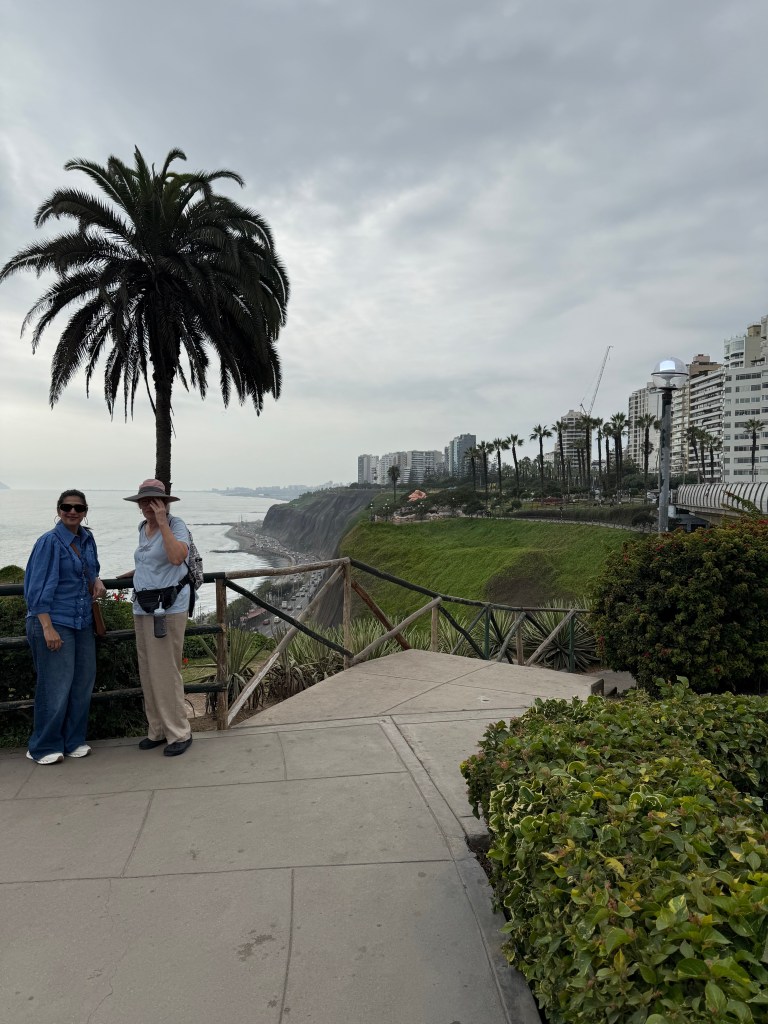
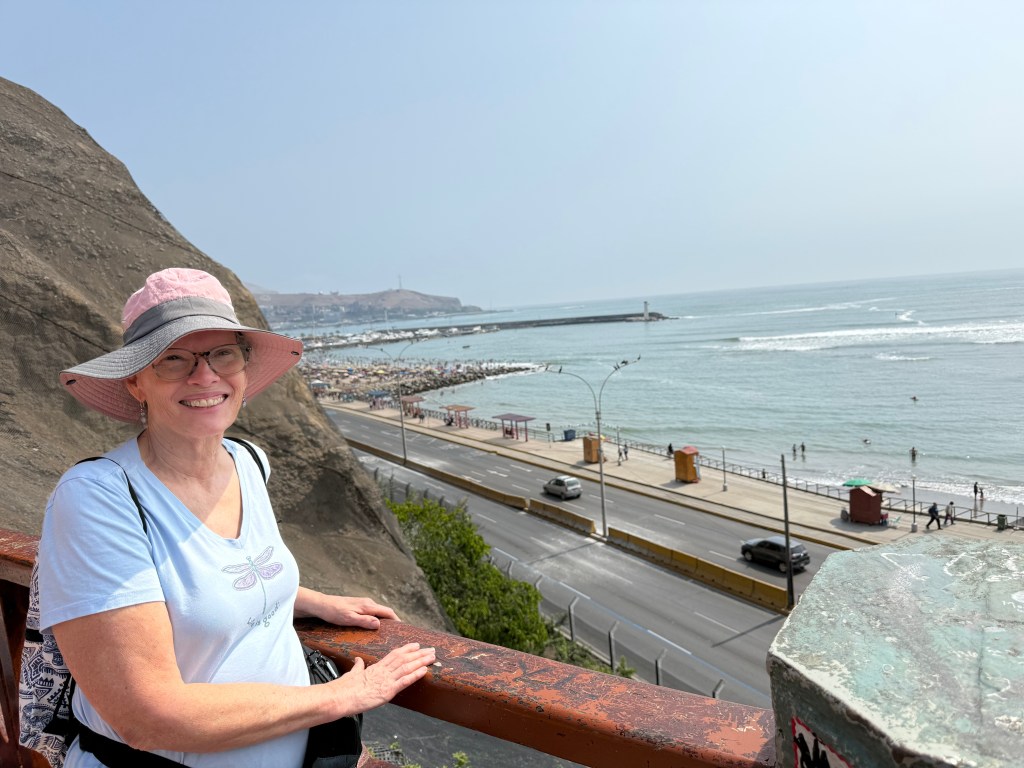
Notice the effigies hanging above. They seem to have a fascination with el muerte in Peru, no idea why. We walked around Barranca, an artsy neighborhood, then headed back to Parque de Amor. These are the views of Lima, a city of 12 million, from the cliff overlooking the ocean.
Peggy with Ayesha, Love Park in the distance
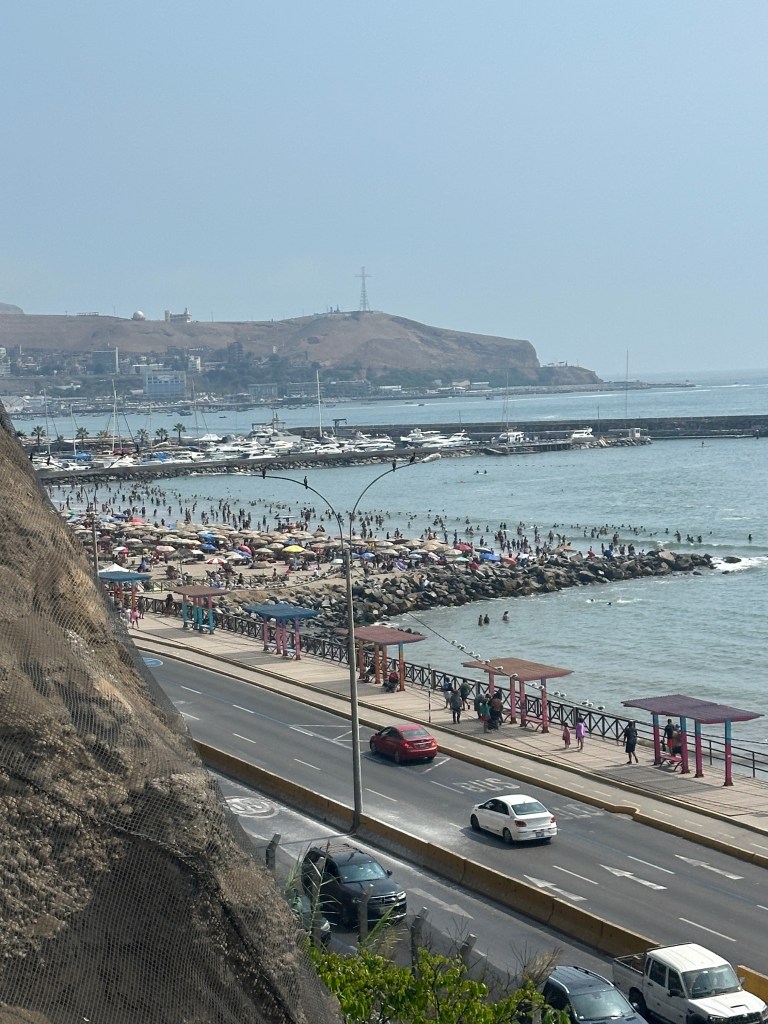
Close up of the beach seen above just to the left, the only sandy beach, very popular
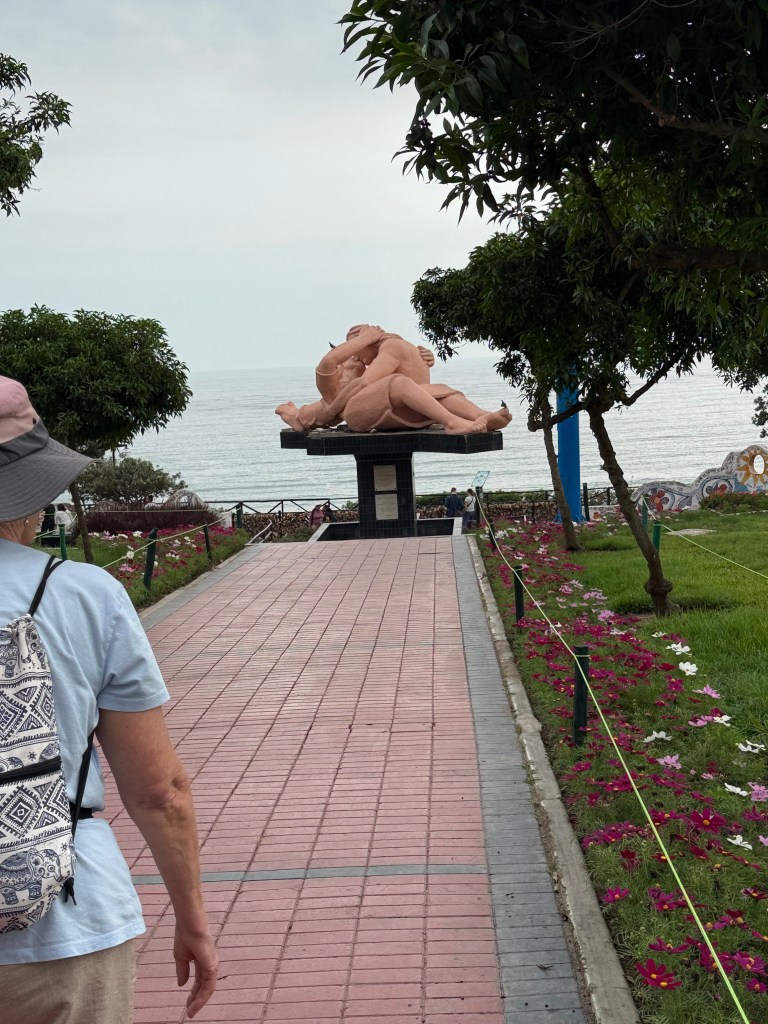
The beach is only a few yards deep and rocks, not sand but the few sandy spots are jammed with people. Here is the famous, semi-pornographic statue at Love Park:
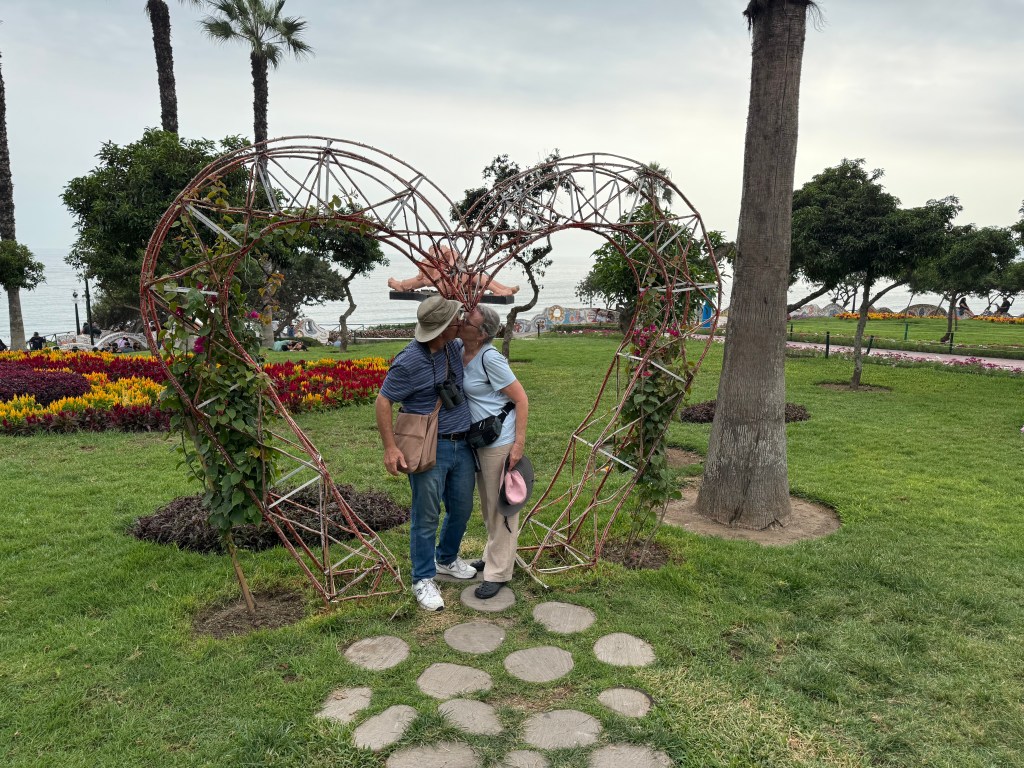
And a pic of us in the photo spot with the statue behind us.
Looking at these pictures it’s surprising to think that Lima is in a desert. It last rained 3 years ago, and the previous rain was 11 year before that. The city is completely unprepared for rain. There are no storm sewers to take rain water away, all roofs are flat. Fresh water is not in short supply however, rivers from the Andes provide enough water.
We ate at Rincon Shami that night, a place an Evansville acquaintance of mine who is originally from Lima recommended. It’s not a place we would have ever picked ourselves but was very good. We ate at a sidewalk table and an SUV slammed into a bollard about 10 feet away from us providing a little excitement.
We went bird watching at a wetland just south of Lima on Wednesday 3/4, Refugio los Pantanos. No pictures, we saw 35 species, 17 life birds for me.Went back to town around 2 PM, ate at el Parquetito along Kennedy park, a two block urban park renamed for JFK several years ago. I saw two life birds there, Cordilleran Parakeets and a Southern Beardless Tyranulet. We got our luggage from the hotel and headed to the airport for Cuzco. Got to the airport in plenty of time even though our Uber driver was pulled over by the police, reason ???, we never knew.
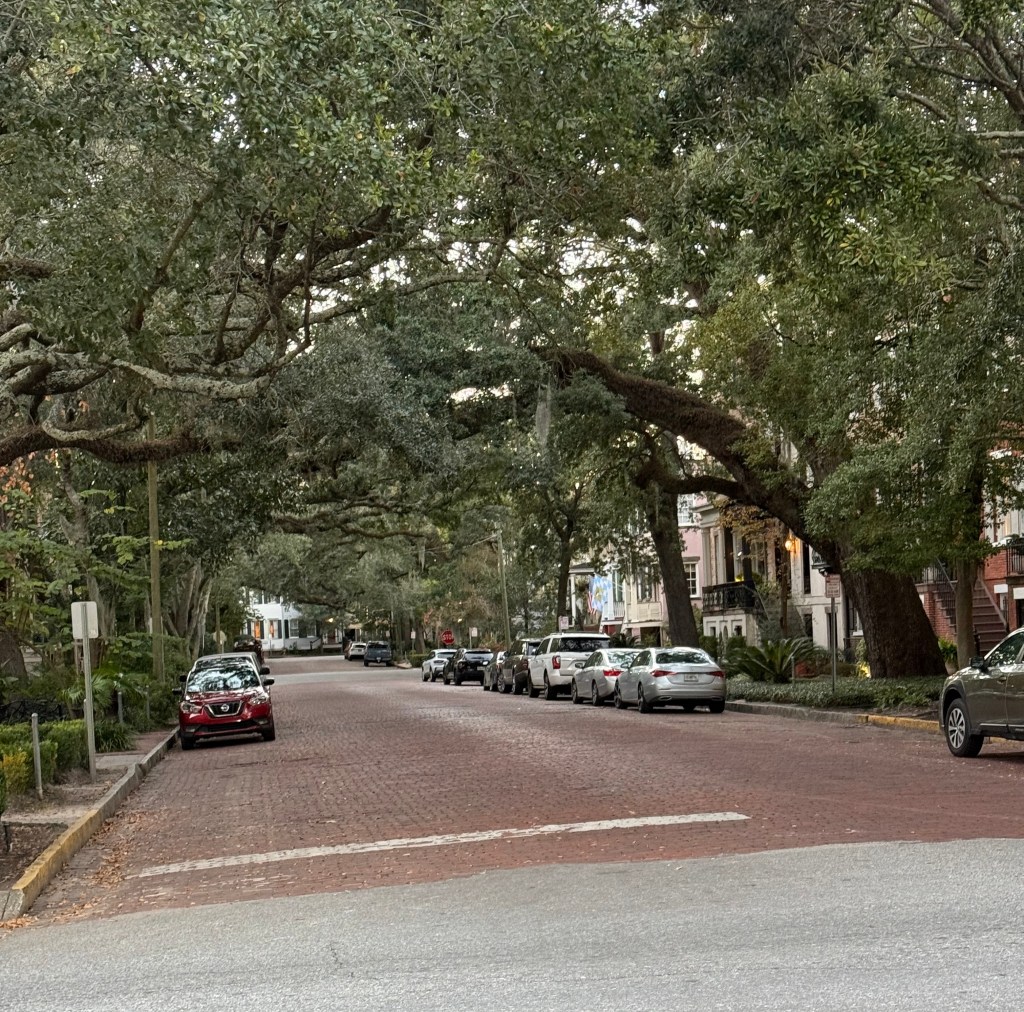
…a beautiful city, the second busiest port on the east coast, well worth a visit. Savannah is a success story. Thirty years ago it was run down, dirty and plagued by crime. Things slowly began to change. No one I spoke to seemed to know the exact reason but probably control of crime played a big role, the coming of SCAD (Savannah College of Arts and Design from its beginning in the ’70’s to 16,000 students now), some hit movies and historic preservation and tourism all combined to start the snow ball rolling down the hill leading to an avalanche of improvements. Today Savannah rivals Charleston for beauty, southern culture and tourism. Pretty much any random street in Savannah looks like this:
Live oaks, their tendency to horizontal spread creating an archway over the street complete with an adornment of Spanish moss.
We left home Sunday 11/2 at noon, made it to Dalton, Ga. From there to Skidaway State Park at 4:00 PM Monday. This is our campsite:
After checking in and setting up we took a 2 mile hike on a trail that went through slightly elevated woodlots alternating with boardwalk through salt/brackish water marshes. Tuesday was our Savannah day. It started with a tour on the Old Town Trolley:
Trolley seen passing the Basilica of St John the Baptist
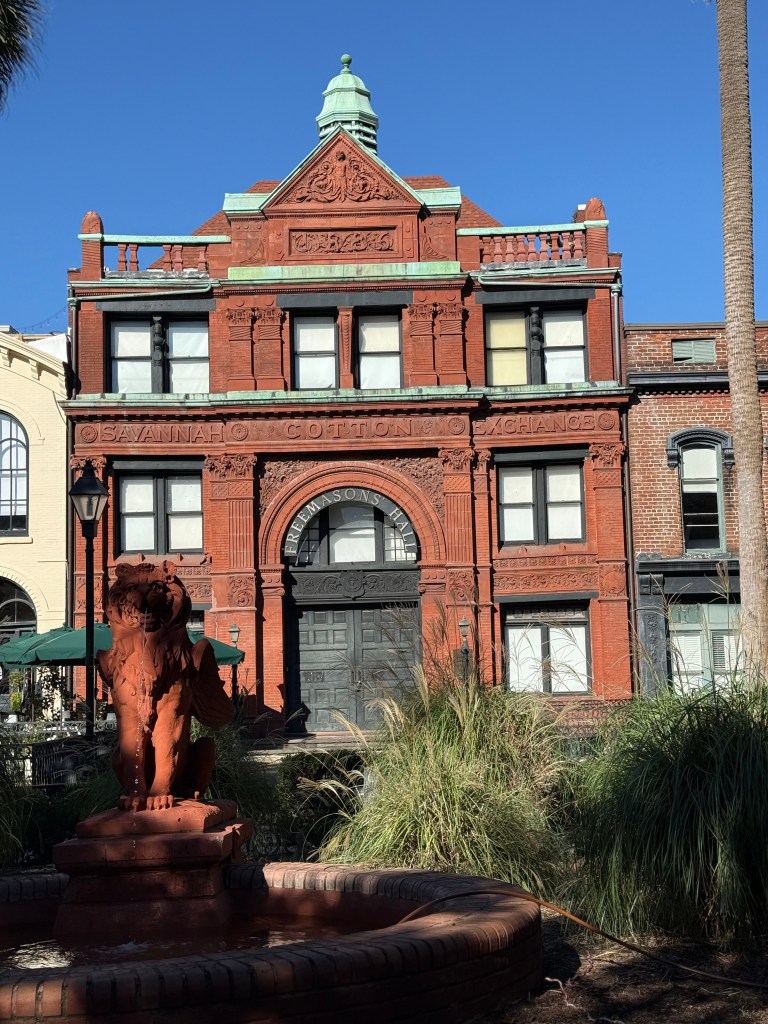
The quality of the 1 1/2 hr. trolley tour depends greatly on the quality of the driver/guide. Ours, Big E as he calls himself, was wonderful. Funny and informative, we were lucky to get him. Since the trolleys are hop-on-hop-off, Peggy took a different one back and experienced another driver/guide. The guide can make a big difference. After the trolley tour we walked along River Street, had lunch at “Two Cracked Eggs”, then walked down Bull Street where Savannah history is on full display. Here pictured below is the center of southern commerce in the first half of the 19th century. This building on River Street was where nearly half of the world’s cotton was bought and sold.
The Savannah Cotton Exchange
From there we took a pleasant walk down Bull Street to a little beyond Forsyth Park, total about 2 miles. The restored historic houses are a treat to see, and there is a “park”, or public square every two or three blocks, each dedicated to an important historical figure from Savannah’s past. This synagogue pictured below, built around 1830, represents a jewish community established in the early 1700’s. Like the Jews of Newport Rhode Island the Savannah jews received a letter from George Washington but unlike the more famous RI letter in which Washington writes – the children of Abraham should enjoy “the exercise of their inherent natural rights. For happily the Government of the United States, which gives to bigotry no sanction, to persecution no assistance, requires only that they who live under its protection, should demean themselves as good citizens” – the Savannah original is lost.
picture taken from the public square opposite the synagogue, it’s hard to get a picture in Savannah without live oaks being in the way
We stopped at The Sentient Bean for coffee and tea, Savannah loves coffee houses, then Peggy took a trolley back to the car, I walked a little farther on then walked back to the car. We ate at Cary Hilliard’s, a local chain, which has eat in car or order from a car-hop and carry out.
Wednesday we went to Tybee Island, Savannah’s beach. The beach was nice enough but we aren’t beach people, and they don’t allow dogs on the beach so we skipped it. Fort Pulaski national historic site was on our plans but it was closed due to the government shut down, we forgot, wasted a drive. Finished the day with an excellent meal at Sundae’s, a Guy Fieri rec.
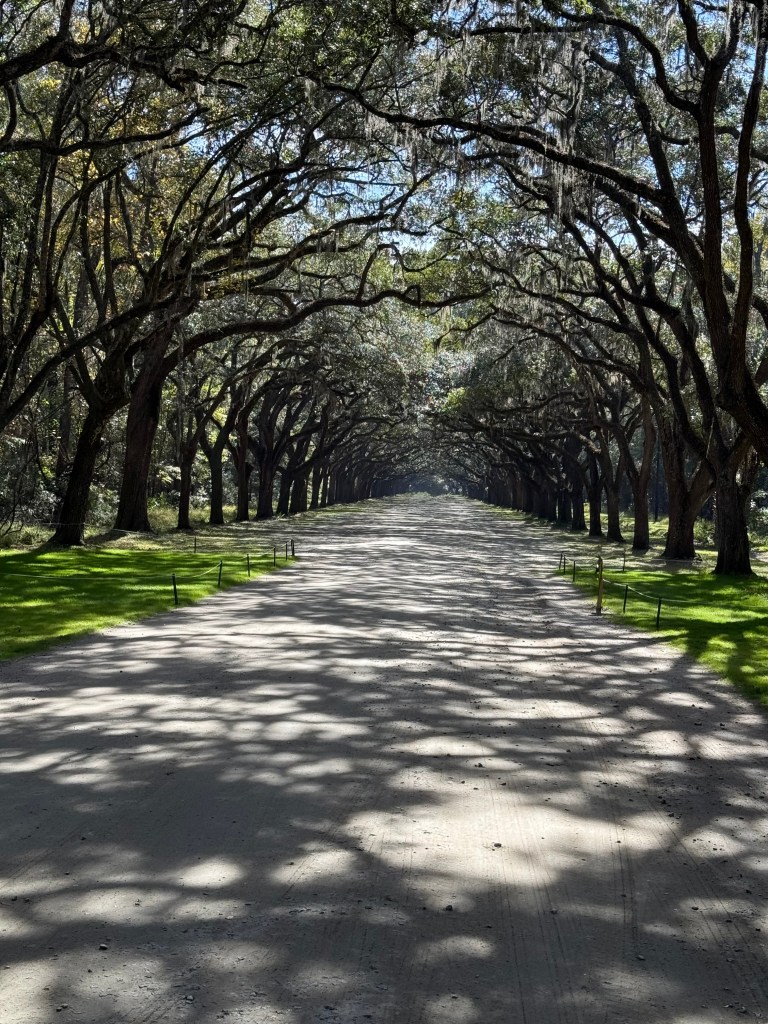
Thursday started the day at Wormsloe. Founded by Noble Jones a member of the original 114 settlers brought to Savannah by Oglethorpe in 1733 to create a new colony which would serve as a buffer between Spanish Florida and South Carolina. Oglethorpe had investigated England’s debtor prisons and became very disillusioned by what he found. He obtained a charter from the king and brought mostly unemployed debtors to his new colony. The idealistic Oglethorpe banned slavery and alcohol, gave each colonist 50 acres and intended a kind of utopian community. Another 400 settlers, again mostly debtors, came in 1733 two years after the first group, but despite the eventual success of the new colony, Oglethorpe’s vision for it was a failure. Here is the image of Wormsloe everyone remembers. The over one mile long entrance to Wormsloe is lined by hundreds of live oaks planted in about 1891?. Each is 33 feet apart, and 66 feet opposite each other across the lane.
Wormsloe was originally 5,000 acres, direct descendants of Noble Jones still live on a portion of the original land, but most is now a state owned historic site. From Wormsloe we went to Bluffton, S.C., a small town on Hilton Head island, to their farmer’s market. Supper was back in Savannah at Erica’s Low Country, very good local food.
Friday we went to the Savannah botanical garden, quite small, essentially a project of the local garden club, then we ate lunch at Kayak Kafe, got cookies at Byrd’s Cookie Co., both local chains, and then hit the road.
One life bird, Clapper Rail, on the marsh trail at Skidaway park.
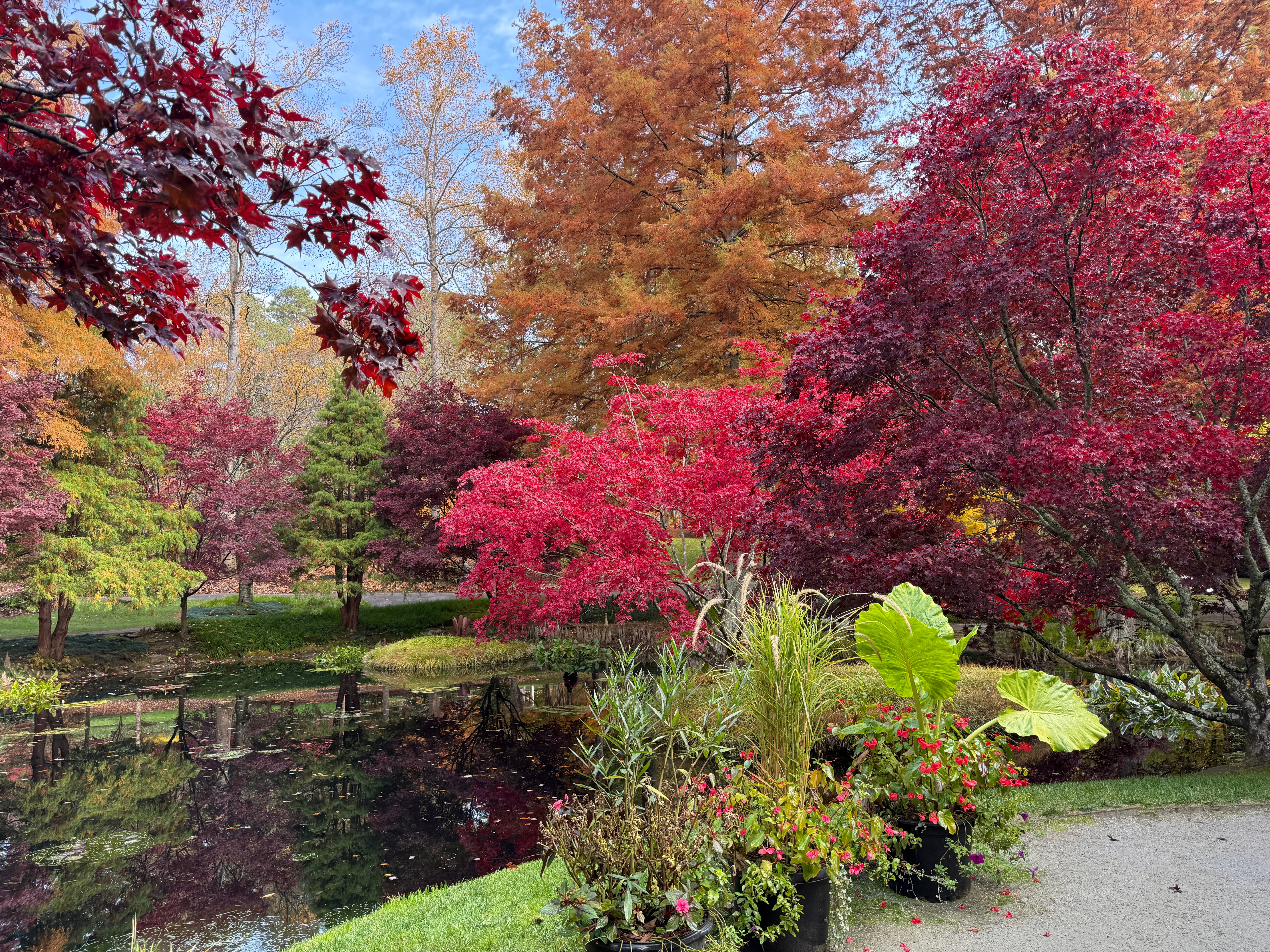
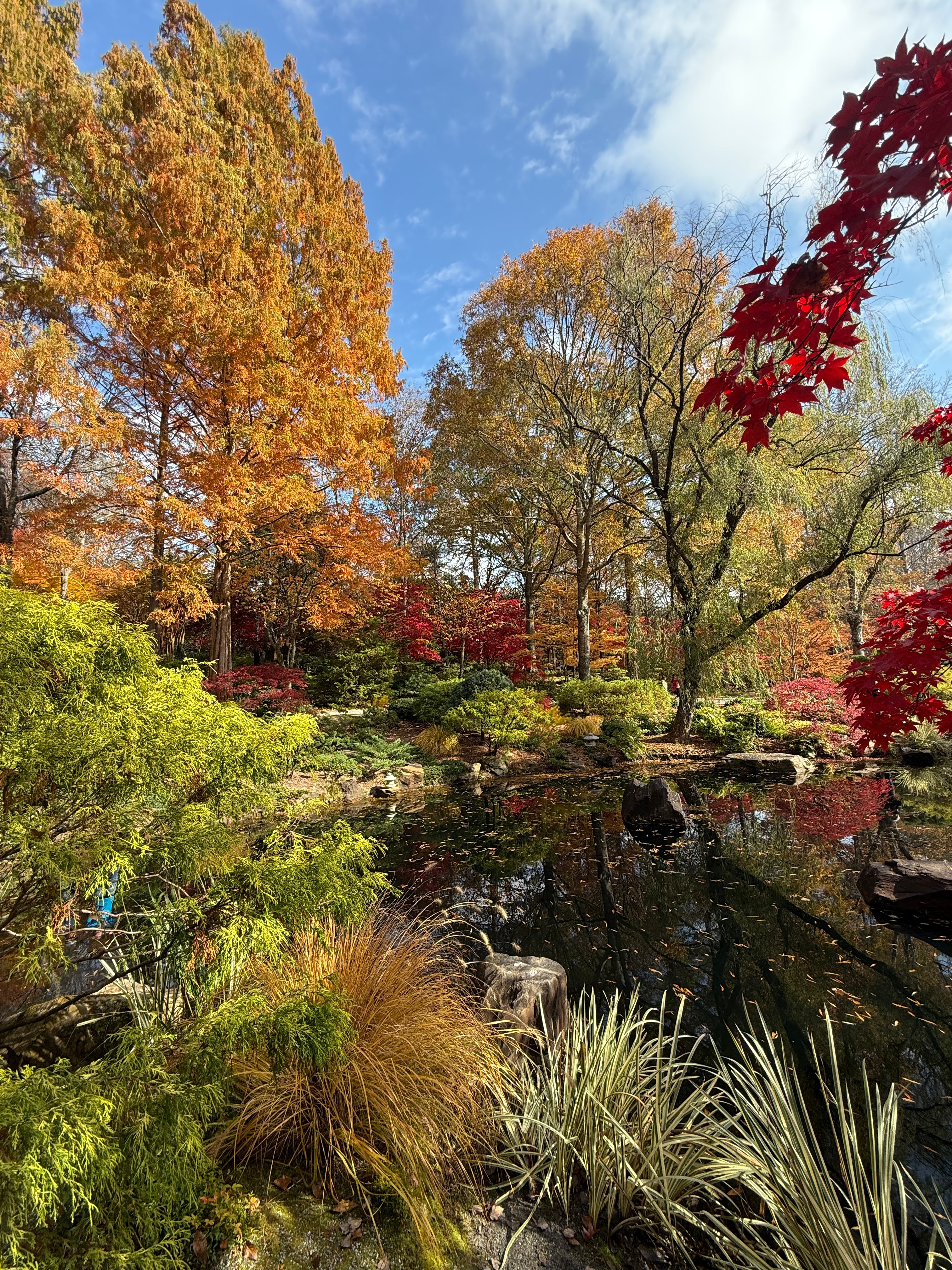
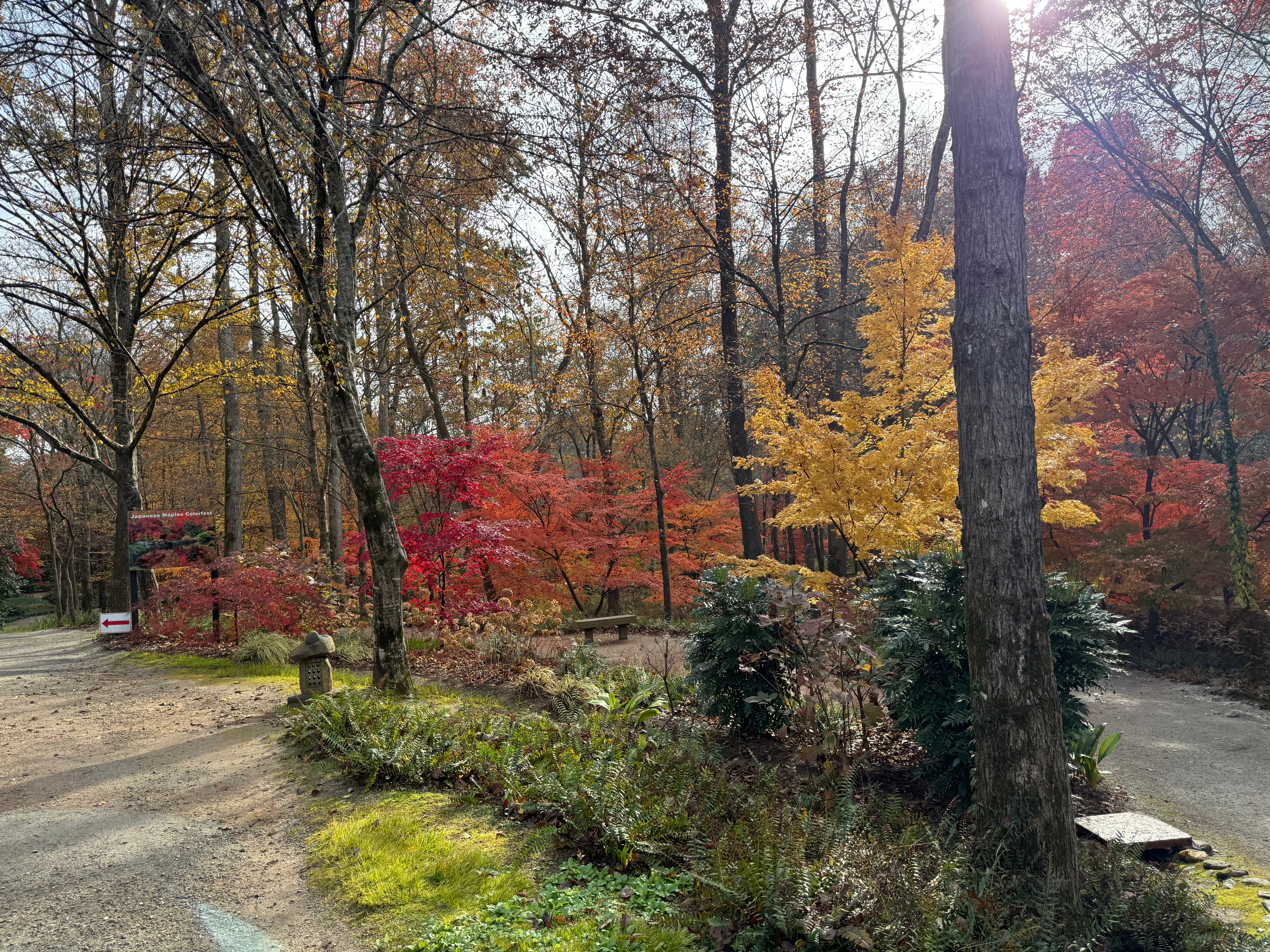
Gibbs’s Garden. Visiting this was always a part of our purpose on this trip. We have been to a lot of garden’s on our travels, Duke University’s was fantastic, and Montreal has a very nice one, but for shear beauty nothing tops Gibb’s Garden. Located in the north Georgia foothills of the Appalachians, the scenery is stunning.
This isn’t the usual ‘learn about plants’ garden, there were almost no identifying name plates. This garden is about landscape design. It is intended to have four season interest and I hope to see it again in each season. Notice the row of crepe myrtle and daylilies in the small right side photo, that would be spectacular in summer. Some of the hillsides have thousands of daffodils blooming in spring.
Lastly I want to mention Puckett’s Grocery in Murphreesboro Tn. where we ate supper Saturday evening. Good food, and a ‘rising star’ performs country music most nights, and every weekend night.
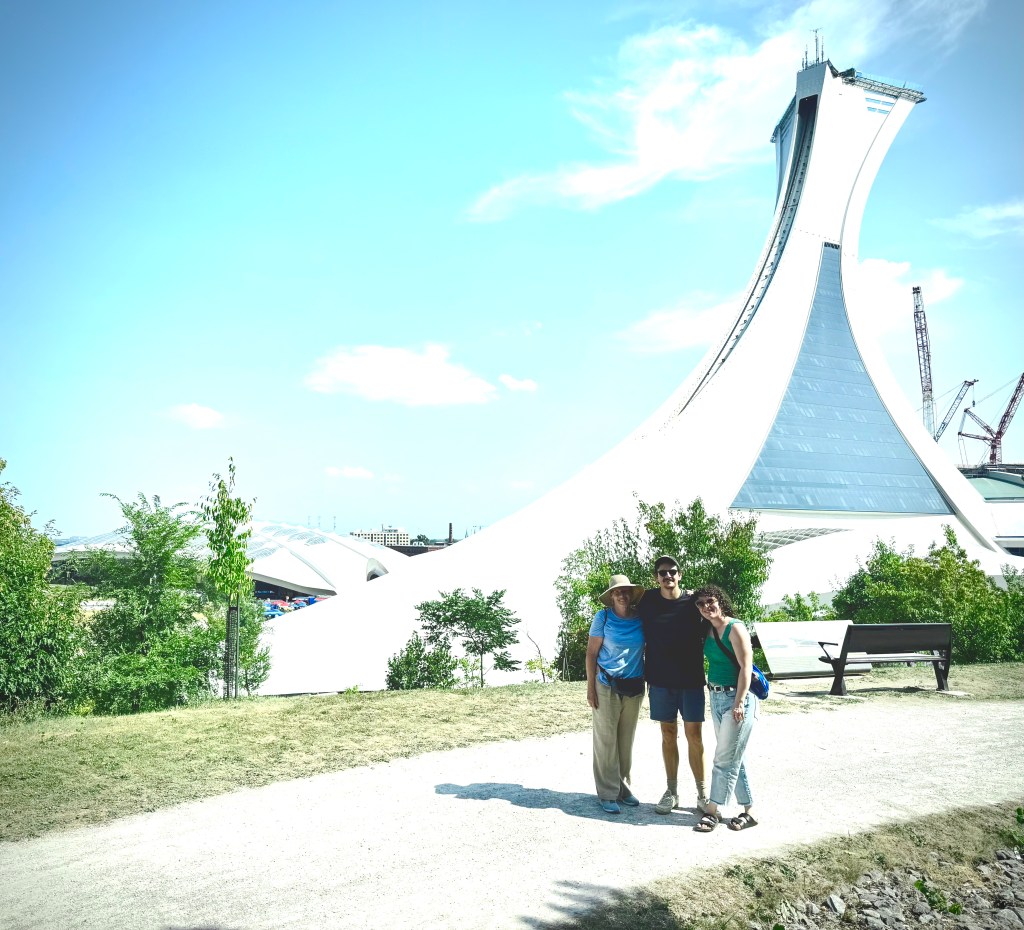
Today’s schedule was a Steve and Peggy day. We picked Montreal’s botanical garden and insectarium. Both are fabulous, the latter is more out of the ordinary, after all lots of cities have botanical gardens. They are located on the same property literally in the shadow of the olympic stadium built for the 1976 games.
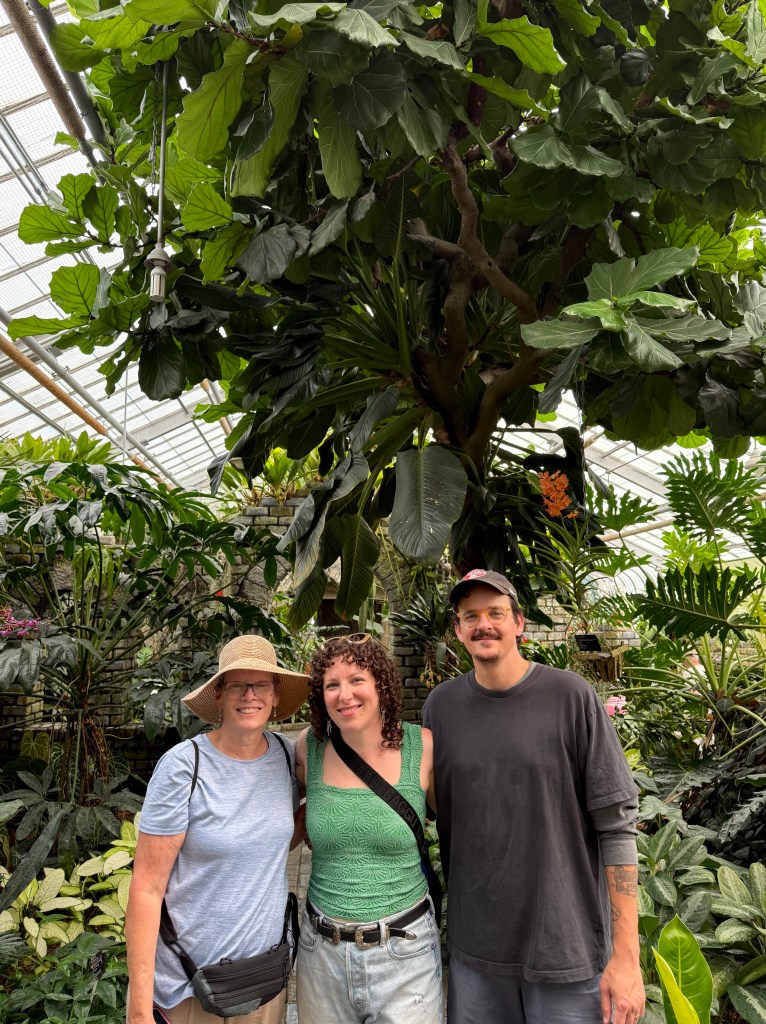
That’s the stadium tower looming over their heads, the biodome is on the left side. They are looking toward the botanical garden. The Botanical gardens are both inside in greenhouses, like the picture below, or outdoors. A variety of garden themes are present from herbs and vegetables to bromeliads. We had only scratched the surface in about 2.5 hrs when it was time to go to the insectarium (they assign times to prevent it from being mobbed with people).
Tropical room
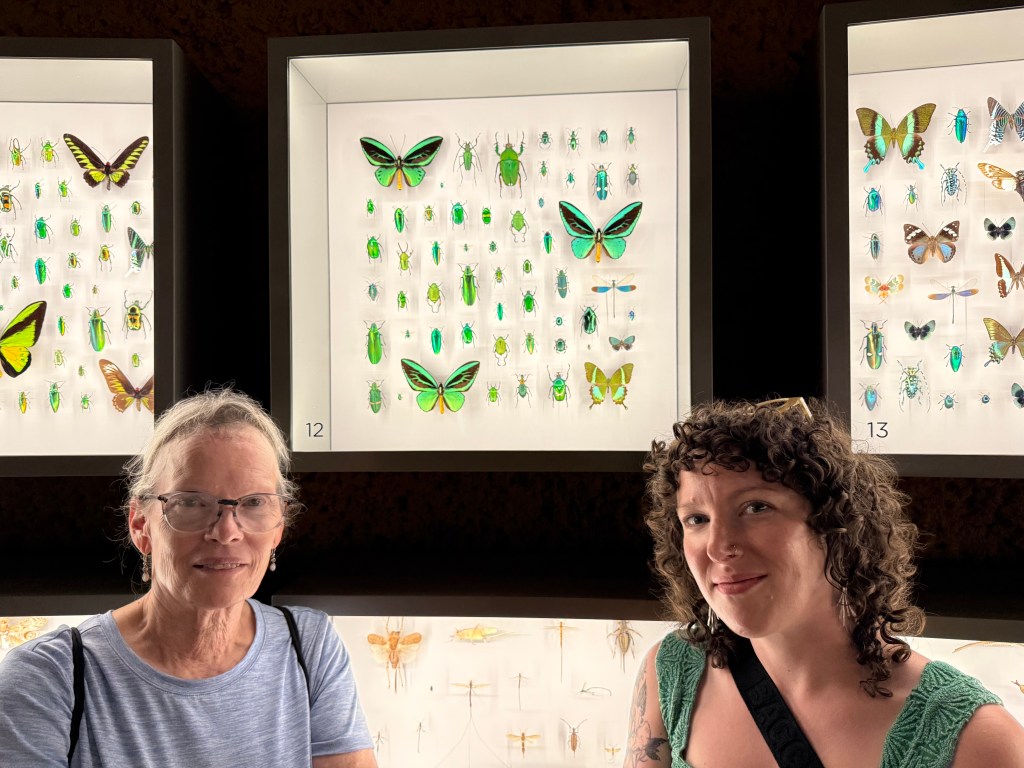
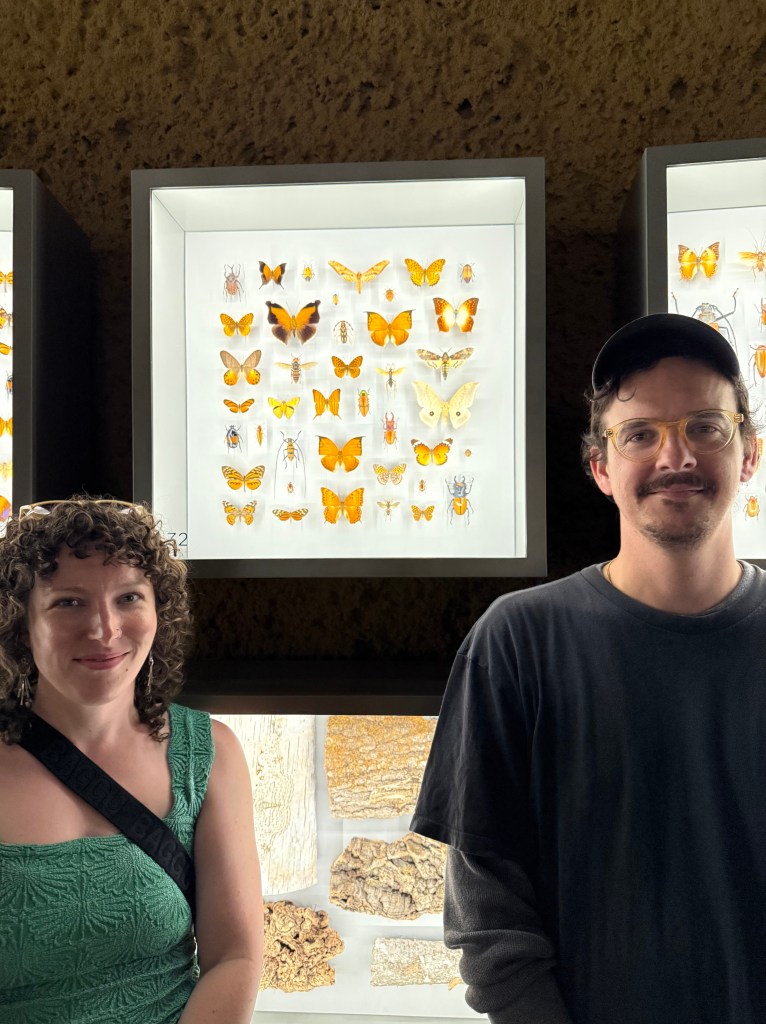
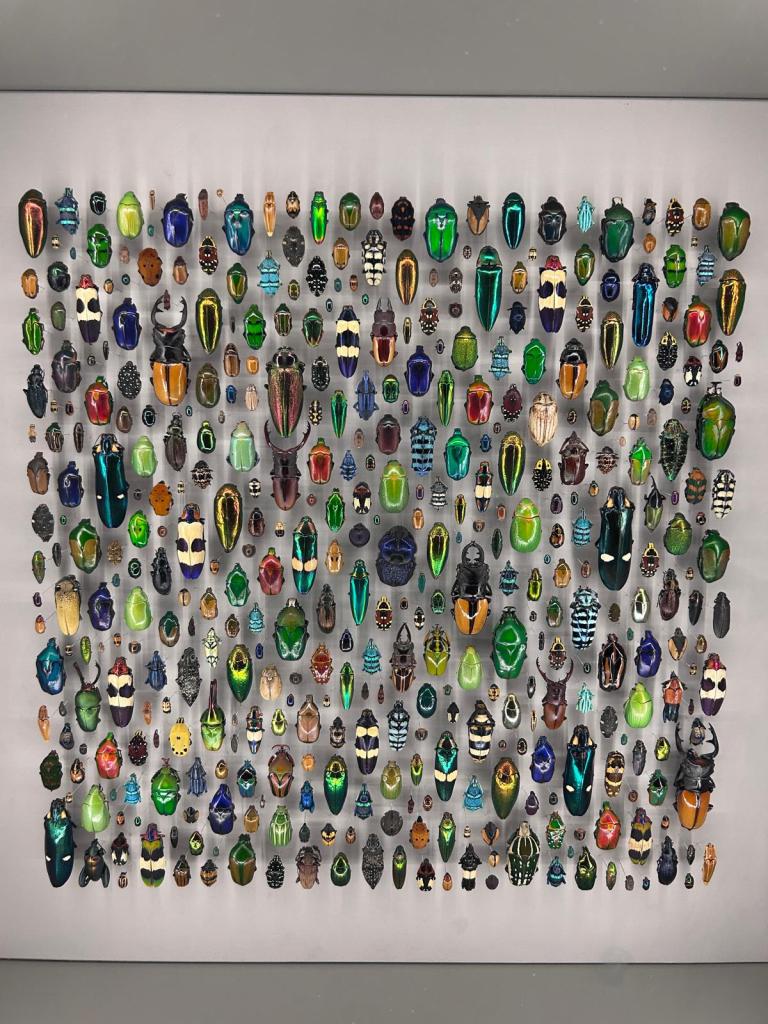
The insectarium had numerous displays like these three…….
The butterfly displays were arranged mostly by color, the number and diversity of beetles is other-worldly.
The grand finale of the insectarium was the butterfly room. One of the best we have seen it was filled with a variety of mostly tropical butterflies. After a nice lunch at the gardens we went back to regroup before supper at Pub Wolf and Watchman, very good food, and they allowed dogs. And then we walked around observing the considerable night life going on in the downtown port of Montreal area.
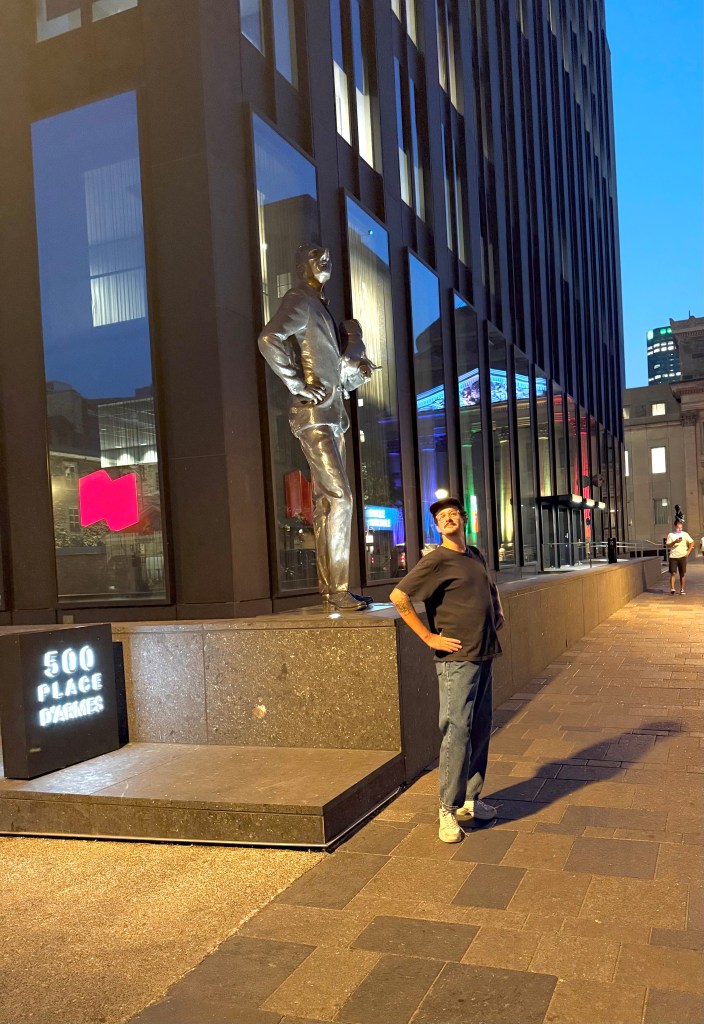
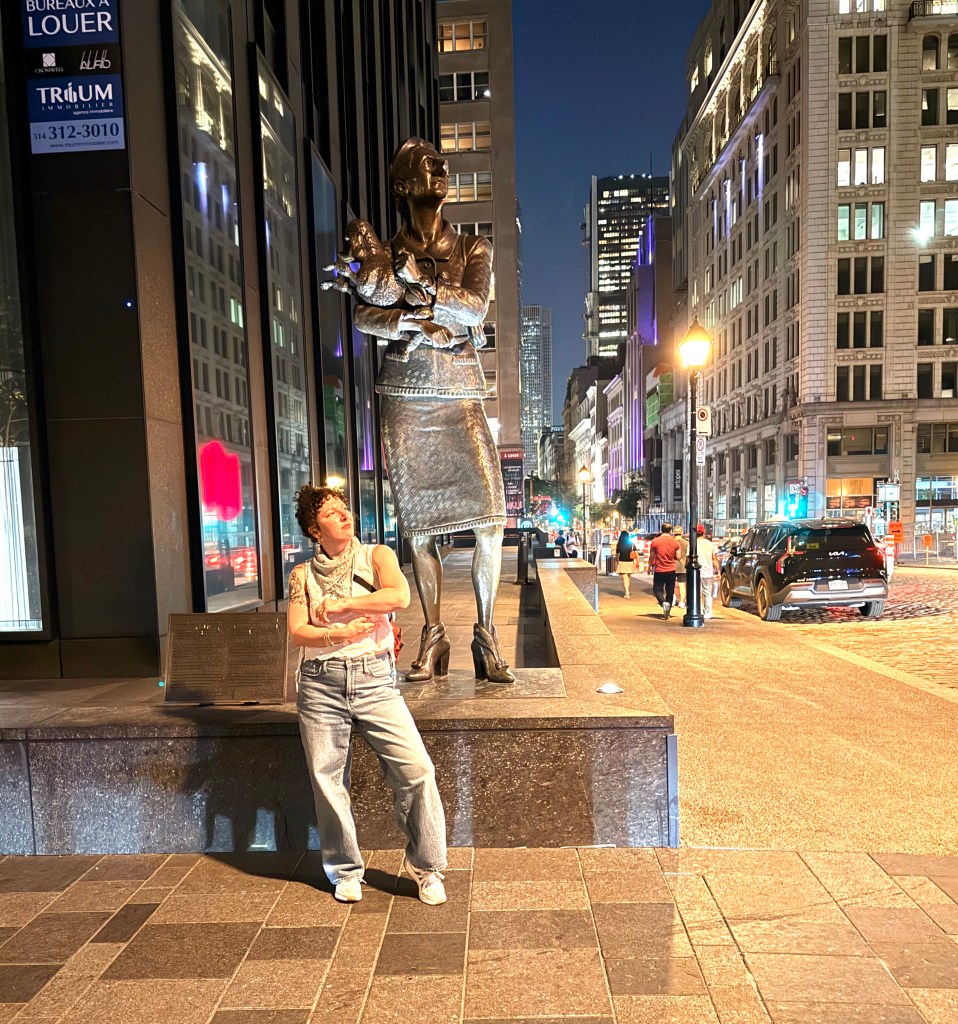
We came across these two opposing statues in the square representing British snobbery and French aloofness. Here they are, taken at night….
With their noses in the air so they can look down on Notre Dame cathedral in the case of the Englishman, and an important English bank in the case of the French woman, neither is aware the dog they hold are bonkers each for the other. She holds a poodle, he a bulldog. Kevin and Jackie doing their best poses beneath.
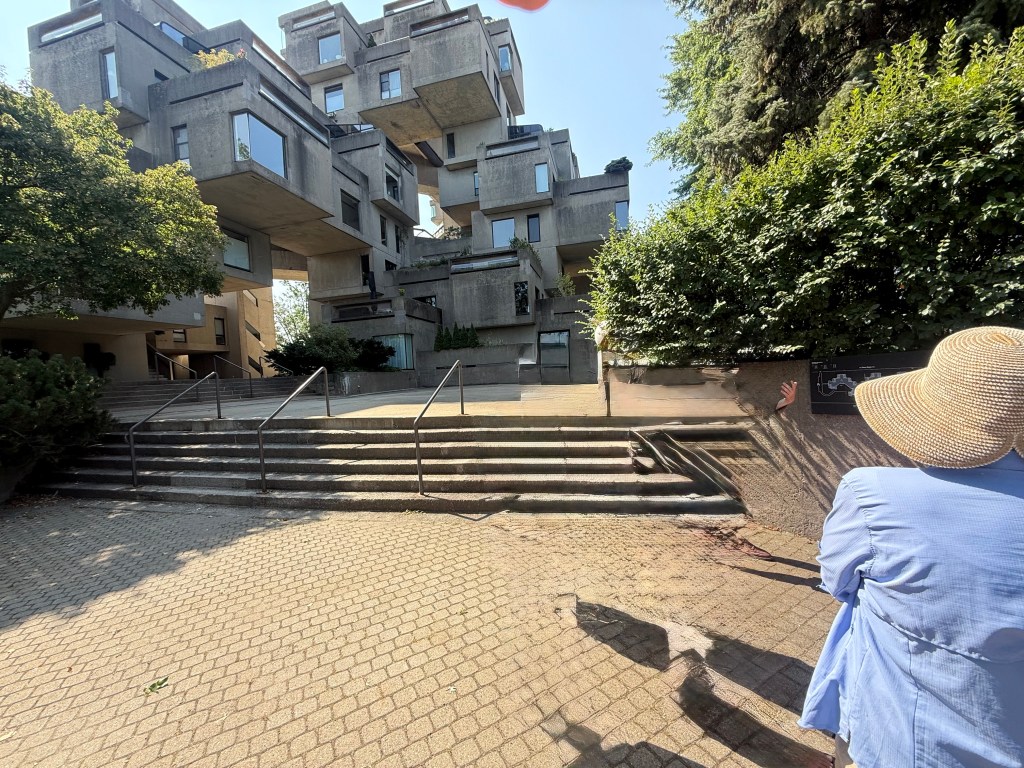
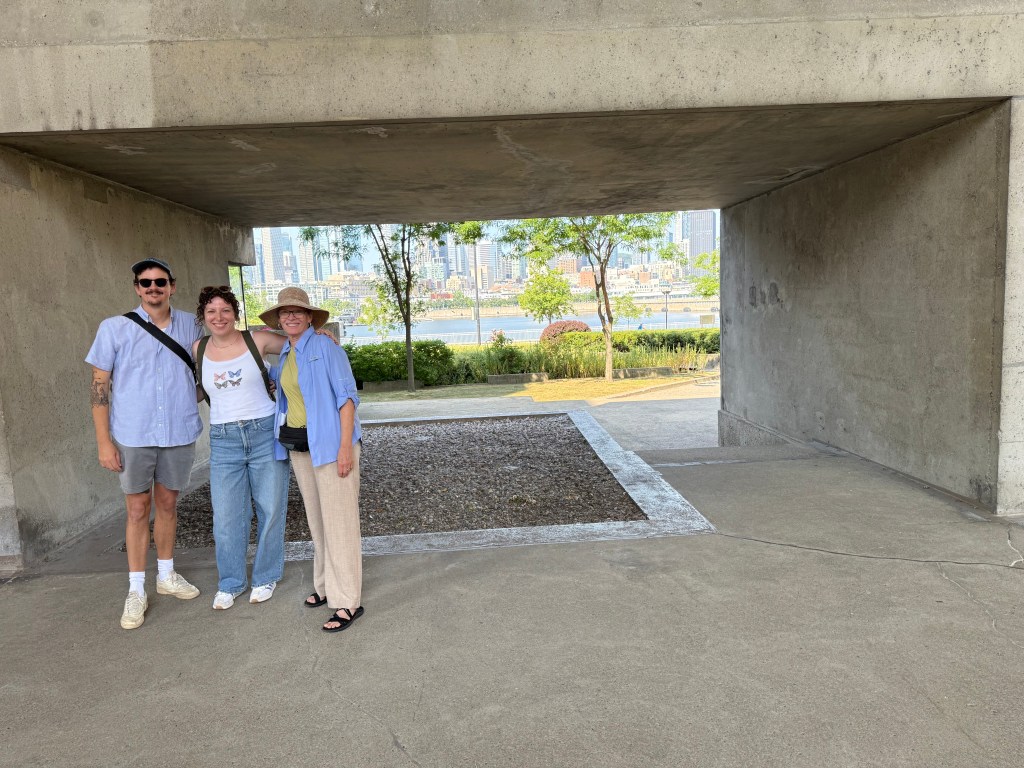
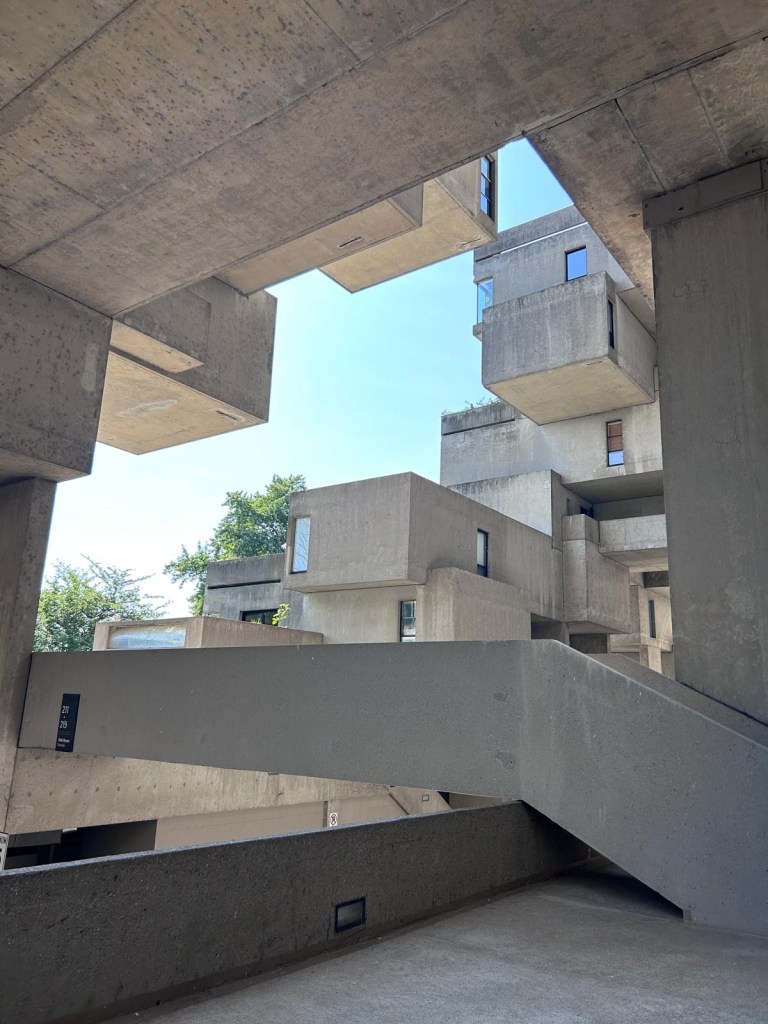
Tuesday 8/5/2025 was a travel day, after dropping K & J off at Holiday Inn Centerville we had a devil of a time getting parked and into our vrbo. I finally decided to take the car top carrier off and carry it into the room. That way we could use the building’s underground parking. K & J had a spa day and date night at a local eatery. We walked to an Irish pub and ate on their patio. Today, Wednesday the main activity was a tour of Habitat 67, as in 1967. Built for the world’s fair, it is one of the few structures still standing from that fair. Concrete slabs were fabricated on site and lifted into place to form cubes, each about 600 sq. ft. The idea was to create a community in which people would live their entire lives, one cube accommodates a single adult, two a married couple, 3 or 4 for a family, back down to two when the kids move out, then one…..and so on. Built on an island across the St Lawrence from Montreal it does have some stunning views. Below is Peggy approaching Habitat 67.
A “picture window” view at street level from inside central courtyard, standing under a cube.
It feels like a jumbled maze of concrete inside. This picture is from the second floor looking up and across to other units.
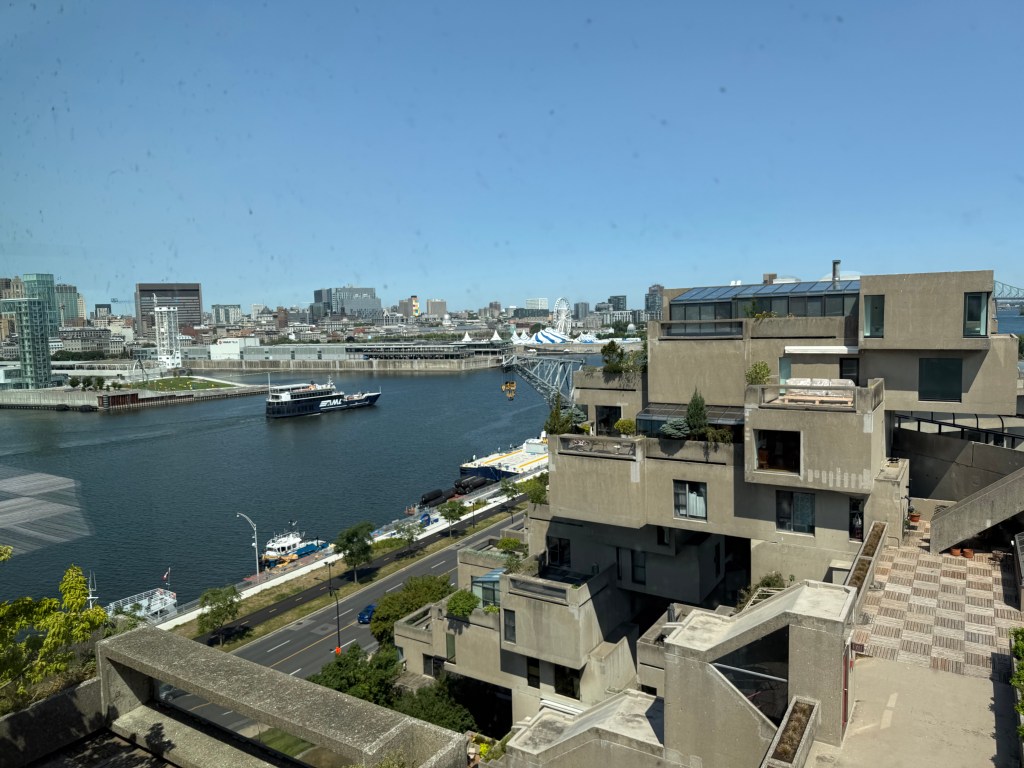
A picture from the top of one unit looking across to another jenga like cluster of cubes.
It does have some great views.
Inside the units does feel private and quiet. The affordable housing community idea never worked. The units are privately owned now, sell in the millions, $4,800/mo fee in addition to whatever the mortgage is. Only the super rich live there now.
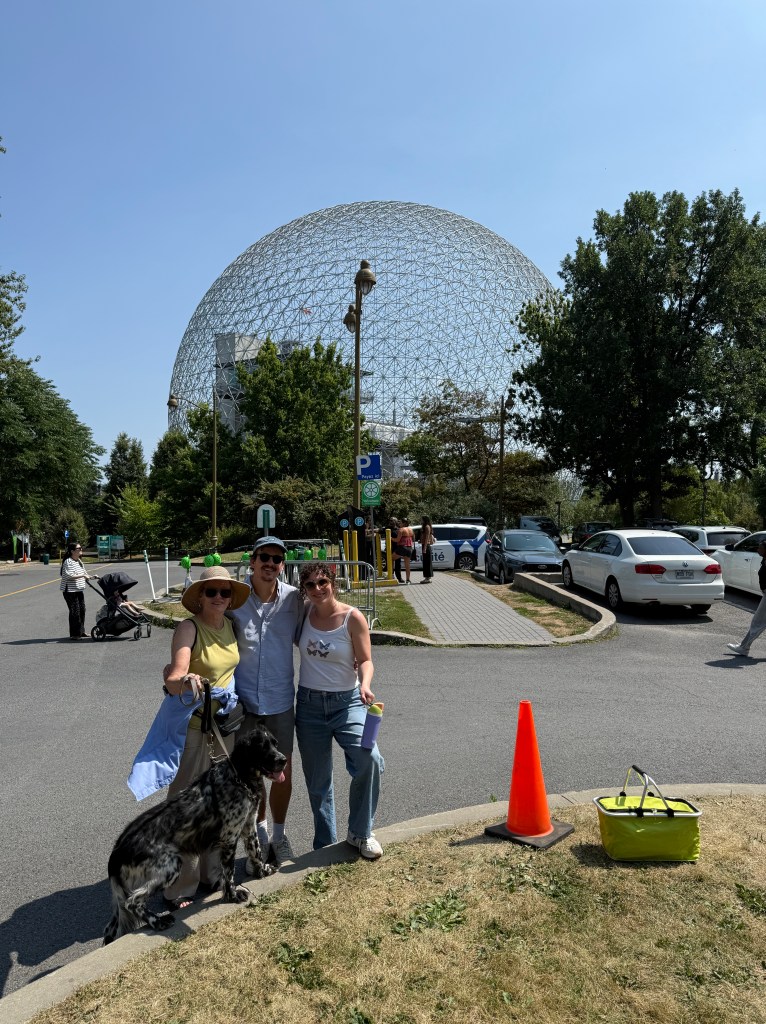
Below is the biosphere designed by Buckminster Fuller, like habitat 67 it was a structure created for the ’67 worlds fair. Lunch was a picnic in the park where the Biosphere is located.
Afternoon was spent walking in old Montreal and visiting the History of Montreal museum. Evening meal at L’original.