…a beautiful city, the second busiest port on the east coast, well worth a visit. Savannah is a success story. Thirty years ago it was run down, dirty and plagued by crime. Things slowly began to change. No one I spoke to seemed to know the exact reason but probably control of crime played a big role, the coming of SCAD (Savannah College of Arts and Design from its beginning in the ’70’s to 16,000 students now), some hit movies and historic preservation and tourism all combined to start the snow ball rolling down the hill leading to an avalanche of improvements. Today Savannah rivals Charleston for beauty, southern culture and tourism. Pretty much any random street in Savannah looks like this:
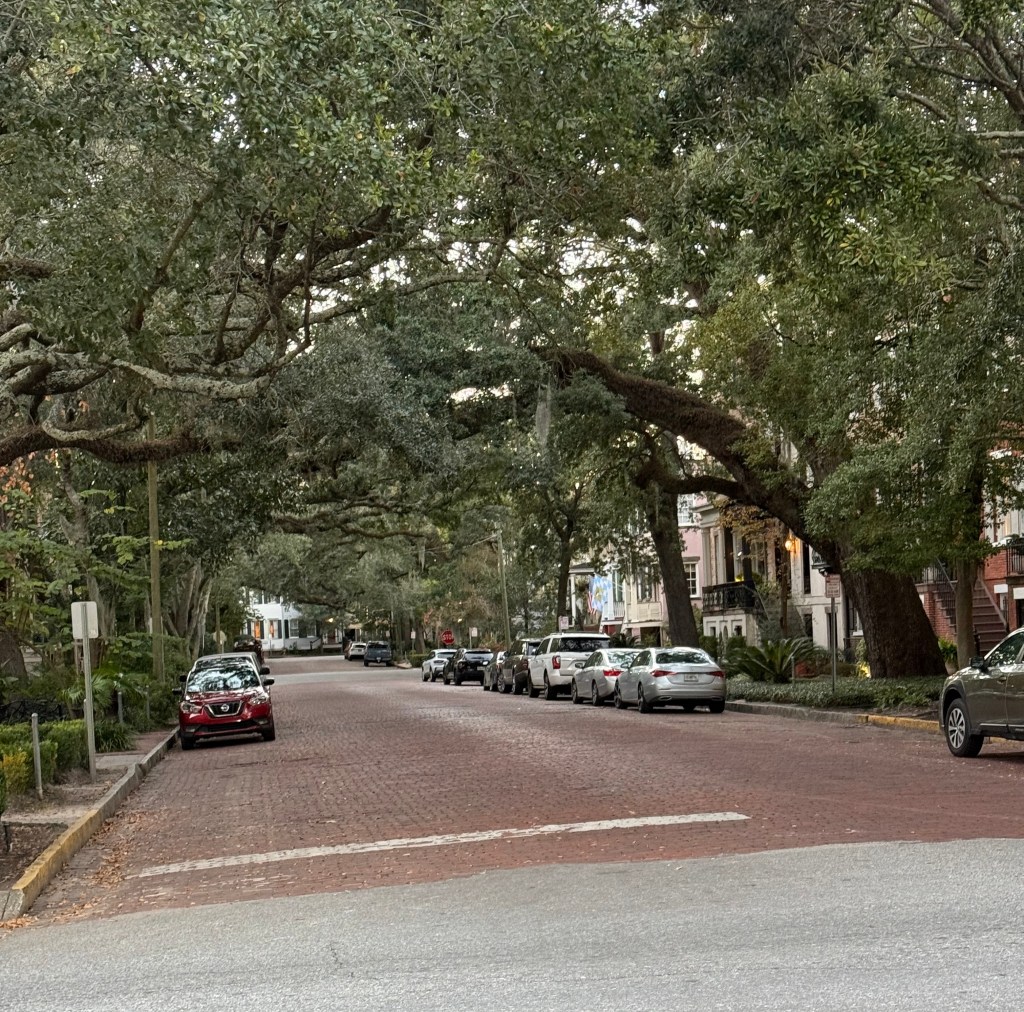
Live oaks, their tendency to horizontal spread creating an archway over the street complete with an adornment of Spanish moss.
We left home Sunday 11/2 at noon, made it to Dalton, Ga. From there to Skidaway State Park at 4:00 PM Monday. This is our campsite:

After checking in and setting up we took a 2 mile hike on a trail that went through slightly elevated woodlots alternating with boardwalk through salt/brackish water marshes. Tuesday was our Savannah day. It started with a tour on the Old Town Trolley:

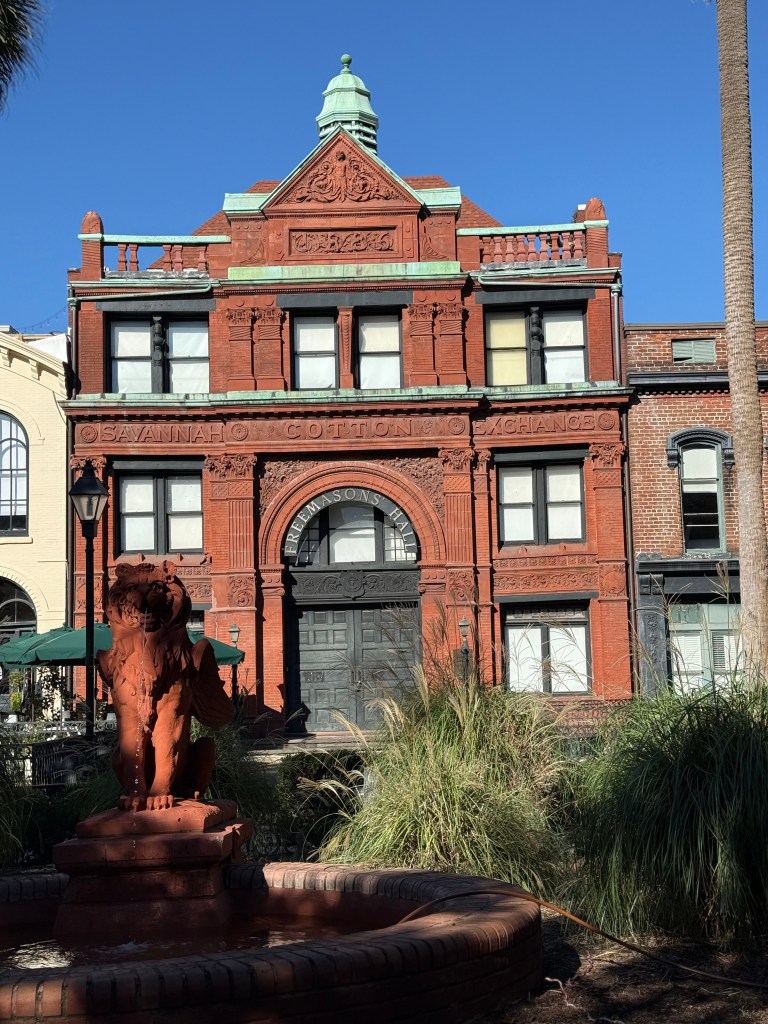
The quality of the 1 1/2 hr. trolley tour depends greatly on the quality of the driver/guide. Ours, Big E as he calls himself, was wonderful. Funny and informative, we were lucky to get him. Since the trolleys are hop-on-hop-off, Peggy took a different one back and experienced another driver/guide. The guide can make a big difference. After the trolley tour we walked along River Street, had lunch at “Two Cracked Eggs”, then walked down Bull Street where Savannah history is on full display. Here pictured below is the center of southern commerce in the first half of the 19th century. This building on River Street was where nearly half of the world’s cotton was bought and sold.
From there we took a pleasant walk down Bull Street to a little beyond Forsyth Park, total about 2 miles. The restored historic houses are a treat to see, and there is a “park”, or public square every two or three blocks, each dedicated to an important historical figure from Savannah’s past. This synagogue pictured below, built around 1830, represents a jewish community established in the early 1700’s. Like the Jews of Newport Rhode Island the Savannah jews received a letter from George Washington but unlike the more famous RI letter in which Washington writes – the children of Abraham should enjoy “the exercise of their inherent natural rights. For happily the Government of the United States, which gives to bigotry no sanction, to persecution no assistance, requires only that they who live under its protection, should demean themselves as good citizens” – the Savannah original is lost.

We stopped at The Sentient Bean for coffee and tea, Savannah loves coffee houses, then Peggy took a trolley back to the car, I walked a little farther on then walked back to the car. We ate at Cary Hilliard’s, a local chain, which has eat in car or order from a car-hop and carry out.
Wednesday we went to Tybee Island, Savannah’s beach. The beach was nice enough but we aren’t beach people, and they don’t allow dogs on the beach so we skipped it. Fort Pulaski national historic site was on our plans but it was closed due to the government shut down, we forgot, wasted a drive. Finished the day with an excellent meal at Sundae’s, a Guy Fieri rec.
Thursday started the day at Wormsloe. Founded by Noble Jones a member of the original 114 settlers brought to Savannah by Oglethorpe in 1733 to create a new colony which would serve as a buffer between Spanish Florida and South Carolina. Oglethorpe had investigated England’s debtor prisons and became very disillusioned by what he found. He obtained a charter from the king and brought mostly unemployed debtors to his new colony. The idealistic Oglethorpe banned slavery and alcohol, gave each colonist 50 acres and intended a kind of utopian community. Another 400 settlers, again mostly debtors, came in 1733 two years after the first group, but despite the eventual success of the new colony, Oglethorpe’s vision for it was a failure. Here is the image of Wormsloe everyone remembers. The over one mile long entrance to Wormsloe is lined by hundreds of live oaks planted in about 1891?. Each is 33 feet apart, and 66 feet opposite each other across the lane.
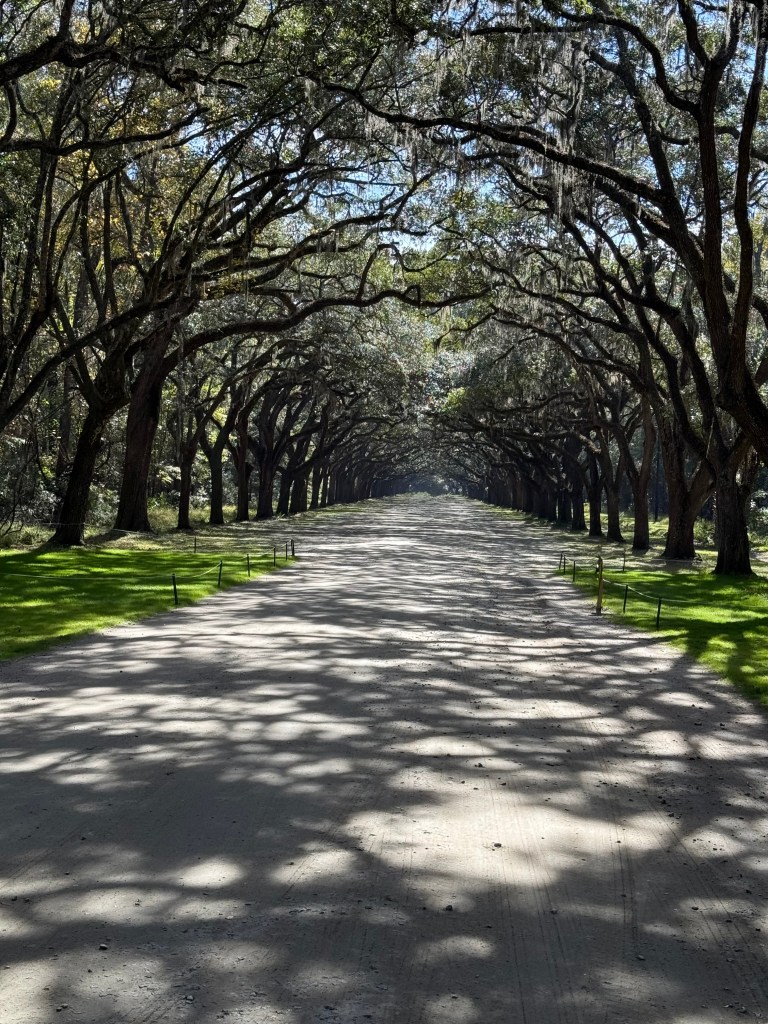
Wormsloe was originally 5,000 acres, direct descendants of Noble Jones still live on a portion of the original land, but most is now a state owned historic site. From Wormsloe we went to Bluffton, S.C., a small town on Hilton Head island, to their farmer’s market. Supper was back in Savannah at Erica’s Low Country, very good local food.
Friday we went to the Savannah botanical garden, quite small, essentially a project of the local garden club, then we ate lunch at Kayak Kafe, got cookies at Byrd’s Cookie Co., both local chains, and then hit the road.
One life bird, Clapper Rail, on the marsh trail at Skidaway park.
Gibbs’s Garden. Visiting this was always a part of our purpose on this trip. We have been to a lot of garden’s on our travels, Duke University’s was fantastic, and Montreal has a very nice one, but for shear beauty nothing tops Gibb’s Garden. Located in the north Georgia foothills of the Appalachians, the scenery is stunning.


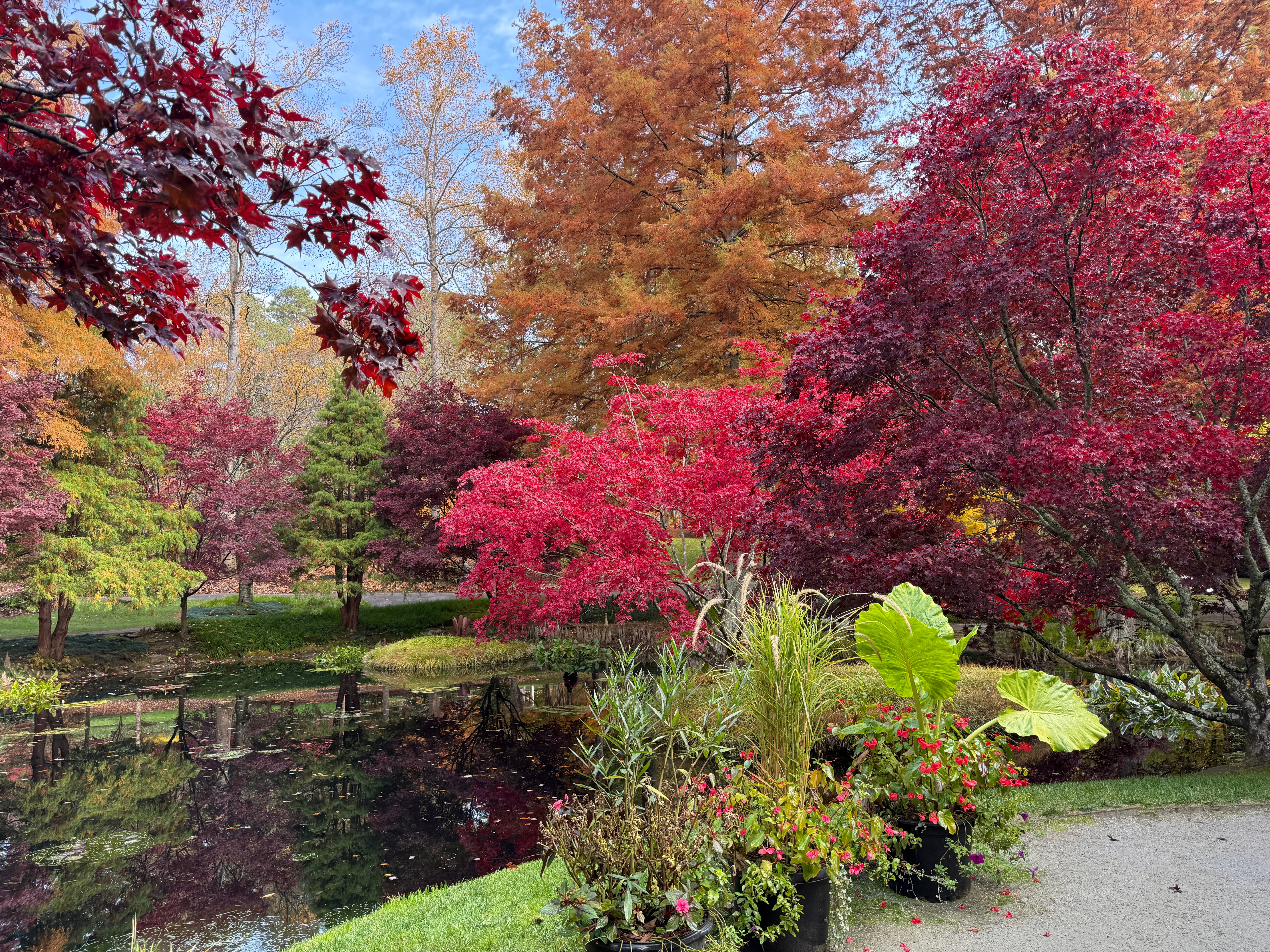

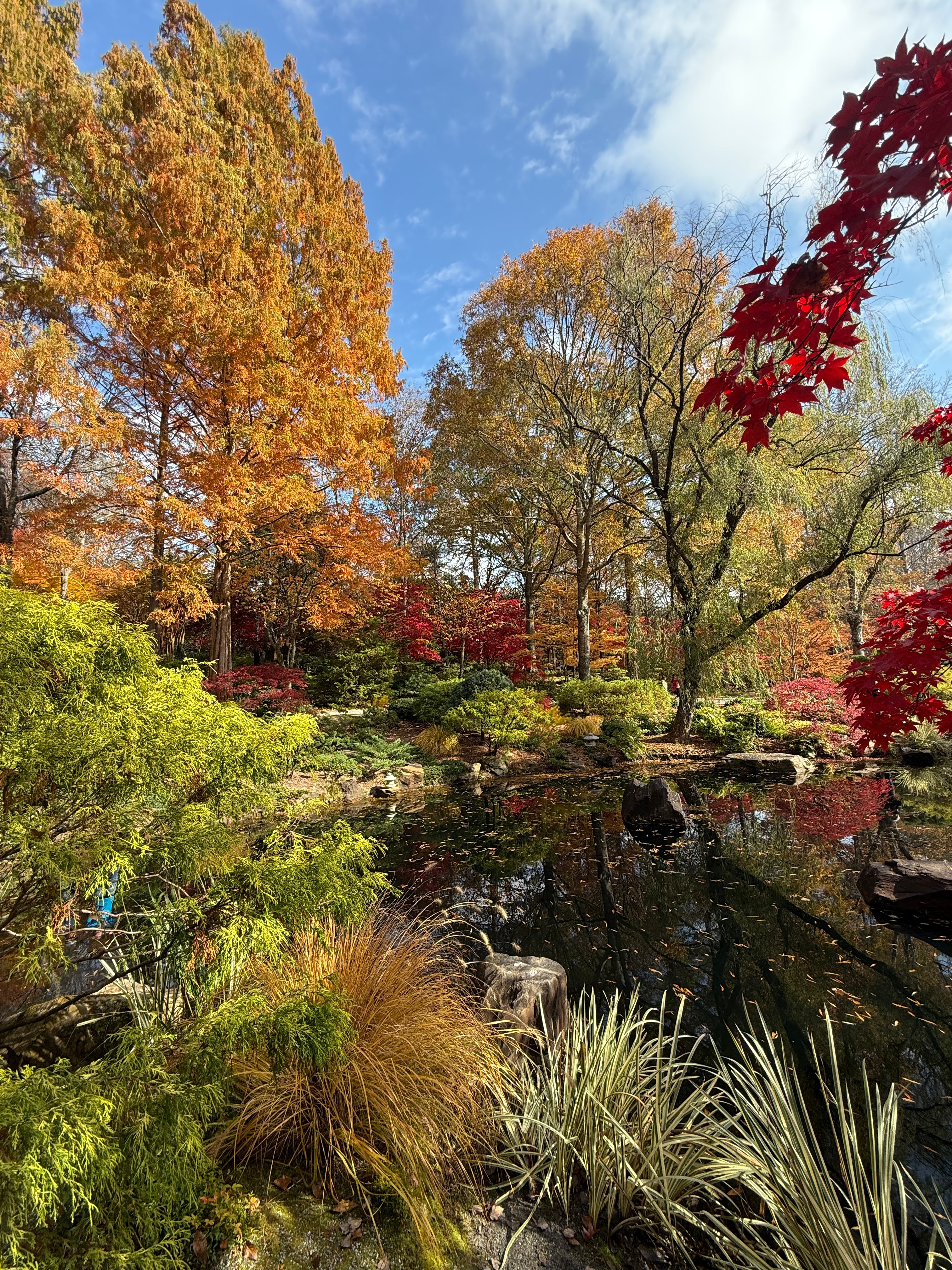
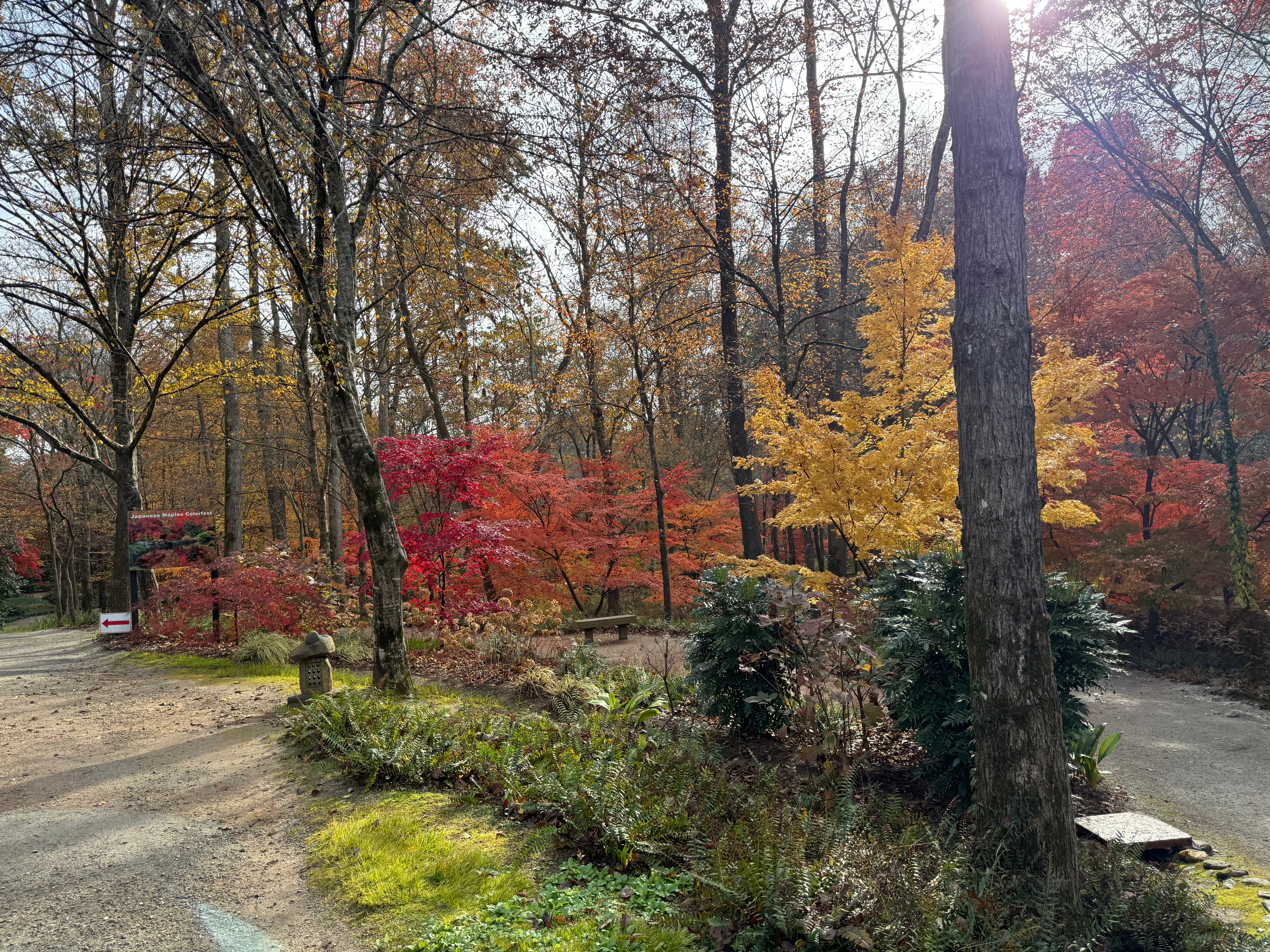
This isn’t the usual ‘learn about plants’ garden, there were almost no identifying name plates. This garden is about landscape design. It is intended to have four season interest and I hope to see it again in each season. Notice the row of crepe myrtle and daylilies in the small right side photo, that would be spectacular in summer. Some of the hillsides have thousands of daffodils blooming in spring.
Lastly I want to mention Puckett’s Grocery in Murphreesboro Tn. where we ate supper Saturday evening. Good food, and a ‘rising star’ performs country music most nights, and every weekend night.



















 Roses 1.0 Van Life