BYOB*
We had no trouble getting the train from Florence to Venice. Most europeans know at least some English but we didn’t need any help, the arrivals/departure boards were easy to understand. Getting to the hotel from the train station was another matter. There are no taxi cabs, in fact there are no cars, there aren’t even streets just sidewalks. We walked to a lunch place, originally we were going to get a water taxi but finally decided to hoof it the whole way, just under 30 minute walk. Many of the sidewalks are narrow and the near universal cafe tables outside in Rome and Florence become a bit of an uncommon site here as there often isn’t room. We feared the water would be brown and littered but that is not the case at all. The water is clean and blue/green with nothing but sea-air smell. Here are some pictures to get a flavor of Venice.


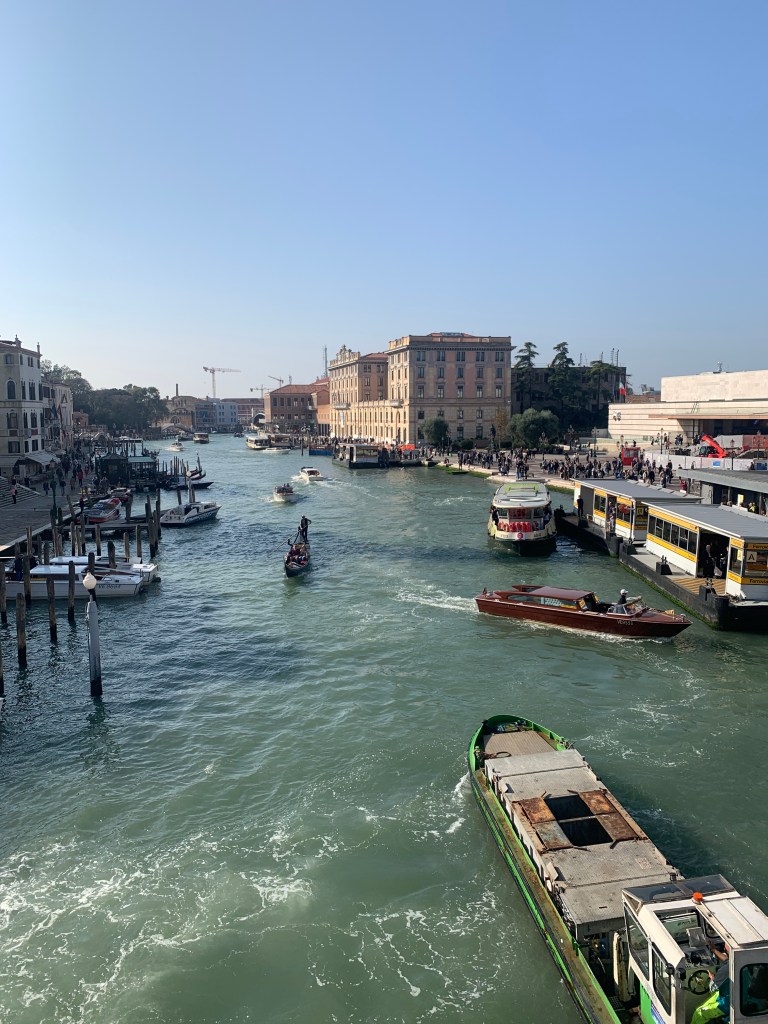
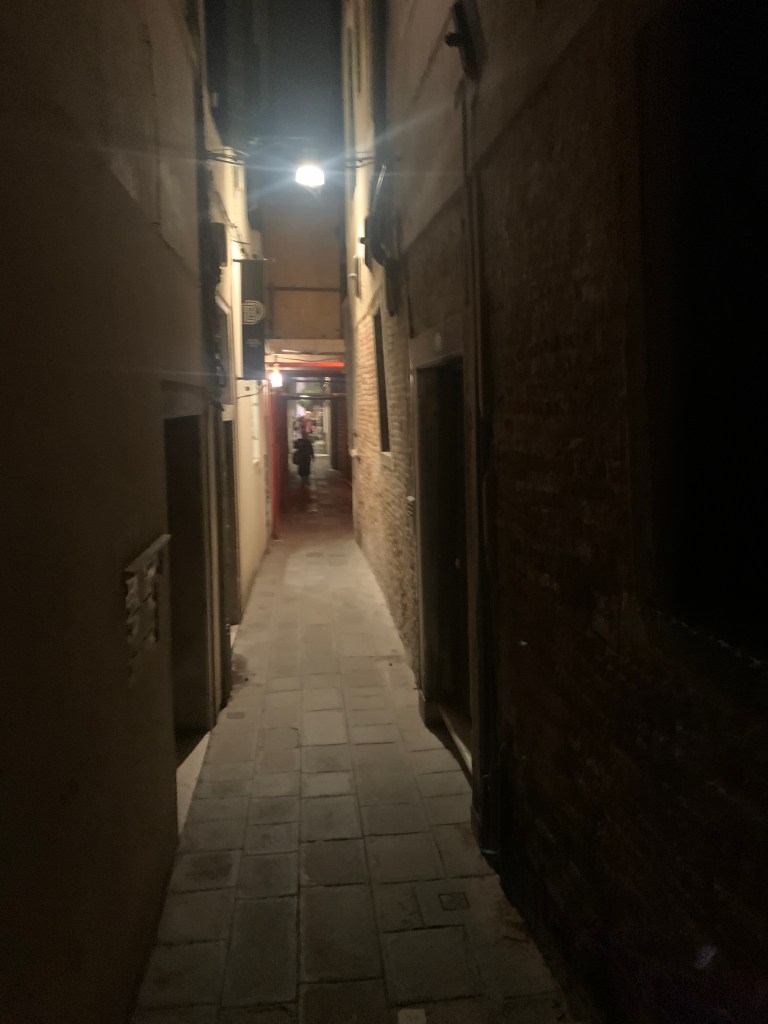
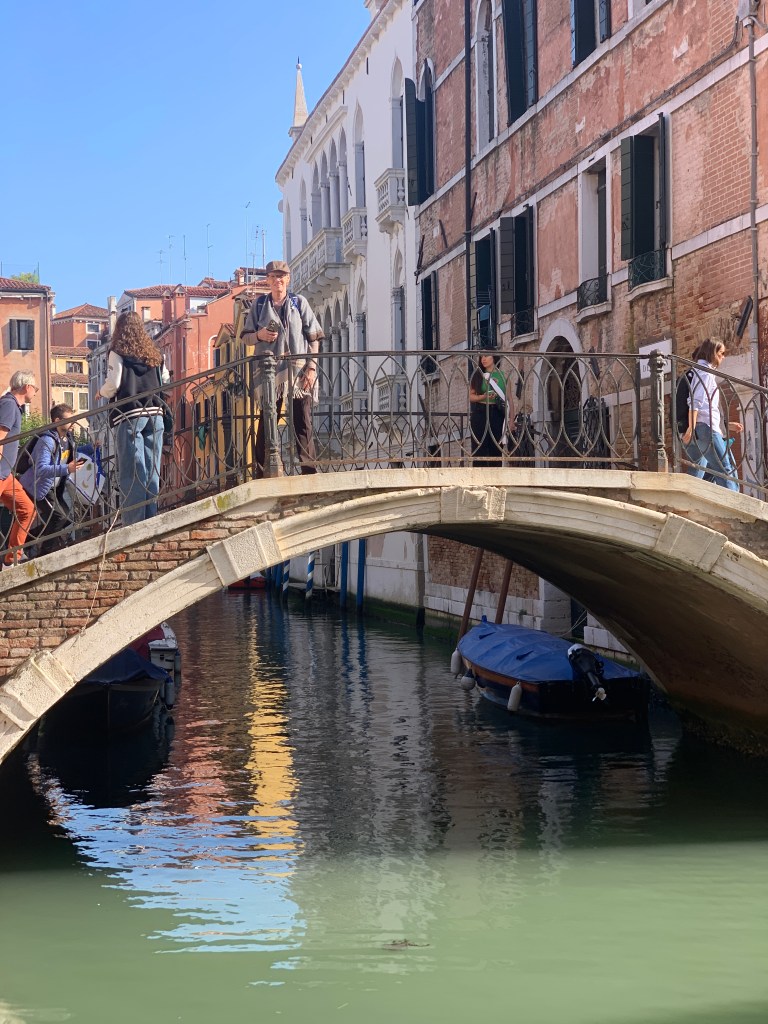
We spent most of Wednesday, our only full day in Venice, in water buses. It was difficult, gondolas and even water taxis are too expensive so take the buses. But it is confusing. Buy an all day or multiday ticket from a machine, study the lines on the posted schedule outside each stop but don’t expect to understand them. Figure out what stop you are at and what stop you want to go to then look at the list of stops on the side of the boat. If your stop is there get on. Pay attention to the line you are on, most are numbers, some are letters. You’ll get comfortable with it after a few trips. One last thing on boats, forget the Traghettos, small boat ferries that supposedly take you across the grand canal for a small fee, there NEVER was a boat at a Traghetto, never. As for walking it’s navigating a labyrinth. The sidewalks vary but are often so narrow two people can barely walk abreast and they rarely go straight because there is always a side canal to find a foot bridge over. There’s a picture of a typical sidewalk above, not all are that narrow but many are.
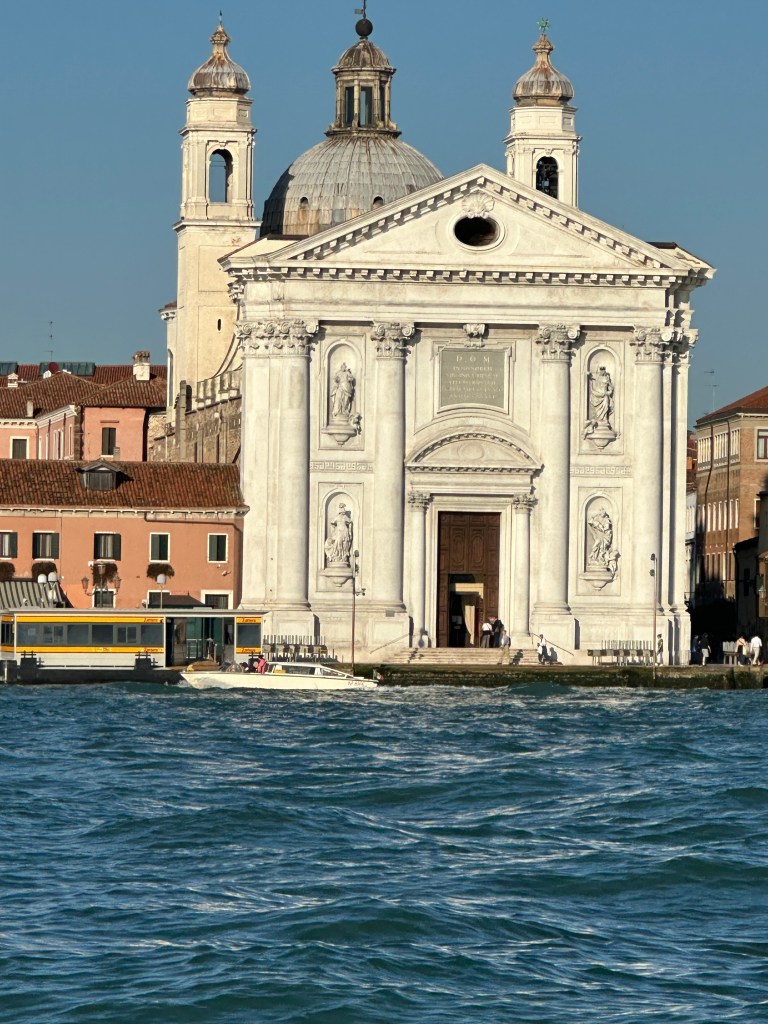
The only tour we took was St Mark’s Basilica at night. Built in 1097 after the first church burned down, it is a marvel. Old testament scenes are around the narthex, new testament scenes decorate the nave and alter, finishing of course with Christ’s resurrection. The ceiling frescoes are gold, 400 sq meters of hammered gold leaf cut to fit into intricately drawn images. Here’s the ceiling:
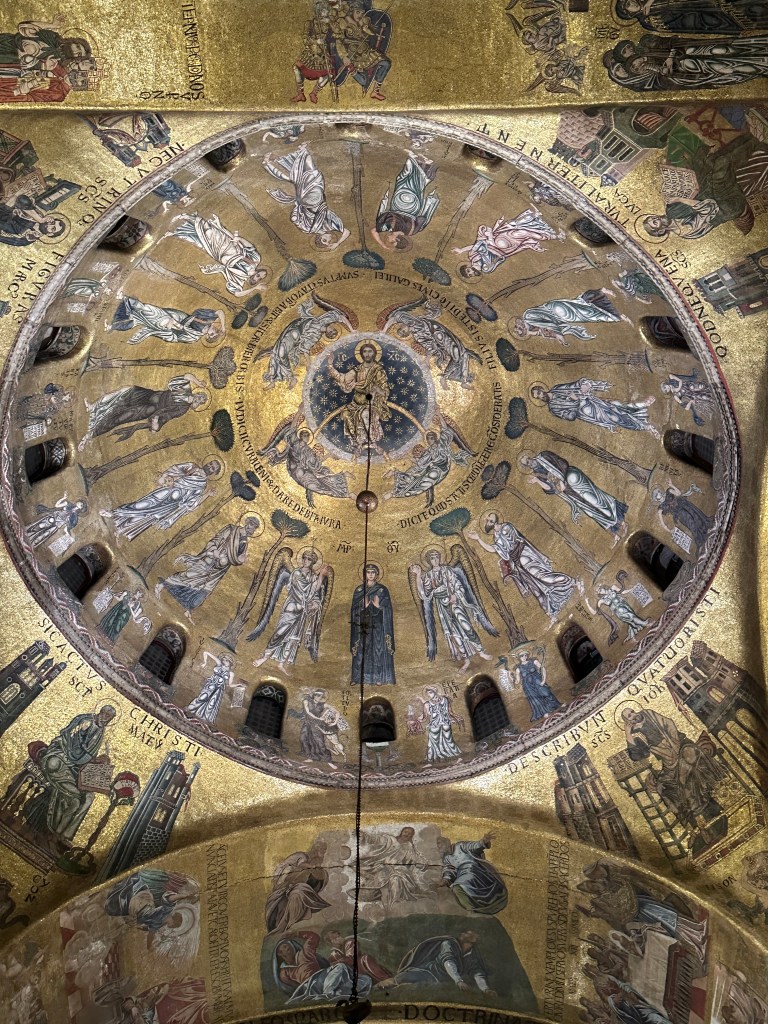
The detail throughout is spectacular. This is one of two 12 ft tall alabaster columns carved with biblical themes. This is Judas hanging himself (why isn’t it white, it’s 1,000 yr old):
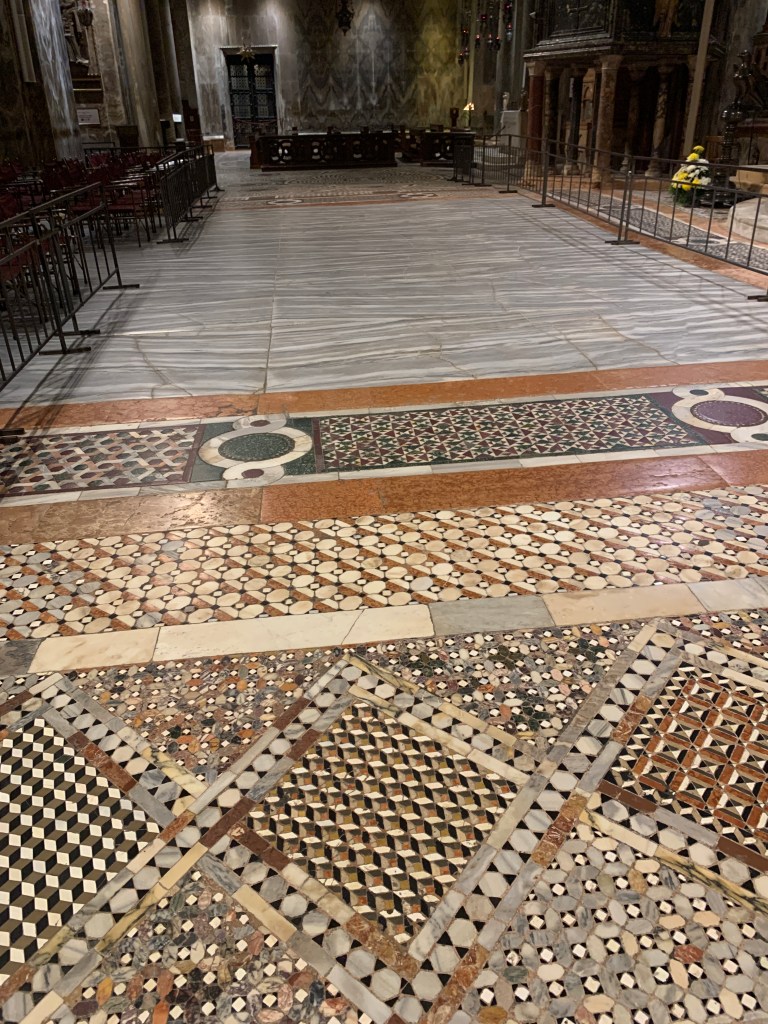

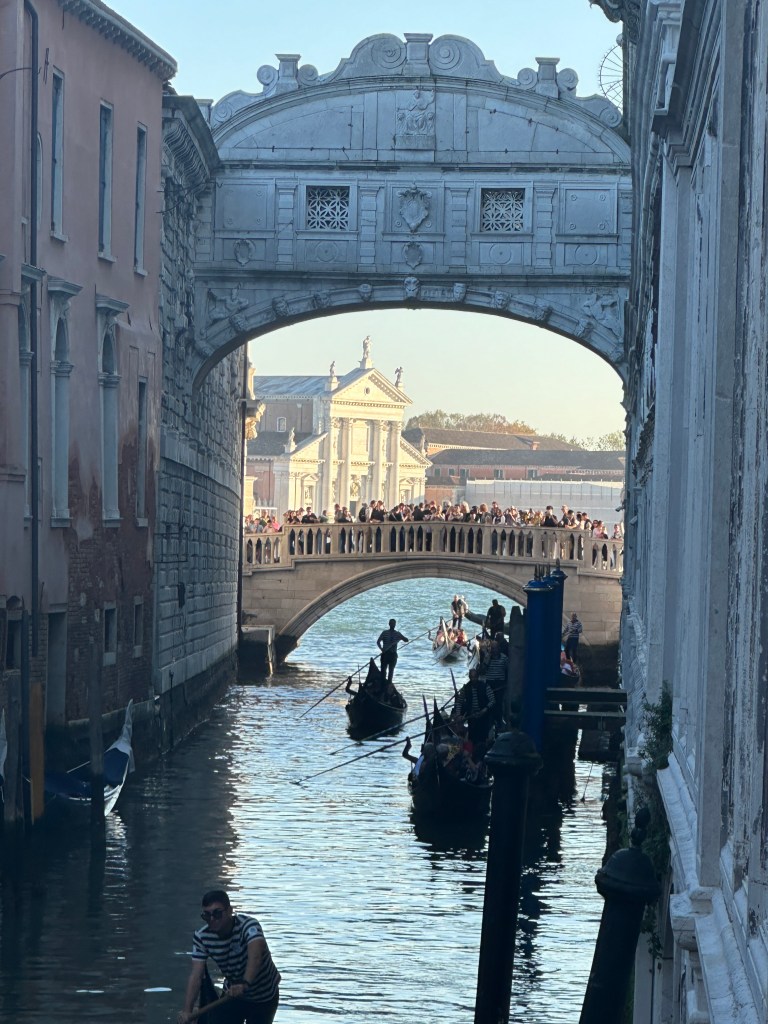
The floor is undulating, and cracked. The church like all of Venice is built on marshy islands in what was an estuary lagoon. That helped fend off invasions, mostly barbarians from the north who were fierce on foot but not so great in boats. Wooden pillars were driven into the mud to support the buildings. Over time the buildings have sunk, and large very heavy buildings like this church haven’t sunk evenly. The solid marble slabs in the picture above right crack more than the tiles, both sink and undulate. One last picture, the Bridge of Sighs. Made of limestone it connects the Doge’s palace to the prison. If convicted in court, which was in the palace, the condemned man was marched across this enclosed bridge to the adjacent prison. St Mary di Salute can be seen across the grand canal as well as a foot bridge over a side canal with a gondola crossing beneath.
Our guide in St Marks said the gold and jeweled screen behind the altar was built by Turks in 1104 in Byzantium. Byzantium was Greek in 1104, it wasn’t until 1453 that the Turks conquered and colonized it. This historical inaccuracy bothered me but Peggy insisted I keep quiet about it, was she right?
We had several good meals here. I plan to do a general Italy post on the flight home tomorrow.
- * BYOB in Venice stands for Bring Your Own Boots. Flooding is a regular event here December to February.
 Roses 1.0 Van Life